
The glass melting furnace, as the core equipment in glass production, operates at temperatures as high as 1500°C to 1600°C, imposing stringent requirements on the performance of refractory materials. Refractory bricks, serving as the main construction material for glass melting furnaces, directly determine the glass furnace‘s service life, glass product quality, and production efficiency. In glass industry applications, refractory bricks are primarily divided into two categories: fused cast refractory blocks and sintered refractory bricks. Due to the fundamental differences in their manufacturing processes, they exhibit significant divergence in microstructure and physicochemical properties, which in turn determines their suitability for different sections of the glass melting furnace.
1. Core Differences in Manufacturing Processes
2. Microstructural Differences
3. Performance Differences
4. Application Differences in Glass Melting Furnaces
5. Core Selection Principles for Refractory Bricks in the Glass Industry
1. Core Differences in Manufacturing Processes
The manufacturing process is the fundamental distinction between fused cast refractory blocks and sintered refractory bricks. Different process routes not only determine the method of raw material conversion but also directly affect the product‘s microstructure and physicochemical properties, thereby influencing their adaptability in the complex environment of a glass melting furnace. The glass industry places extremely high demands on the purity, density, and resistance to glass liquid erosion of refractory bricks. Consequently, the manufacturing processes for both types are optimized in terms of raw material selection, temperature control, and forming logic.
1.1 Manufacturing Process of fused cast refractory blocks
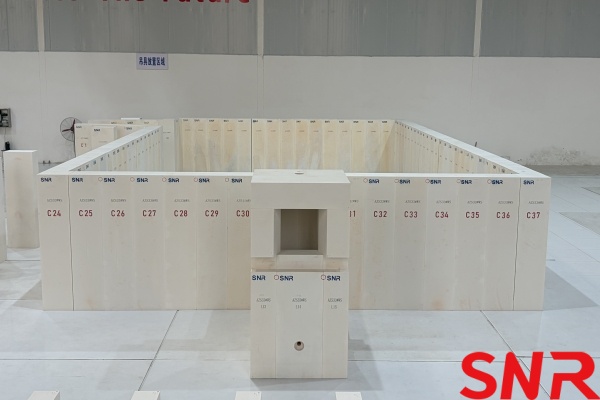
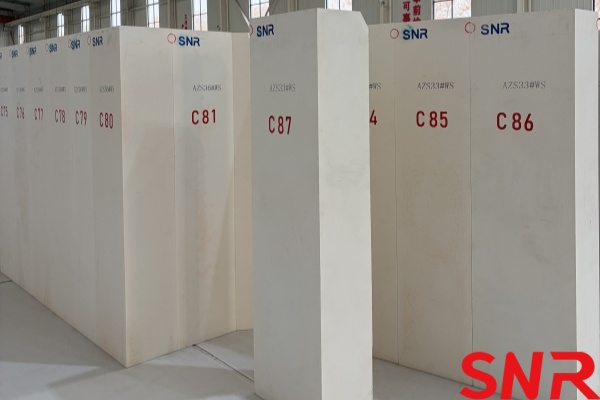
The core process for fused cast refractory blocks is "high-temperature melting - precision casting - controlled cooling." Tailored to the needs of the glass industry, strict optimization is applied to raw material purity control, melt purification, and forming accuracy. The specific process is divided into four stages: raw material pretreatment, melting and casting, cooling and solidification, and subsequent precision machining.
Raw Material Pretreatment Stage: This is crucial for ensuring the resistance of fused cast refractory blocks to glass liquid erosion. Raw materials for glass industry fused cast refractory blocks require strict control over impurity content such as alkali metals (Na₂O, K₂O), iron oxides (Fe₂O₃), and calcium oxides (CaO), typically requiring total impurity content below 0.5% to 1%. Core raw materials often use high-purity synthetic materials or selected natural minerals, such as fused alumina (Al₂O₃ content ≥99%), fused zirconia sand (ZrSiO₄ content ≥98%), and high-purity magnesia (MgO content ≥97%). After crushing and fine grinding, raw materials undergo multi-stage screening to control particle size distribution, ensuring particle uniformity and avoiding insufficient local melting or component segregation during the melting process. The resulting powder must be dried to remove moisture, preventing bubble defects during melting.
Melting and Casting Stage (Core Step): Dedicated electric arc furnaces or plasma furnaces are used, generating temperatures of 1800°C to 2400°C through electrode discharge to completely melt the raw materials. Mechanical stirrers agitate the melt to ensure compositional homogeneity and fully eliminate gases (CO₂, H₂O) and impurities from the melt, avoiding the formation of pores or inclusion defects—these defects can become entry points for glass liquid erosion, severely shortening brick life. After melting, the homogeneous and pure melt is rapidly poured into pre-made precision molds. Molds are made from high-temperature-resistant, non-reactive special materials (e.g., graphite molds, alumina molds). Mold design must conform to the shapes of different glass furnace sections (e.g., irregular structures of sidewalls, throats, and outlets) to ensure dimensional accuracy after forming.
Cooling and Solidification Stage: This directly affects the crystal structure of fused cast refractory blocks. To obtain stable high-temperature crystal phases (e.g., α-Al₂O₃, ZrO₂), a controlled gradient cooling process is employed: The high-temperature melt first cools naturally in the mold to about 1200°C, then is transferred to a constant-temperature cooling furnace for slow cooling at a rate of 5°C to 10°C per hour. This ensures sufficient and uniform crystal growth, avoiding cracks caused by internal stress from rapid cooling. For core products like fused cast AZS blocks, the phase transformation of ZrO₂ crystals must be precisely controlled during cooling to avoid cracking due to volumetric expansion from phase change.
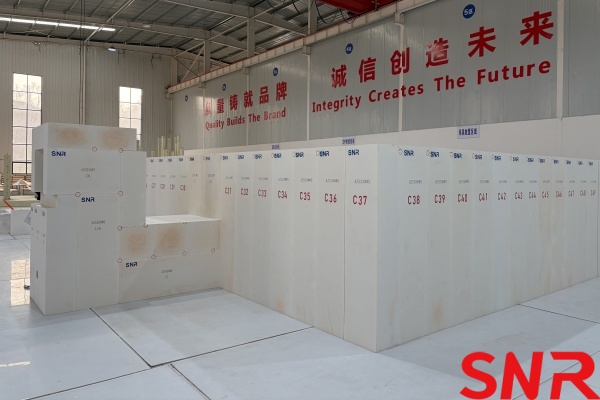
Subsequent Precision Machining Stage: To meet the construction requirements of glass melting furnaces, demolded blocks undergo cutting, grinding, and polishing to ensure dimensional accuracy with errors controlled within ±1 mm and surface flatness meeting standards. Glass furnace construction requires minimal block joint gaps (typically ≤2 mm); otherwise, high-temperature glass liquid can penetrate the joints, causing brick spalling and failure. Final products must pass stringent quality inspections such as ultrasonic flaw detection, compositional analysis, and density testing to ensure the absence of internal cracks, inclusions, pores, and other defects before being used in glass melting furnaces.
1.2 Manufacturing Process of Sintered Refractory Bricks
The core process for sintered refractory bricks is "raw material mixing - forming - drying - high-temperature sintering." Optimized for the glass industry in areas like raw material grading, binder selection, and sintering temperature control, the primary goal is to maximize density and erosion resistance while ensuring thermal shock resistance. The process is divided into five stages: raw material preparation, forming, drying, sintering, and post-processing.
Raw Material Preparation Stage: Sintered bricks have a wider range of raw material choices, but those for the glass industry still require strict control of impurity content (total impurities ≤3% to 5%). Commonly used raw materials include high-alumina bauxite (Al₂O₃ content 60%-80%), high-quality clay, and siliceous materials (SiO₂ content ≥95%). Some applications may add small amounts of erosion-resistant components like ZrO₂ or Cr₂O₃. After crushing and grinding, a three-grade particle size distribution design of "coarse particles + fine particles + ultrafine powder" is used. Coarse particles (1-3 mm) serve as the skeleton to enhance brick strength, fine particles (0.074-1 mm) fill skeleton voids, and ultrafine powder (≤0.074 mm) improves forming performance. Optimizing this grading increases green body density. Eco-friendly binders (e.g., modified clay, organic resin) and low-melting-point sintering aids (e.g., CaF₂, Li₂CO₃) are added. Binders must ensure adequate green body strength after drying and leave no harmful gas residues during sintering (to avoid contaminating glass liquid). Sintering aids lower the sintering temperature (typically by 50°C to 100°C), promoting strong bonding between particles.
Forming Stage: High-pressure pressing (pressure ≥150 MPa) is used to ensure green body density. The green body density for glass industry sintered bricks must be ≥2.6 g/cm³; otherwise, high porosity exacerbates glass liquid erosion. For irregularly shaped bricks used in areas like glass furnace crowns and flue channels, vibration forming is employed, using high-frequency vibration to achieve tight particle packing and avoid defects like lamination or porosity in the green body. Formed green bodies are manually trimmed to ensure regular shape.
Drying Stage: A staged hot-air drying process is used. First, drying at 40°C to 60°C for 4-6 hours removes free moisture; then, the temperature is raised to 100°C to 120°C for 8-12 hours to remove combined moisture. The heating rate during drying is controlled below 5°C per hour to prevent cracking from rapid moisture evaporation. The moisture content of the dried green body must be ≤0.5%; otherwise, water evaporation during sintering will create pores, degrading brick performance.
High-Temperature Sintering Stage: Sintering is conducted in tunnel kilns, with temperatures adjusted between 1300°C and 1700°C depending on brick type, and a holding time of 4-8 hours. For glass industry bricks, the kiln atmosphere must be strictly controlled (oxidizing atmosphere) to prevent the formation of reduced-state impurities (e.g., FeO) in the bricks, as these can leach into the glass liquid and affect glass color. Precise control of sintering temperature and holding time enables solid-state reactions, recrystallization, and glass phase bonding between particles, forming a strong ceramic bond. The glass phase content should be controlled between 10% and 20%; excessive glass phase reduces high-temperature strength and erosion resistance.
Post-Processing Stage: Includes slow cooling, cutting/grinding, and quality inspection. Sintered bricks must be slowly cooled to room temperature in the tunnel kiln (cooling rate ≤10°C/h) to avoid thermal stress cracking. Bricks for areas requiring high dimensional accuracy are cut and ground to ensure construction precision. Final products are tested for density, thermal shock resistance, and chemical composition to ensure they meet glass industry standards.
1.3 Summary of Core Process Differences
From the perspective of glass industry application requirements, the core process differences lie in three aspects: First, purity control: fused cast refractory blocks require higher raw material purity (impurities ≤1%) compared to sintered bricks (≤5%), which directly determines the fundamental resistance to glass liquid erosion. Second, temperature and state transformation: fused cast refractory blocks achieve complete homogenization through ultra-high-temperature melting (1800°C+), while sintered bricks achieve bonding through solid-state reactions at medium-high temperatures (1300°C-1700°C). The former leads to significantly higher density. Third, forming and precision: fused cast refractory blocks use "melting followed by casting and precision machining," adapting to irregular core sections of the glass furnace; sintered bricks use "forming first, then sintering," better suited for regular, non-core sections. These differences directly lead to fundamental variations in their microstructures, subsequently affecting their performance in glass melting furnaces.
2. Microstructural Differences
Microstructure is the core carrier of the physicochemical properties of refractory bricks. The glass industry‘s core requirements for refractory bricks are "resistance to glass liquid erosion, resistance to scouring, and volume stability." The microstructural differences between fused and sintered refractory bricks precisely define their performance boundaries for these core requirements—fused cast refractory blocks, with high density, low porosity, and stable crystal phases, are suited for strongly erosive core zones; sintered bricks, with porous structures, ceramic bonding, and a certain glass phase content, are suited for weakly erosive non-core zones.
2.1 Microstructure of fused cast refractory blocks
The microstructure of fused cast refractory blocks is characterized by "coarse, uniform crystal phases + minor glass phase filling + extremely low closed porosity." They exhibit extremely high density, with porosity typically below 5%. High-quality products (e.g., fused cast AZS blocks) can have porosity below 2%, making them fully suitable for the highly erosive environment of core glass furnace zones.
Crystal Structure: Due to ultra-high-temperature melting and slow cooling, fused cast refractory blocks develop coarse and structurally stable crystal phases. Crystal sizes can reach tens of micrometers or larger, with uniform arrangement and no preferred orientation. The primary crystal phases in core fused cast refractory blocks for the glass industry are highly stable oxides:
►Fused alumina bricks have α-Al₂O₃ as the core crystal, with a melting point as high as 2072°C and strong chemical stability, resisting reaction with glass liquid.
►Fused cast AZS blocks form a composite crystal structure of α-Al₂O₃ and ZrO₂. ZrO₂ crystals have a melting point of 2715°C, offering extremely strong resistance to erosion by glass liquid (especially alkali-containing glass). The interlocking of these two crystals further enhances structural stability.
►Fused magnesia bricks have periclase (MgO) as the core crystal, with a melting point of 2852°C, suitable for specific non-alkali glass furnace environments. Coarse, stable crystal phases are the core guarantee for the high-temperature resistance and erosion resistance of fused cast refractory blocks. Atoms within crystals are strongly bonded, with fewer crystal boundaries, minimizing softening or slippage at high temperatures.
Porosity and Bonding: Pores in fused cast refractory blocks are predominantly closed pores, and their number is minimal. This is because gases are fully expelled during melting, and the small amount of glass phase formed during melt cooling (content ≤5%) fills inter-crystal gaps, further sealing pores. The key role of closed pores is to prevent glass liquid penetration. If glass liquid penetrates the brick interior, it can react with brick components to form low-melting-point phases, damaging the internal structure and leading to spalling failure. The low porosity and closed-pore nature of fused cast refractory blocks fundamentally block the penetration path for glass liquid. In terms of bonding, fused cast refractory blocks primarily feature "crystal bonding + minor glass phase bonding": crystals form strong bonds via atomic diffusion, while the glass phase fills gaps providing auxiliary bonding. This ensures structural strength while alleviating thermal stress at high temperatures, preventing cracking.
2.2 Microstructure of Sintered Refractory Bricks
The microstructure of sintered refractory bricks is characterized by "fine crystal grains + ceramic bonding + numerous open pores." Their density is lower than that of fused cast refractory blocks, with porosity typically between 10% and 25%, of which open pores constitute over 60%. This structure determines their weaker erosion resistance but superior thermal shock resistance, making them suitable for non-core glass furnace zones with temperature fluctuations.
Crystal Structure: Under solid-state reaction conditions, sintered bricks develop fine crystal grains, typically ranging from a few micrometers to tens of micrometers in size, with random grain orientation. The core crystal phases vary by brick type:
►High-alumina sintered bricks have mullite (3Al₂O₃·2SiO₂, melting point 1850°C) and α-Al₂O₃ as primary phases. Mullite grains are fine and interwoven, forming a network skeleton.
►Siliceous sintered bricks have cristobalite (high-temperature SiO₂ phase, melting point 1713°C) as the core crystal.
►Fireclay sintered bricks mainly consist of mullite and glass phase. The advantage of fine-grained structure is better toughness, which can absorb stress from thermal expansion, improving thermal shock resistance. However, high-temperature strength and erosion resistance are inferior to the coarse crystals of fused cast refractory blocks.
Porosity and Bonding: Open pores are a core characteristic of sintered brick microstructure. These pores primarily originate from voids between raw material particles during forming, moisture evaporation during drying, and gas release during sintering. Although some pores are filled by the glass phase generated during sintering, a significant number of open pores remain. The drawback of open pores is their susceptibility to glass liquid penetration. At high temperatures, glass liquid can penetrate the brick interior through open pores, reacting with brick components to form low-melting-point phases (e.g., anorthite, albite). These low-melting phases soften or melt at high temperatures, damaging the ceramic bond structure, leading to reduced strength and spalling failure. Bonding in sintered bricks is primarily "ceramic bonding," where raw material particles form new crystal phases (e.g., mullite) through solid-state reactions at high temperatures, creating strong bonds between particles. The glass phase (content 10%-20%) acts as an auxiliary bonding phase filling gaps. Excessive glass phase content reduces high-temperature performance, hence it must be strictly controlled.
2.3 Impact of Microstructural Differences on Glass Industry Applications
Microstructural differences directly determine the service capabilities of both brick types in glass melting furnaces: The "high density, low porosity, stable coarse crystal" structure of fused cast refractory blocks grants them extremely strong resistance to glass liquid erosion, resistance, and high-temperature volume stability, enabling long-term service in core, strongly erosive areas like the melting tank and throat. The "porous, fine-grained, open-pore" structure of sintered bricks, while offering weaker erosion resistance, provides superior thermal shock resistance (pores can absorb thermal stress) and lower cost, making them suitable for non-core, weakly erosive areas like the furnace crown, flue channel, and regenerators. These areas experience significant temperature fluctuations but minimal glass liquid erosion. Their microstructural differences fundamentally delineate their application boundaries within glass melting furnaces.
The glass industry‘s core performance requirements for refractory blocks can be summarized as "four highs": high resistance to glass liquid erosion, high high-temperature strength, high volume stability, and high resistance, with some areas also requiring good thermal shock resistance. Based on microstructural differences, fused and sintered refractory blocks exhibit precise differentiation in these core properties, perfectly matching the usage needs of different glass furnace sections.
3.1 Resistance to Glass Liquid Erosion: fused cast refractory blocks are Superior
The erosion resistance advantage of fused cast refractory blocks stems from three factors: First, the high-purity crystal phases (e.g., α-Al₂O₃, ZrO₂) are chemically very stable and almost do not react with glass liquid (especially alkali-metal-containing glass with Na₂O, K₂O). Second, low porosity (≤5%) dominated by closed pores blocks the penetration path for glass liquid, preventing reaction with internal brick components. Third, high density makes it difficult for glass liquid to form penetration and diffusion channels on the block surface. Industry test data shows that in soda-lime glass liquid at 1550°C, the erosion rate of fused cast AZS 33 blocks, is only 0.1-0.3 mm/year, whereas that of sintered high-alumina bricks can reach 3-5 mm/year—a difference of over tenfold. For example, using fused cast AZS blocks for the melting tank sidewalls can achieve a service life of 5-10 years, whereas using sintered bricks would result in a service life of less than 2 years and lead to excessive impurities in glass products.
Sintered bricks have weaker resistance to glass liquid erosion, primarily due to their numerous open pores, which allow glass liquid to easily penetrate the brick interior. Inside, it reacts with impurities (e.g., Fe₂O₃, CaO) and some primary crystal phases (e.g., mullite), generating low-melting-point silicate phases (e.g., albite NaAlSi₃O₈, melting point 1100°C). These low-melting phases soften or melt at high temperatures, damage the brick structure, causing spalling and erosion. Even high-purity sintered alumina bricks (Al₂O₃ content ≥95%) have erosion rates 3-5 times higher than fused alumina bricks, failing to meet the requirements of core glass furnace sections. Only in areas without direct glass liquid contact (e.g., glass furnace crown, flue channels) can the erosion resistance of sintered bricks meet usage requirements.
3.2 High-Temperature Strength and Resistance: fused cast refractory blocks are superior
At room temperature, the compressive strength of fused cast refractory blocks is typically 100-200 MPa, maintaining 50-100 MPa at 1600°C. In contrast, sintered bricks have room-temperature compressive strength of 50-150 MPa, dropping to only 20-60 MPa at 1600°C. For example, fused alumina bricks can have a bending strength over 30 MPa at 1800°C, whereas sintered alumina bricks have less than 20 MPa at the same temperature. High high-temperature strength stems from their coarse, stable crystal structure with strong inter-crystal bonding, resisting softening and deformation at high temperatures. Additionally, fused cast refractory blocks have a Mohs hardness of 8-9, excellent wear resistance, and strong resistance, capable of withstanding long-term erosion from high-speed glass liquid (flow velocity 0.5-1 m/s) and high-temperature gas flow without significant surface wear or spalling.
Sintered bricks have weaker high-temperature strength and erosion resistance. At high temperatures, crystal boundaries are prone to softening, and increased glass phase content leads to significant strength reduction, making them less capable of withstanding high-speed erosion.
3.3 Thermal Shock Resistance: sintered bricks are more excellent
Thermal shock resistance (resistance to rapid temperature changes) refers to a refractory brick‘s ability to withstand thermal stress damage during rapid temperature fluctuations. Areas like the glass furnace crown, flue channels, and regenerators in glass melting furnaces experience significant temperature fluctuations (single variations up to 200-300°C) due to changes in combustion conditions, glass furnace start-ups, and shutdowns, requiring good thermal shock resistance. Sintered bricks exhibit significantly better thermal shock resistance than fused cast refractory blocks. The core reason is the numerous open pores in sintered bricks, which can absorb thermal stress generated by temperature changes. Additionally, they have a lower thermal expansion coefficient (5×10⁻⁶/°C to 9×10⁻⁶/°C) and lower thermal conductivity, resulting in smaller internal temperature gradients and more uniform thermal stress distribution, reducing the likelihood of cracking. For example, sintered fireclay bricks can withstand temperature shocks exceeding 300°C, maintaining structural integrity after repeated thermal cycling. Sintered high-alumina bricks have slightly poorer thermal shock resistance but can still withstand temperature shocks of 200-250°C.
Fused cast refractory blocks have poorer thermal shock resistance. They have a higher thermal expansion coefficient (8×10⁻⁶/°C to 12×10⁻⁶/°C), high density, low porosity, and higher thermal conductivity (2-5 W/(m·K)). During rapid temperature changes, significant internal temperature gradients develop, creating intense thermal stress that cannot be released through pores, easily leading to brick cracking and spalling. For example, fused alumina bricks may develop noticeable cracks when subjected to temperature shocks exceeding 200°C. Fused cast AZS blocks have slightly better thermal shock resistance but can only withstand shocks of 150-200°C. Therefore, fused cast refractory blocks are strictly prohibited in areas with severe temperature fluctuations.
Besides the core properties mentioned above, differences in thermal conductivity also affect glass industry applications. fused cast refractory blocks have high thermal conductivity, facilitating efficient heat transfer, which can accelerate glass melting rates, making them suitable for areas like the melting tank requiring enhanced heat transfer. Sintered bricks have low thermal conductivity, offering good insulation, suitable for areas like the furnace crown and flue channels where heat retention is needed to reduce heat loss.

4. Application Differences in Glass Melting Furnaces
Based on the performance differences above, the application areas of fused and sintered refractory bricks in glass melting furnaces show clear and precise differentiation. The core principle is "use fused cast refractory blocks for core, strongly erosive areas; use sintered bricks for non-core, weakly erosive areas with temperature fluctuations." Their collaborative use ensures core glass furnace performance while controlling construction and operational costs. The application differences are detailed below for major glass furnace sections.
4.1 Typical Application Areas for fused cast refractory blocks (Core Zones of Glass Melting Furnace)
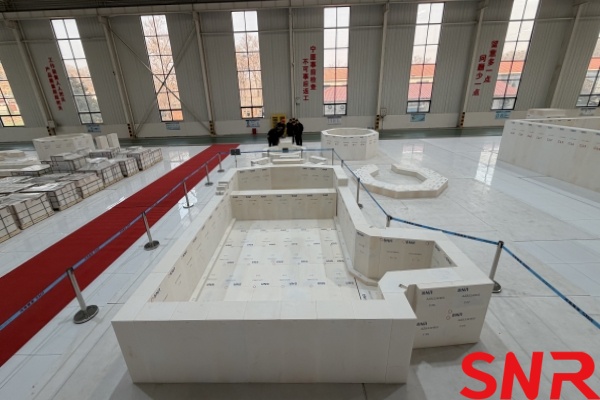
Relying on their excellent resistance to glass liquid erosion, high-temperature strength, and volume stability, fused cast refractory blocks are the only choice for core, strongly erosive areas of glass melting furnaces, primarily applied in key areas like the melting tank, throat, doghouse, and refining zone.
►Melting Tank: This is the core area where raw materials are heated to 1500°C-1600°C to melt into glass liquid, subjected to strong erosion. Fused cast AZS blocks are preferentially selected. For critical areas like sidewalls and tank bottom, AZS 33# (33% ZrO₂ content) or AZS 41# (41% ZrO₂ content) are used. AZS 33# is used for the most severely eroded areas like the bottom paving and lower sidewalls. The upper sidewalls of the melting tank can use AZS 41#, balancing erosion resistance and cost. fused cast refractory blocks in this area can achieve a service life of 5-10 years, crucial for ensuring long-term stable glass furnace operation.
►Throat: The throat is the channel connecting the melting tank and refining zone, with glass liquid flow speeds up to 1-2 m/s, resulting in extremely strong erosion. The throat uses fused alumina bricks or fused cast AZS blocks, requiring high density and strong erosion resistance to avoid leakage or impurity ingress due to wear. Fused cast refractory blocks here can last 3-5 years, requiring regular inspection and replacement.
►Refining Zone: Here, glass liquid undergoes refining and bubble removal at temperatures up to 1550°C-1600°C, subject to erosion and gas flow erosion. Fused alumina bricks or fused cast AZS 33# blocks are used to ensure high-temperature stability and prevent impurity release into the glass liquid, safeguarding refining quality.
Furthermore, in special glass furnaces like those for non-alkali glass or borosilicate glass, where glass liquid is more corrosive, core areas may use special fused cast refractory blocks like fused magnesia bricks or fused magnesia-chrome bricks to further enhance erosion resistance.
4.2 Typical Application Areas for Sintered Refractory Bricks (Non-Core Zones of Glass Melting Furnace)
Relying on their good thermal shock resistance, lower cost, and insulating properties, sintered bricks are primarily used in non-core, weakly erosive areas of glass melting furnaces. These areas have no or minimal direct contact with glass liquid, mainly subject to temperature fluctuations and self-weight.
►Furnace Crown: Divided into arched crown and suspended crown, it withstands high temperatures (1400°C-1500°C) and temperature fluctuations without direct glass liquid contact, requiring good thermal shock resistance and insulation. Sintered high-alumina bricks, siliceous sintered bricks, or fireclay sintered bricks are typically used. High-alumina bricks are used for higher-temperature arched sections, while fireclay bricks are used for lower-temperature suspended sections. Sintered bricks here can last 3-5 years, with relatively simpler replacement and maintenance.
►Flue channels and Chimney: These are exhaust channels for high-temperature waste gases (800°C-1200°C), subject to gas erosion and temperature fluctuations without glass liquid erosion. Fireclay sintered bricks or lower-grade high-alumina sintered bricks are used, requiring certain high-temperature resistance and thermal shock resistance while being cost-effective. Sintered bricks here can last 5-8 years, crucial for controlling overall furnace costs.
►Regenerator: This heat recovery device uses chimney bricks to recover waste heat to preheat combustion air. Temperatures range from 1000°C to 1400°C with significant fluctuations and no glass liquid contact. Sintered fireclay bricks, high-alumina bricks, or siliceous bricks are used as chimney bricks, requiring good thermal shock resistance and heat storage capacity, along with moderate porosity to facilitate heat exchange. Sintered bricks here can last 4-6 years, requiring regular ash removal to maintain heat exchange efficiency.
In actual glass melting furnace design and construction, fused and sintered bricks are not used in isolation but collaboratively to achieve a balance of "core performance assurance + cost optimization." Moreover, during glass furnace maintenance and renovation, core-area fused cast refractory blocks can be replaced individually, while non-core-area sintered bricks can be replaced in batches, further improving operational efficiency and reducing maintenance costs.
5. Core Selection Principles for Refractory Bricks in the Glass Industry
1. The Performance Precision Matching Principle: The selection of refractory bricks should be based on their performance compatibility with the temperature at each part of the glass melting furnace, the intensity of glass liquid erosion, the degree of scouring, and the frequency of temperature fluctuations.
2. The Economic Benefit Balance Principle: A comprehensive evaluation should be made, taking into account the initial investment, service life, losses from furnace shutdowns, and maintenance costs. For core areas, priority should be given to ensuring performance by using fused cast bricks to reduce long-term comprehensive costs; for non-core areas, priority should be given to cost control by using sintered bricks to optimize the initial investment.
3. Principle of Environmental Compliance: Prioritize refractory brick products with low energy consumption, low pollutant emissions, and recyclable waste. Partner with environmentally compliant, technologically advanced refractory manufacturers to ensure their production processes meet national environmental standards, assisting glass enterprises in achieving low-carbon, green production.
In the future, as the glass industry moves towards low-carbonization and high-end development, e.g., photovoltaic glass, electronic glass, fused and sintered refractory bricks will continue to break through in areas of cost reduction, performance enhancement, and environmental friendliness, providing stronger support for the low-carbon, high-end development of the glass industry.
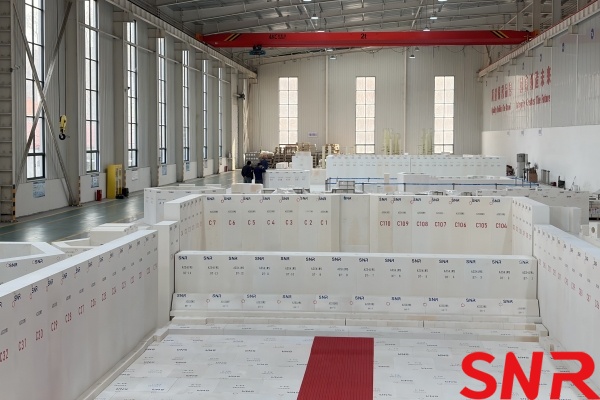
Henan SNR Refractory Co., Ltd. is dedicated to the manufacture, research and development of fused cast AZS refractory blocks and bonded refractory materials for the glass industry. Meanwhile, SNR can provide total solutions and services for glass furnace design, glass furnace construction, renovation, and upgrading. Please contact me if you have any requirements.
CONTACT: 
[email protected]/ WhatsApp:+86 15670323812


 +86-18203976036