

With the continuous advancement of global strategies addressing climate change, carbon neutrality has emerged as a critical target framework for industrial development. As special energy-intensive industry, the glass sector is currently facing unprecedented pressure to undergo a green transformation.
This study focuses on the transformation of the energy structure in the glass industry under the context of carbon neutrality. It analyzes the transition trend from traditional fossil fuel combustion toward all-electric melting furnaces and oxy-fuel combustion technologies. Furthermore, it investigates the impact of changes in glass furnace hot spot distribution on the corrosion mechanisms and high-temperature creep behavior of fused cast AZS (alumina–zirconia–silica) refractories, which represent core technical challenges.
In addition, this paper elaborates on optimization pathways for the composite design of low thermal conductivity refractory materials and systematically reviews the technological framework and carbon reduction potential associated with the recycling of spent fused cast AZS refractories. The results indicate that achieving deep decarbonization in the glass industry requires systematic technological innovation, including the parallel development of multiple pathways such as partial electrification technologies, integration of carbon capture and storage (CCS), and hydrogen energy substitution. At the policy level, major economies such as China and the European Union have already established clear carbon reduction roadmaps for the glass industry, providing explicit strategic guidance for the technological upgrading of the refractory materials sector.
1. Introduction
The glass industry is a fundamental materials sector in modern society, with extensive applications in construction, automotive manufacturing, containers, and photovoltaic electronics. However, the glass production process is characterized by high temperature, high energy consumption, and high emissions. It is estimated that the production of one weight case of flat glass results in approximately 360 tons of carbon dioxide emissions. In 2020, total CO₂ emissions from China’s flat glass industry reached approximately 34 million tons, accounting for about 0.33% of the country’s total carbon emissions. From the perspective of emission structure, more than 60% of carbon emissions in glass production originate from fossil fuel combustion. CO₂ generated from raw material decomposition or carbon oxidation accounts for approximately 25%–27%, while electricity-related emissions contribute around 13%. This emission structure clearly indicates that fuel substitution and energy transition represent the primary breakthrough pathways for achieving carbon neutrality in the glass industry.
With the establishment of global carbon neutrality targets, the green transformation of the glass industry has shifted from an optional pathway to a mandatory requirement. The European Union has proposed a target to reduce carbon emissions by 55% by 2030 compared to 1990 levels and is actively promoting deep decarbonization in the industrial sector. China has also clearly proposed its “dual carbon” goals—peaking carbon emissions before 2030 and achieving carbon neutrality before 2060—positioning green development as a core strategy during the “14th Five-Year Plan” period.
Under this background, the energy structure of the glass industry is undergoing profound transformation. Traditional combustion-based heating methods relying on heavy oil and natural gas are rapidly shifting toward cleaner energy technologies such as all-electric melting furnaces and oxy-fuel combustion. This fundamental transformation in energy structure has introduced entirely new technical requirements and challenges for high-performance fused-cast refractories.
As the core lining materials of glass melting furnaces, refractory materials directly determine thermal efficiency, service life, and product quality. Changes induced by energy transition—such as alterations in hot spot distribution, shifts in redox atmosphere, and variations in temperature gradients—are reshaping both the operating environment and performance requirements of refractory materials.
This paper aims to systematically analyze the driving effects of the green transformation of the glass industry under carbon neutrality on high-performance fused-cast refractories, identify the associated technical challenges and development opportunities, and provide reference for technological innovation and strategic decision-making in related industries.
2. Energy Transition Trends in the Glass Industry
2.1 Structural Transition from Fossil Fuels to Clean Energy
The energy transition in the glass industry is a systematic undertaking involving multiple dimensions, including technological pathways, equipment investment, and operational costs. Traditional glass melting furnaces primarily rely on heavy oil, natural gas, or coal gas as fuels. The heat generated from combustion is used to melt the batch materials into molten glass. This conventional process route is mature and stable; however, it inherently suffers from relatively low thermal efficiency and high carbon emission intensity. According to statistics, only about 35%–40% of the heat generated by combustion in glass furnaces is effectively absorbed by the molten glass. Approximately 20%–25% is dissipated through the glass furnace structure, while 30%–40% is lost with flue gas emissions.
To reduce carbon emission intensity and improve energy utilization efficiency, the glass industry has been actively exploring fuel substitution and technological upgrading pathways. Among these, the substitution of coal and heavy oil with natural gas represents the most practical and feasible transitional solution in the near term. Compared with coal and heavy oil, natural gas combustion produces lower carbon dioxide emissions and generates almost no sulfur oxides or particulate matter, thereby contributing to improved regional air quality. In terms of carbon reduction effectiveness, the transition from coal to natural gas (“coal-to-gas conversion”) offers relatively greater emission reduction potential. However, it must be clearly recognized that natural gas is still fundamentally a fossil fuel. Its combustion inevitably produces carbon dioxide emissions, meaning it can only serve as a transitional solution rather than a final pathway toward carbon neutrality.
From a long-term perspective, achieving net-zero emissions in the glass industry requires a fundamental transformation of the energy structure. The main technological directions include:
► all-electric melting furnace technology
► oxy-fuel combustion technology
► hydrogen energy substitution
► biomass fuel utilization
All-electric melting furnaces use electricity as the sole energy source. Through electrode heating, molten glass is heated directly, completely eliminating direct carbon emissions associated with fuel combustion. According to techno-economic analyses, all-electric furnaces can reduce carbon emissions by approximately 41% compared with traditional natural gas furnaces, while eliminating all combustion-related emission sources. Hydrogen combustion technology, on the other hand, replaces fossil fuels with green hydrogen, enabling zero-carbon emissions during the combustion process. In theory, this approach can reduce process-related emissions by approximately 50%. However, large-scale industrial application of hydrogen energy still faces significant constraints, including:
► high production costs
► underdeveloped storage and transportation infrastructure
► unresolved challenges in combustion control technologies
2.2 Development and Application of All-Electric Melting Furnace Technology
All-electric melting furnace technology represents a fundamental solution for achieving zero combustion emissions in the glass industry. Its basic principle involves inserting molybdenum or tin electrodes into molten glass. Under the action of an alternating electric field, Joule heat is generated, directly heating and melting the glass. This heating method offers several significant advantages, including:
► uniform temperature distribution
► high thermal efficiency
► extremely low NOx emissions
► environmentally friendly operation
From a technical classification perspective, electric melting furnaces can be categorized into three main types:
► fully electric melting furnaces
► electric boosting glass furnaces
► hybrid glass furnaces
Fully electric glass furnaces are particularly suitable for producing high-end glass products such as:
► lead crystal glass
► pharmaceutical glass
► optical glass
Their main advantages include:
► elimination of bubbles and striations during melting, improving glass quality
► significant reduction in the volatilization of hazardous substances such as lead
► improved working environment
► cold-top operation, greatly reducing thermal radiation exposure to operators
► precise temperature control, facilitating automated production management
Depending on production scale, the daily melting capacity of fully electric furnaces ranges from 0.2 tons to over 40 tons, meeting the requirements of various specialized application scenarios.
Electric boosting technology, in contrast, serves as a supplementary heating method for conventional flame glass furnaces. While maintaining the basic structure of flame melting, electrical energy is introduced via electrodes to provide additional heat input. This enhances melting efficiency and reduces unit energy consumption. This hybrid approach allows for:
► partial decarbonization
► energy savings
► minimal disruption to existing production systems
It is therefore regarded as a pragmatic and incremental transition pathway. For upgrading existing glass furnaces, electric boosting is relatively easy to implement and offers a shorter investment payback period, making it economically attractive. However, the large-scale deployment of all-electric melting furnaces still faces several constraints:
a. Electricity Cost
At current electricity price levels, the overall production cost of electric melting is typically higher than that of natural gas glass furnaces. Economic competitiveness will depend on:
effective carbon pricing mechanisms
significant reductions in green electricity costs
b. Capacity Limitations
Large-scale float glass furnaces can achieve daily melting capacities of several hundred to over a thousand tons. The technological maturity of all-electric solutions for such large capacities remains limited.
c. Power Grid Constraints
Glass plants are high electricity consumers. The large-scale adoption of electric melting places higher demands on:
grid capacity
power supply stability
2.3 Energy-Saving Mechanisms and Emission Reduction Effects of Oxy-Fuel Combustion
Oxy-fuel combustion technology represents another important pathway for energy conservation and emission reduction in glass melting furnaces. Its fundamental principle is to replace air with high-concentration oxygen in the combustion process. By reducing the amount of nitrogen entering the glass furnace, the volume of flue gas is significantly decreased, thereby reducing heat loss carried by exhaust gases and improving combustion efficiency.
Compared with conventional air combustion, oxy-fuel combustion offers several advantages:
► Higher flame temperature, enhancing radiative heat transfer and increasing melting rates
► Significantly reduced flue gas volume, leading to lower heat losses and improved fuel utilization
► Substantial reduction in NOx formation, delivering clear environmental benefits
► Improved glass quality, particularly by reducing defects associated with nitrogen involvement
According to application data, oxy-fuel combustion can achieve:
► energy savings of 6%–18%
► productivity increases of 3%–15%
► improved glass quality grades
Pure oxygen combustion represents a further advancement of oxy-fuel technology, with oxygen concentrations approaching 100%. This enables:
maximum energy-saving potential and minimal nitrogen oxide emissions. Oxygen staging combustion technology, an important enhancement of pure oxygen combustion, introduces oxygen in stages into the combustion zone. This allows for:more precise flame temperature control and optimized combustion efficiency. This technology demonstrates strong potential in improving combustion performance, reducing energy consumption, and minimizing pollutant emissions.
From an emission reduction perspective, converting traditional regenerative glass furnaces into oxy-fuel glass furnaces can achieve approximately 30% reduction in fuel consumption and carbon emissions. This pathway is particularly suitable for retrofitting existing glass furnaces, enabling significant energy-saving and decarbonization benefits without substantial increases in capital investment. However, pure oxygen combustion requires the installation of air separation units for oxygen production.
3. Effects of Changes in Glass Furnace Hot Spot Distribution on Refractory Materials
3.1 Differences in Thermal Field Characteristics between Conventional Fuel-Fired Furnaces and Electric Melting Furnaces
The distribution characteristics of temperature within a glass melting furnace, specifically the hot spot distribution, are key factors determining the selection and service life of refractory materials. In traditional fuel-fired furnaces, the hot spots formed by combustion flames are typically located in the upper space of the glass furnace near the burner positions, exhibiting uneven temperature gradients. The presence of heat recovery devices such as regenerators and recuperators further complicates the temperature distribution across various parts of the glass furnace.
In contrast, the temperature field distribution characteristics of all-electric melting furnaces are fundamentally different from those of traditional fuel-fired furnaces. During the electric melting process, heat is generated directly within the glass melt, resulting in a more uniform temperature distribution. The location of the hot spot shifts from the gas-phase space in traditional glass furnaces to the liquid-phase space. This change has profound implications for the erosion mechanisms of refractory materials: the refractory materials in the high-temperature zone of the liquid phase must withstand greater erosion and chemical attack from higher-temperature glass melt flow, while the traditional logic for selecting refractory materials for the gas-phase hot spot area requires corresponding adjustments.
The location of the hot spot in an electric melting furnace primarily depends on the electrode layout configuration. In a typical six-electrode configuration, a high-temperature zone usually forms in the central area of the glass furnace, with heat transferring and diffusing from the glass melt around the electrodes to the surrounding areas. This temperature distribution characteristic means that the importance of selecting refractory materials for the upper structure is reduced, while the performance requirements for refractory materials used in the tank walls and bottom are significantly increased. Additionally, the refractory materials at the electrode insertion points must withstand the dual effects of localized high temperatures and the electric field, imposing higher demands on their electrical insulation performance and thermal shock resistance.
3.2 Effects of Redox Atmosphere Transformation on Material Stability
The atmospheric environment inside a glass melting furnace is an important factor affecting the stability of refractory materials. In traditional natural gas-fired melting furnaces, the combustion zone exhibits a weakly oxidizing to reducing atmosphere, while the atmospheric environment in non-combustion zones is more complex and variable. The introduction of oxygen-enriched combustion technology has significantly altered the glass furnace atmosphere characteristics, as the increased oxygen concentration results in a more distinctly oxidizing atmosphere in the combustion zone.
Regarding the corrosion mechanism of fused cast AZS refractory materials in glass melting furnaces, studies have shown that oxidizing and reducing atmospheres lead to significantly different degradation modes of the materials. Under oxidizing atmosphere conditions, corrosive compounds such as sodium sulfate are more likely to deposit on the surface of refractory materials and undergo chemical reactions, forming complex corrosion product layers. In contrast, under reducing atmosphere conditions, the formation rate and extent of corrosion products are relatively less severe. This finding provides important guidance for the selection of refractory materials in oxygen-enriched combustion melting furnaces.
Research has also found that the area near the batch charging end experiences more severe corrosion due to higher concentrations of alkaline substances and sulfates, resulting from greater dusting of the batch materials. In actual production, this location effect means that higher-grade corrosion-resistant refractory materials need to be used, or more frequent maintenance and repair measures should be taken. Additionally, the regenerator checker bricks undergo periodic changes in temperature and atmosphere during the cyclic reversal of airflow, and this alternating stress accelerates thermal shock degradation and structural spalling of the materials.
3.3 Temperature Gradient Variation and Thermo-Mechanical Stress
Another significant change brought about by the energy transition is the reconstruction of the temperature gradient inside the melting furnace. In traditional glass furnaces, there is a large temperature difference between the flame space and the glass melt surface, with refractory materials simultaneously subjected to radiant heat from the flame above and conductive heat from the glass melt below. In electric melting furnaces, because heat is generated directly within the glass melt, the temperature at the glass melt surface is relatively lower, while the temperature around the electrodes is higher, forming a new temperature gradient distribution.
This reconstruction of the temperature field imposes different requirements on the thermomechanical properties of refractory materials. The traditionally emphasized thermal shock resistance of the upper structure remains important, but the creep performance of tank wall materials under long-term exposure to high-temperature glass melt becomes even more critical. The creep behavior of refractory materials refers to the phenomenon of slow plastic deformation under constant high-temperature load, which is directly related to the service life and safety of the melting furnace. High-zirconia-content fused cast AZS materials exhibit significantly enhanced electrical conductivity at temperatures above 1400°C, which is closely related to the stability changes in their crystal structure.
To adapt to the new characteristics of temperature gradient changes, the design philosophy of refractory materials is also evolving accordingly. On one hand, by optimizing material formulations and microstructures, the structural stability of materials under prolonged high-temperature conditions is improved. On the other hand, through improved glass furnace design, different grades of refractory materials are rationally configured to meet process requirements while achieving economical material consumption. Furthermore, the design optimization of heat recovery devices such as regenerators and recuperators is also an important aspect of improving overall thermal efficiency.
4. Technical Challenges of Fused Cast AZS Refractories
4.1 Corrosion Mechanisms at Electrode Ports and Protection Strategies
In all-electric melting furnaces and electrically boosted furnaces, electrode ports are special critical areas for the application of refractory materials. As electrodes pass through the tank wall or bottom into the glass melt, the refractory materials around the electrode ports are subjected to synergistic destructive effects from multiple factors, including thermal, electrical, and chemical influences. Electrode port erosion is one of the primary modes leading to premature failure of refractory materials in electric melting furnaces.
The mechanisms of electrode port erosion mainly include the following aspects: First, thermal mechanical stress concentration caused by temperature gradients, where an uneven temperature field forms around the electrode port, generating periodic thermal stress. Second, glass melt infiltration and capillary action, where molten glass penetrates into the pores or cracks of the refractory material, solidifies and expands upon cooling, exacerbating structural damage. Third, electrochemical corrosion under the influence of an electric field, where certain components within the refractory material may undergo electrochemical migration under a direct current electric field, leading to deterioration of the material‘s microstructure. Fourth, bubble and streak defects, where the exudation of the glassy phase from fused cast AZS materials can be carried into the glass melt, forming defects.
To address the issue of electrode port erosion, protective countermeasures mainly include: optimizing the design of the electrode port by using smoothly transitioning geometries to reduce stress concentration; selecting high-density, low-porosity dense fused cast AZS materials to minimize glass melt penetration pathways; reasonably controlling the cooling intensity of the electrodes to avoid excessive thermal stress caused by localized overcooling; and developing dedicated sealing materials and protective coatings for electrode ports. Compared with traditional fused-cast forming processes, the cast forming process can achieve a more uniform microstructure, avoid defects such as shrinkage cavities, and help improve the erosion resistance of the electrode port area.
4.2 High-Temperature Creep Behavior and Material Optimization
High-temperature creep is an inherent challenge faced by fused cast AZS refractory materials during long-term use at elevated temperatures. At the typical operating temperatures of glass melting furnaces (1400°C to 1600°C), refractory materials undergo slow plastic deformation under the sustained effects of their own weight and thermal load. This creep behavior intensifies with increasing temperature and prolonged exposure.
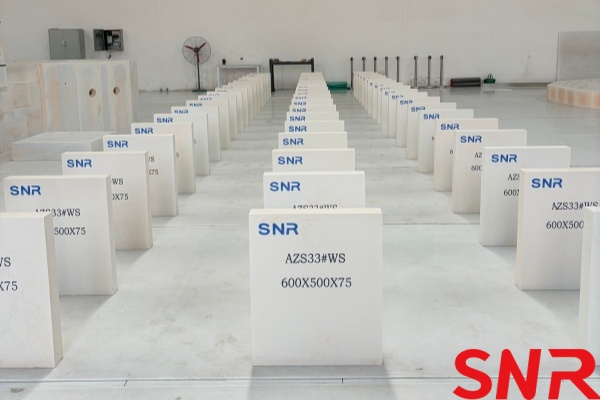
Research indicates that the high-temperature creep performance of fused cast AZS materials is closely related to their chemical composition and microstructure. Zirconia content is a key parameter affecting the high-temperature performance of fused cast AZS materials: a higher zirconia content helps enhance the material‘s creep resistance and corrosion resistance but simultaneously increases material cost and manufacturing difficulty. In industrial practice, three commonly used grades—fused cast AZS-33 (33% ZrO₂), fused cast AZS-36 (36% ZrO₂), and fused cast AZS-41 (41% ZrO₂)—seek different trade-offs between performance and cost. High-end products, such as fused cast AZS-41, offer superior corrosion resistance and a higher glassy phase exudation temperature, making them suitable for the most demanding service conditions.
From a quality evaluation perspective, a comprehensive assessment of fused cast AZS refractory material performance cannot rely solely on simple indicators such as zirconia content and density. Greater attention should be paid to the uniformity of the chemical composition and the behavioral characteristics of the glassy phase. The volume fraction of the glassy phase and its exudation onset temperature are critical parameters determining the actual service performance of the material. For high-quality fused cast AZS refractory materials, the exuded volume of the glassy phase should be controlled between 2% and 3%, and the exudation onset temperature should exceed 1400°C. To obtain high-quality fused cast AZS products with these characteristics, meticulous management is required across all process stages, including raw material purity control, melting process optimization, casting parameter adjustment, and heat treatment protocol development.
4.3 Glassy Phase Exudation and Defect Control
The glassy phase in fused cast AZS refractory materials is an important component of their microstructure, becoming softened or even fluid at actual service temperatures. The exudation of the glassy phase refers to the migration of this liquid glassy phase from within the material to its surface or its penetration into the adjacent glass melt. This phenomenon is a significant cause of glass product defects and premature failure of refractory materials.
The mechanism by which glassy phase exudation generates defects is as follows: the exuded glassy phase carries its contained impurities into the glass melt, forming visible defects such as stones, streaks, or bubbles, which severely impact the surface quality and optical performance of glass products. To control the negative effects of glassy phase exudation, measures need to be taken at both the material preparation and service maintenance levels. At the material preparation level, by optimizing formulation design, improving raw material purity, and enhancing melting process parameters, the overall volume fraction of the glassy phase can be minimized, and its exudation onset temperature can be increased. At the service maintenance level, the application location of fused cast AZS products should be rationally selected, avoiding the use of products with high glassy phase content in high-temperature, highly corrosive areas.
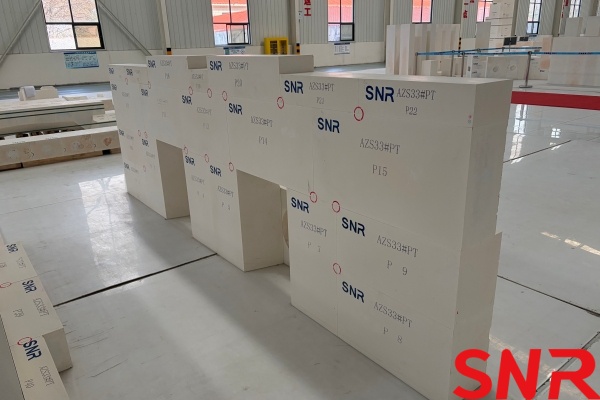
Improving overall performance through brick structure design is also an important technical direction. Research shows that cast AZS, compared to fused-cast AZS, exhibits a more uniform microstructure without shrinkage cavities, thus demonstrating better glass corrosion resistance, uniform thermal expansion rate, and thermal shock resistance, while also avoiding glass product defects caused by glassy phase exudation. This type of material can be widely applied to various furnace components, such as the tank bottom, breast walls, and regenerator checker bricks, providing a comprehensive refractory material solution for the melting furnace.
5. Composite Design of Low Thermal Conductivity Refractory Materials
5.1 Design Principles of Porous Insulating Refractory Materials
In the energy saving and consumption reduction of glass melting furnaces, the thermal insulation performance of refractory materials plays a key role. By adopting low thermal conductivity insulating refractories, heat loss from the furnace surface can be effectively reduced, thermal energy utilization efficiency improved, and fuel consumption and carbon emissions lowered. Porous insulating refractory materials are important product types developed based on this principle.
The core design goal of porous insulating refractory materials is to achieve a balance between low thermal conductivity and high thermomechanical performance. On one hand, the numerous micropores and pores distributed within the material effectively block heat transfer pathways, significantly reducing the material‘s thermal conductivity. On the other hand, the oxide crystals forming the material‘s skeleton provide sufficient high-temperature strength and chemical stability. This composite material design philosophy embodies the typical application of the functional composite concept in the field of refractories.
Analyzed from the perspective of heat transfer mechanisms, the thermal conductivity of porous materials depends on the combined effect of three components: solid conduction, gas conduction, and radiation conduction. When the porosity exceeds 30%, the dependence of thermal conductivity on gas pressure within the pores and temperature increases significantly. This characteristic implies that the insulating performance can be adjusted by controlling the material‘s porosity, pore size, and distribution. Furthermore, under high-temperature conditions, the contribution of radiative heat transfer to the overall thermal conductivity increases, providing a pathway to regulate insulating performance through material composition design.
5.2 Common Types of Low Thermal Conductivity Refractory Materials
Low thermal conductivity insulating refractory materials used in industrial practice include several types, each with its own technical characteristics and applicable scenarios. Calcium-hexaluminate (CA₆)-based insulating materials possess excellent high-temperature strength and slag corrosion resistance, making them suitable for locations with higher operating temperatures. Mullite-based insulating materials are characterized by a low coefficient of thermal expansion and good thermal shock resistance, suitable for locations subject to cyclic temperature changes. Calcium silicate insulating materials feature low density and extremely low thermal conductivity, but their maximum service temperature is relatively limited. Alumina-based porous ceramics combine a high use temperature with good insulating performance.
Lightweight insulating bricks are an important category of insulating refractory products. By adding foaming agents or using other methods during raw material processing, a uniformly distributed closed-pore structure is formed, significantly reducing density while maintaining adequate strength. The bulk density of these products can be adjusted in a series according to application requirements, with commercial products available ranging from 0.4 g/cm³ to over 1.0 g/cm³ . Closed-pore structures provide better insulation than open-pore structures because gas convection heat transfer is confined within the individual pores.
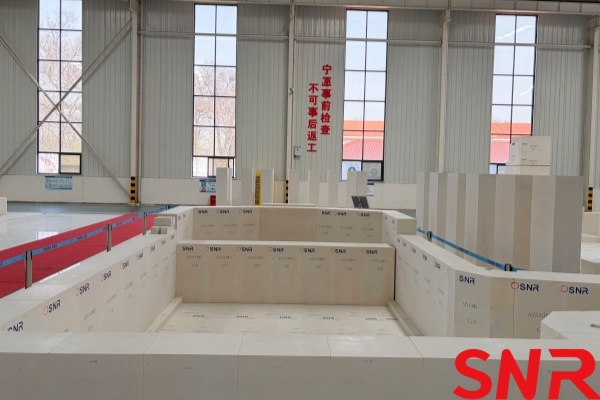
In glass furnace design, the application of insulating refractories typically employs a layered configuration strategy: the working layer in contact with the high-temperature glass melt or flame uses high-density, high-strength refractories to ensure corrosion resistance and thermal shock resistance; the backup layer uses low thermal conductivity insulating materials to reduce heat loss to the glass furnace shell. This configuration strategy maximizes energy savings while meeting process requirements. Research indicates that optimizing the glass furnace lining design can achieve a heat loss reduction of 3.91% to 4.16%.
5.3 Optimal Design of Composite Insulation Structures
The insulation design of modern glass melting furnaces has evolved from the application of single materials towards the optimization of composite structures. By rationally combining refractory materials with different performance characteristics, the overall thermal efficiency of the glass furnace structure can be maximized while ensuring structural safety and reliability. The design of composite insulation structures requires comprehensive consideration of multiple factors, including temperature distribution, thermal stress distribution, material compatibility, and construction feasibility.
Phase change energy storage is an emerging research direction in recent years. By incorporating phase change materials into refractories, heat can be absorbed or released during temperature fluctuations, helping to smooth out temperature variations and improve thermal efficiency. Although this technology is still in the research and demonstration stage, its application prospects in the field of high-temperature industrial glass furnaces are noteworthy. Another important trend is the development of intelligent insulation systems, which achieve dynamic optimization and adjustment of the insulation structure through online temperature monitoring and feedback control.
Analyzed from a life cycle perspective, the design of insulation structures also needs to consider the service life and maintenance cycles of the refractory materials. Good insulation design not only reduces daily operational energy consumption but should also help extend the overall life of the refractory lining, reduce the frequency of repairs and glass furnace downtime losses, thereby maximizing economic benefits over the entire life cycle.
Achieving carbon neutrality goals in the glass industry requires systematic technological innovation and collaborative efforts across multiple fields. As a key supporting material in glass production, the technological advancement of refractory materials will provide an important guarantee for realizing the industry‘s carbon neutrality targets. The development of this field presents both opportunities and challenges, requiring joint efforts from enterprises, research institutions, government departments, and other stakeholders to form a synergy in areas such as technology research and development, standard setting, policy support, and market cultivation, collectively promoting the high-quality and sustainable development of the glass industry.
 I am Zoe. If you have any purchasing plans for fused cast AZS refractory blocks, please contact me.
[email protected]/ WhatsApp:+86 15670323812


 +86-18203976036