

In modern float glass, photovoltaic glass, electronic glass, and domestic glass production, the yield of premium-grade glass products directly determines an enterprise‘s economic profitability and market competitiveness. Glass defects – especially blisters, stones, and streaks – are the three core obstacles affecting the optical performance, mechanical strength, and appearance quality of glass. Their formation mechanisms are complex and sources diverse, consistently posing a core challenge for technical personnel in the glass industry. For a long time, industry engineers and technicians have been continuously exploring defect traceability and have discovered a profound and direct correlation between the quality of fused cast AZS (Alumina-Zirconia-Silica) refractory blocks and the occurrence of glass defects. As the key lining material of the glass melting furnace, fused cast AZS blocks are in prolonged contact with high-temperature molten glass. Their material composition, microstructure, corrosion resistance, and exsolution behavior directly "inherit" the purity of the final glass product. This paper systematically discusses how the key quality indicators of fused cast AZS refractory materials induce blisters, stones, and streaks, and proposes an optimization strategy based on whole-process quality control of refractory materials, ultimately achieving a significant improvement in the yield of premium glass products.
I. Introduction: The Industrial Cost of Glass Defects and the Core Role of Refractory Materials
During glass manufacturing, the melting furnace is the heart where the glass batch is melted and formed, and its operational status directly determines the final quality of the glass product. Fused cast AZS refractory blocks, possessing excellent resistance to molten glass corrosion, high-temperature strength, and low contamination characteristics, have become the preferred material for key areas such as glass furnace sidewalls, bottom paving, charging ends, throat, and distributor channels. According to statistics, the vast majority of domestic and international float glass furnaces use fused cast AZS blocks as the primary refractory lining material, accounting for over 60% of the total refractory usage in the glass furnace. However, even trace-level imperfections in refractory materials, under continuous high-temperature operation (1500°C to 1650°C), can release impurities into the molten glass, form heterogeneous phases, and evolve into defects visible to the naked eye or detectable by instruments.
From an economic benefit perspective, downgraded grades or waste products caused by blisters and stones result in annual losses amounting to tens of millions or even hundreds of millions for glass enterprises. Taking a float glass production line with a daily melting capacity of 600 tons as an example, assuming a premium product yield of 90%, increasing it to 95% could reduce direct economic losses by approximately 15 million RMB per year, not including indirect costs from brand reputation damage and customer churn. In the photovoltaic glass industry, due to the stricter requirements of solar modules for glass transmittance and surface quality, stone defects can lead to the scrapping of an entire glass sheet, with a single piece loss reaching several hundred RMB. Furthermore, with the growing market demand for high-end products like electronic glass and automotive glass, downstream customers have increasingly low tolerance for quality defects. Some high-end customers even require that blisters larger than 0.1 mm be considered non-conforming.
Deeply understanding the intrinsic relationship between fused cast AZS block quality and glass defects is a crucial step from passive defect inspection towards active preventive control. Traditionally, companies often conduct reverse traceability after glass defects occur, a method that is inefficient and struggles to solve root causes. Implementing forward quality control from the refractory material source can fundamentally reduce the probability of defect occurrence, achieving twice the result with half the effort. This paper systematically elaborates on the microstructural characteristics of fused cast AZS block, quality control parameters, and their correlation mechanisms with glass defects, providing theoretical guidance and technical pathways for glass enterprises to improve premium product yield.
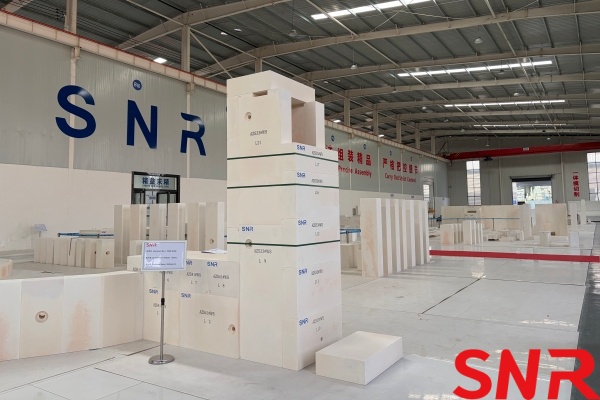
II. Microstructure and Key Quality Elements of fused cast AZS blocks
Fused cast AZS blocks are mainly composed of three phases: corundum (Al₂O₃), baddeleyite (ZrO₂), and glass phase (SiO₂-based). The proportion, distribution, and interaction of these three phases determine the overall performance of fused cast AZS blocks. Understanding the microstructure of fused cast AZS block is fundamental to analyzing their correlation with glass defects.
The corundum phase forms the skeleton of the AZS block, providing high-temperature mechanical strength and chemical stability. Corundum crystals have an extremely high melting point (2050°C) and excellent hot hardness, making them resistant to softening and deformation under high-temperature environments. However, the corundum phase undergoes interfacial reactions with alkaline oxides in the molten glass, forming low-melting-point compounds, which cause corundum crystals to detach from the block surface. Therefore, the grain size and distribution uniformity of the corundum phase directly affect the corrosion resistance of fused cast AZS block.
The baddeleyite phase is the most distinctive component of fused cast AZS block and the core symbol distinguishing them from other refractory materials. Baddeleyite crystals form a three-dimensional continuous network skeleton within the AZS block, much like steel reinforcement in reinforced concrete, significantly enhancing the block‘s structural strength and corrosion resistance. Baddeleyite possesses excellent chemical stability, hardly reacting with molten glass, and its presence effectively blocks the penetration of molten glass into the block interior. Research shows that the higher the degree of interlocking of baddeleyite crystals, the better the corrosion resistance of the AZS block and the lower the tendency to form stones. In high-quality fused cast AZS block, the baddeleyite phase content is typically between 35% and 42%, with uniform grain size distribution and no obvious enrichment or depletion zones.
The glass phase acts as the "binder" in fused cast AZS block, filling the spaces between corundum and baddeleyite crystals, firmly bonding the phases together. However, the glass phase is precisely the main channel through which fused cast AZS block release impurities into the molten glass. Under high temperatures, the glass phase softens and exudes, and alkaline oxides like sodium and potassium diffuse into the molten glass, altering the local chemical composition, thereby inducing streak defects. Simultaneously, gases within the glass phase can become sources of blisters. Therefore, the content, distribution, and exudation temperature of the glass phase are key indicators for evaluating fused cast AZS block quality.
An ideal fused cast AZS block microstructure should possess the following characteristics: high density, uniform distribution and moderate content of the glass phase (typically not exceeding 18%), extremely low apparent porosity (less than 1% for premium products), baddeleyite crystals forming a continuous network to enhance corrosion resistance, moderate and appropriately sized corundum and baddeleyite grains without abnormal growth, and no microcracks or inclusions inside the block.
Core parameters affecting fused cast AZS block quality include:
Bulk density is a fundamental indicator reflecting the densification degree of fused cast AZS block. Higher bulk density indicates fewer internal pores and a more compact structure. High-quality fused cast AZS-41# blocks should have a bulk density not less than 3.85 g/cm³. Values lower than this indicate the presence of numerous pores or internal defects. Bulk density is positively correlated with corrosion resistance; high-density bricks resist scouring and chemical attack from molten glass more effectively.
Apparent porosity is a direct indicator of the pore content inside fused cast AZS block. Lower apparent porosity means fewer potential sources of gas release. The apparent porosity of premium fused cast AZS block should be controlled below 1.0%, while ordinary products might reach 2% to 3%. It is noteworthy that apparent porosity not only affects blister defects but also reduces the mechanical strength of the block, accelerating the corrosion process.
Glass phase exudation temperature is a key parameter reflecting the high-temperature stability of fused cast AZS block. When the service temperature exceeds the softening temperature of the glass phase, the glass phase becomes less viscous and more fluid, accelerating its exudation into the molten glass. The glass phase exudation temperature of high-quality fused cast AZS block should be higher than 1400°C to ensure stability under typical furnace operating temperatures.
Zirconia exsolution tendency refers to the tendency of baddeleyite crystals to detach from the block surface under high temperature and chemical attack. Exsolved baddeleyite crystals entering the molten glass, due to their extremely high melting point and very low solubility, form difficult-to-eliminate stone defects. The degree of zirconia exsolution is closely related to the morphology and size of baddeleyite crystals, as well as the composition of the glass phase.
Impurity element content is an important indicator affecting the purity of fused cast AZS block. Main impurities include iron oxide (Fe₂O₃), titanium oxide (TiO₂), sodium oxide (Na₂O), and potassium oxide (K₂O). Iron and titanium oxides lower the refractoriness of the material and may introduce coloration defects; sodium and potassium oxides are strong fluxes, accelerating the exudation of the glass phase and the corrosion process. The total impurity content of high-quality fused cast AZS block should be controlled below 0.3%.
Internal microcracks are a potential defect that can occur during the production of fused cast AZS block. Causes for microcracks include: improper control of the electric fusion process leading to uneven cooling, unreasonable annealing schedules causing concentration of thermal stress, and volume effects from crystalline transformations due to fluctuations in raw material ratios. Microcracks not only reduce the mechanical strength of the block but can also become pathways for gas accumulation and release, inducing blister defects.
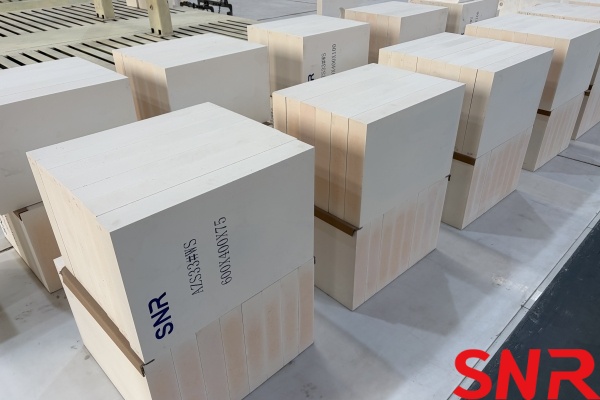
III. Direct Correlation Mechanisms of the Three Major Glass Defects with fused cast AZS blocks
Although glass defects have diverse sources, those related to fused cast AZS blocks exhibit specific patterns and characteristics. A deep understanding of these correlation mechanisms is a prerequisite for implementing precise quality control.
3.1 Blisters: From Refractory Material "Breathing" to Micro-bubble Clusters in Molten Glass
Blisters are among the most common and impactful defects in glass, with complex formation causes. From the perspective of fused cast AZS blocks, blister generation primarily involves the following three mechanisms.
The first type is pore-release blisters. If fused cast AZS block have high apparent porosity (greater than 1.5%) or contain closed internal pores, gases (mainly nitrogen, carbon dioxide, water vapor, and small amounts of hydrogen) expand upon heating and gradually escape into the molten glass, forming blisters with diameters of 0.1 to 2 mm. These blisters are particularly noticeable in the furnace sidewall area because sidewall bricks directly endure convection scouring from the molten glass, making gas released from pores more likely to enter the main flow of glass. Research data indicates that when the apparent porosity of fused cast AZS block decreases from 1.0% to 0.5%, the blister defect rate in the sidewall area can drop by about 60%. Pore-release blisters are characterized by a location highly consistent with the usage area of the fused cast AZS block and often show an increasing trend in the mid-to-late stage of furnace operation, as previously closed pores may be opened by deepening corrosion.
The second type is blisters caused by glass phase decomposition and oxidation-reduction reactions. The glass phase in fused cast AZS block contains components like sodium oxide and potassium oxide. When in contact with molten glass, sodium and potassium ions diffuse into the glass, while simultaneously, non-bridging oxygen in the glass phase undergoes redox reactions with multivalent elements (like iron, tin) in the molten glass, potentially leading to the continuous generation of tiny blisters. This type of blister is often smaller (mostly 0.1 to 0.5 mm in diameter) but numerous, appearing in clusters, severely affecting the optical homogeneity of the glass.
The third type is blistering induced by electric fusion process defects. If fused cast AZS block are not adequately degassed during production and retain large internal bubbles, the rupture and release of these bubbles during the later stages of glass furnace use can directly cause continuous bubble clusters in the glass ribbon. Such defects have obvious batch characteristics; fused cast AZS block from the same batch may exhibit a concentrated bubble outbreak after the same duration of use. Scanning electron microscopy (SEM) observation shows that high-quality fused cast AZS block should have no bubbles larger than 0.5 mm internally, while inferior products may contain millimeter-sized or even larger residual pores.
Research shows that high-quality fused cast AZS block, through optimized fusion-casting and annealing processes, can control apparent porosity below 0.5%, significantly reducing the probability of blister occurrence. Additionally, vacuum degassing treatment of the blocks before leaving the factory is also an effective means of eliminating internal gases. From a defect diagnosis perspective, if gas analysis of blisters shows mainly nitrogen, investigation should focus on the apparent porosity and residual pore issues of the fused cast AZS block; if carbon dioxide and sulfur dioxide content is high, it may point to glass phase decomposition problems.
3.2 Stones: Crystallized or Unmelted Particles from Refractory Material "Spalling"
Stones are crystalline materials or unmelted particles within the glass that differ from the glass matrix, representing one of the most harmful defect types. Stones not only destroy the optical homogeneity of glass but can also act as stress concentration points, reducing mechanical strength. From the perspective of fused cast AZS blocks, the formation mechanisms of stones mainly include the following categories.
Corrosion-induced spalling stones are the most significant type related to fused cast AZS block. When fused cast AZS block are severely corroded by molten glass, corundum and baddeleyite crystals on the block surface are scoured away. Upon entering the glass melt, due to limited dissolution rates, they cannot completely dissolve and eventually form stones during forming. The chemical composition of such stones is highly consistent with fused cast AZS block, mainly comprising zircon (zirconium silicate), corundum (alumina), and baddeleyite (zirconia), either singly or in combination. SEM-EDS analysis reveals significantly higher levels of zirconium, aluminum, and silicon compared to the surrounding glass matrix. Corrosion-induced spalling stones are often irregularly blocky or angular with sharp edges, clearly demarcated from the surrounding glass.
Phase transformation stones are related to the crystalline transformation of baddeleyite in fused cast AZS block. During the cooling process of AZS block production, zirconia may undergo a transformation from monoclinic to tetragonal, accompanied by a volume contraction of about 5% to 7%. If the annealing process is not properly controlled, residual tetragonal zirconia may undergo a reverse transformation during high-temperature use, leading to microcracks and particle detachment on the brick surface. These detached zirconia particles, due to their extremely high melting point and very low solubility, become typical baddeleyite stones.
Composite phase stones are associated with impurity elements in fused cast AZS block. If the block contains a significant amount of iron oxide or titanium oxide impurities, these elements can react with corundum and baddeleyite to form complex mineral phases like iron-aluminates and zirconium-titanates. These composite phases often have higher melting points and lower solubility, making them more prone to forming stable stone defects. Additionally, iron oxide itself has strong coloring ability, potentially leading to colored halos around the stone, severely affecting the glass‘s appearance quality.
The stone risk of low-quality fused cast AZS block is significantly higher than that of high-quality products. Their characteristics include: high glass phase content (exceeding 20%) leading to a loose structure and insufficient corrosion resistance at high temperatures; high apparent porosity allowing molten glass to easily penetrate the brick interior, exacerbating chemical attack; uneven distribution of baddeleyite crystals with obvious enrichment and depletion zones, leading to accelerated local corrosion. Quality statistics from a certain glass company show that when using ordinary fused cast AZS-33# blocks, the stone defect rate was approximately 2.5 times higher than when using high-quality fused cast AZS-41# blocks.
Controlling the corrosion resistance and structural uniformity of fused cast AZS block is the fundamental way to eliminate stones. From a stone diagnosis perspective, if the stone composition is mainly zirconia, focus should be on the crystalline phase stability and exsolution tendency of baddeleyite in the AZS block; if the stone contains significant alumina, it may point to spalling issues of the corundum phase; if enrichment of impurities like iron or titanium is detected, traceability should go back to the raw material purity and impurity control level of the AZS block.
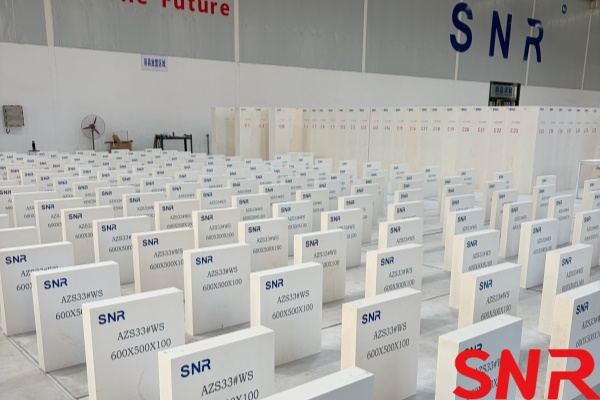
IV. Mapping Relationship Between Key Control Parameters of Fused Cast AZS Refractory Material Quality and Defects
To quantitatively assess the correlation between fused cast AZS block quality and glass defects, researchers and enterprises, through years of practice, have developed a multi-dimensional quality control indicator system. The following details the core parameters and their influence mechanisms on blister, stone, and streak defects.
Apparent porosity is the most direct parameter affecting blister defects. Lower apparent porosity means less internal gas storage space and fewer potential sources of gas release into the molten glass. The apparent porosity of high-quality fused cast AZS-41# blocks should be controlled below 1.0%, with superior products achieving 0.5% or even lower. When apparent porosity exceeds 1.5%, the risk of blister defects increases significantly; above 2.0%, severe blister problems can almost be anticipated. It is noteworthy that apparent porosity testing should involve multi-point sampling from different parts of the brick to rule out local anomalies.
Glass phase content and exudation temperature together determine the degree of influence of fused cast AZS block on streak defects. Lower glass phase content and higher exudation temperature mean a lower tendency for component release from the brick at high temperatures. The glass phase content of high-quality AZS-41# bricks should be controlled below 18%, with an exudation temperature higher than 1400°C. When the glass phase content exceeds 20% or the exudation temperature falls below 1350°C, the risk of streak defects increases significantly. The measurement of glass phase exudation temperature requires simulation of actual service conditions, bringing AZS block samples into contact with molten glass at high temperatures for a certain period, then measuring the total amount and composition of the exudate.
Bulk density is a fundamental indicator reflecting the overall quality and corrosion resistance of fused cast AZS block. A dense structure not only improves mechanical strength but also reduces pathways for molten glass penetration. The bulk density of high-quality fused cast AZS block should be no less than 3.85 g/cm³. Bricks with bulk density below 3.70 g/cm³ typically have obvious defects. Bulk density is positively correlated with corrosion resistance, but the relationship is not linear and requires comprehensive evaluation combined with microstructure.
Total impurities is an important parameter affecting stones and colored streaks. The main impurities in fused cast AZS block include iron oxide, titanium oxide, sodium oxide, and potassium oxide. These elements can not only directly participate in stone formation but also lower the chemical stability of the brick. The total impurity content of high-quality fused cast AZS block should be controlled below 0.3%, with iron oxide content below 0.1% and titanium oxide content below 0.05%. Control of impurity content requires whole-process management from raw material selection, production processes, to finished product inspection.
Corrosion resistance to molten glass is the core indicator comprehensively reflecting the service performance of fused cast AZS block. Dynamic corrosion tests simulate the actual service environment under laboratory conditions, measuring the corrosion rate of the brick under the action of high-temperature molten glass. The corrosion rate of high-quality fused cast AZS block in soda-lime glass at 1500°C should be controlled below 1.2 mm/day, with premium products achieving below 0.8 mm/day. When the corrosion rate exceeds 1.5 mm/day, the risk of stone defects increases significantly. Evaluation of corrosion resistance needs to combine observation of corrosion morphology and analysis of corrosion product composition.
Zirconia grain distribution and exsolution tendency are key factors affecting stone defects. Baddeleyite crystals should form a uniformly interlocking three-dimensional network structure without obvious enrichment zones, depletion zones, or abnormally grown grains. Evaluation of exsolution tendency requires observing the detachment of baddeleyite crystals after high-temperature corrosion testing; the surface of high-quality bricks should remain intact after corrosion without obvious signs of grain spalling.
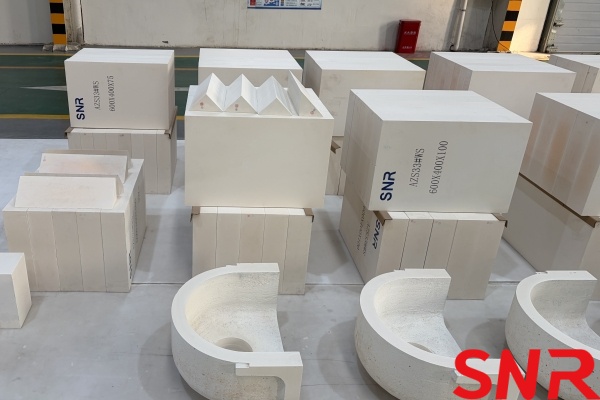
V. Systematic Solution to Improve Premium Product Yield by Controlling AZS Refractory Material Quality
Based on the above mechanism analysis, establishing a closed-loop quality control system from refractory material design, procurement, acceptance, installation, to operation and maintenance can significantly improve the yield of premium glass products. Referencing advanced industry levels, systematically implementing the following solutions can increase the premium product yield from 85% to over 95%.
5.1 Source Optimization – Selection and Standard Upgrade for High-Quality fused cast AZS block
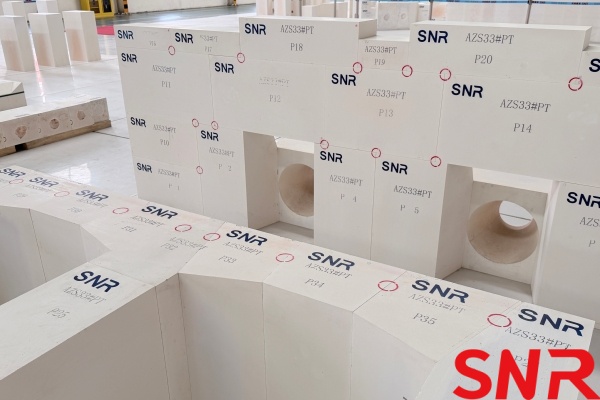
Enterprises should scientifically select fused cast AZS block grades based on furnace location and glass type. For high-corrosion areas like sidewalls and throat channels, fused cast AZS-41#blocks with a zirconia content of 41% or more are mandatory, requiring low glass phase content and high density. For relatively milder areas, such as bottom paving and charging end sidewalls, more cost-effective fused cast AZS-33# blocks can be chosen, but their quality must still meet the company‘s internal control standards.
The technical annex of the contract should specify the following key indicators: apparent porosity not greater than 1.0%, bulk density not less than 3.85 g/cm³, glass phase content not greater than 18%, total impurities not greater than 0.3%, corrosion rate in molten glass not greater than 1.2 mm/day.
By raising fused cast AZS block acceptance standards above national norms (e.g., JC/T 493-2015 "Fused Cast AZS Blocks for Glass Melting Furnaces") and implementing stricter sampling plans and testing items, a leading domestic glass group reduced its stone defect rate by about 40%. For example, a large glass enterprise added supplementary items to its fused cast AZS block procurement standards compared to the national standard, such as measuring gas release after high-temperature erosion tests, SEM microstructure evaluation, and consistency checks across different parts of the brick. Although procurement costs increased by about 15%, the comprehensive benefits from defect reduction exceeded the cost increase more than fivefold.
5.2 Precision Installation and Firing – Avoiding Secondary Construction Defects
Even with high-quality fused cast AZS block, improper installation can induce secondary defects like blisters and early spalling. Quality control during installation should focus on the following aspects.
First, a dry method or special AZS mortar must be used, controlling joint width to less than 0.5 mm. Excessively large joints easily form pathways for molten glass penetration and spaces for gas accumulation, becoming sources of blisters and stones. Special leveling tools should be used during installation to ensure surface flatness, with height differences between adjacent brick surfaces controlled within 0.3 mm.
Secondly, the design of expansion joints in the pool wall bricks must be scientifically reasonable. AZS blocks undergo crystalline phase transformation and thermal expansion during the heating process. If the expansion joints are insufficient, compressive stress may occur, leading to block cracking; if the expansion joints are too large, glass melt leakage may result. It is recommended to determine the reasonable size and distribution position of expansion joints based on the expansion coefficient of AZS blocks and the glass furnace heating curve through calculation.
Third, the baking heating curve must strictly match the crystalline phase transformation characteristics of AZS blocks. In particular, within the temperature range where monoclinic zirconia transforms into tetragonal zirconia (typically between 1100°C and 1200°C), the heating rate should be appropriately slowed down to avoid thermal stress cracks caused by the volume effect of the crystalline phase transformation. The recommended baking curve for a new glass furnace should include: from room temperature to 500°C, a heating rate not exceeding 10°C per hour; from 500°C to 1100°C, a heating rate not exceeding 15°C per hour; from 1100°C to 1300°C, a heating rate not exceeding 10°C per hour; from 1300°C to the operating temperature, a heating rate not exceeding 20°C per hour.
In a practical engineering case, a float glass company experienced microcracks in fused cast AZS block within the crystalline transformation temperature range due to an excessively fast sidewall firing rate (exceeding 30°C/hour). Three months after startup, a large number of zirconia stones appeared in the glass ribbon, with defect rates reaching over 8%, forcing the company to undertake an early cold repair. In-depth analysis revealed the root cause was improper firing curve design. After adjusting installation specifications and firing procedures, the stone defect rate in subsequent glass furnace campaigns stabilized below 0.5%.
5.3 Optimizing Molten Glass Flow and Cooling Processes to Reduce Refractory Load
Optimizing furnace process parameters can effectively reduce the load on fused cast AZS block, extending service life and decreasing defect occurrence. Combining numerical simulation and physical model testing allows optimization of furnace flow field design.
Optimizing the sidewall cooling system is an effective means of reducing the thermal load on fused cast AZS block. Reasonable distribution of cooling air can lower the operating temperature of sidewall blocks, reducing glass phase softening and exudation. Cooling air should be distributed uniformly to avoid local undercooling or overheating. For high-corrosion areas, forced water cooling or mist cooling can be used to further lower brick temperature. Practice at one company showed that after optimizing sidewall cooling air distribution, brick operating temperature dropped by about 50°C, and blister and streak defect rates decreased by 35% and 45%, respectively.
The use of bubbling or electric boosting technology can optimize the temperature distribution and flow patterns of the glass melt, stabilize the location of the hot spot, and reduce local overheating of the sidewall bricks. The optimal design of the bubbling position requires comprehensive consideration of the glass melt depth, flow field characteristics, and temperature distribution, with the optimal location determined through computational fluid dynamics simulations. Similarly, the arrangement of electric boosting electrodes requires precise design to ensure uniform heat distribution.
Appropriately adjusting the chemical composition and fining process of the molten glass can indirectly improve the performance of fused cast AZS block. For example, suitably increasing the amount of salt cake fining agent can improve the fining effect of the glass, reducing residual blisters; simultaneously, sodium sulfate in salt cake can, to some extent, reduce the corrosion rate of molten glass on fused cast AZS block. Furthermore, controlling the supersaturation of alumina and zirconia in the molten glass can allow stone-forming materials to precipitate earlier and be removed during fining, reducing stone defects in the final product.
VI. Benchmark Case: Technology Upgrade Results at a Photovoltaic Glass Company
A photovoltaic glass company operated a production line with a daily melting capacity of 650 tons. For a long time, it was plagued by blister and stone defects. Before the technology upgrade, using ordinary fused cast AZS-33# sidewall blocks, the average premium product yield was 87.6%. Blister defects accounted for 62% of downgrades, and stone defects for about 23%, together causing over 85% of the losses due to grade reduction.
During a cold repair at the end of a furnace campaign, the company implemented a comprehensive fused cast AZS block upgrade and quality control optimization plan. Specific measures included: replacing all sidewall bricks with high-density fused cast AZS-41# block and establish stricter procurement technical specifications; introducing online bubble detectors and stone analysis systems for full inspection and traceability of defects; optimizing sidewall cooling air processes to lower brick operating temperature; establishing a joint laboratory with the fused cast AZS block supplier for tracking studies on usage effects.
Defect statistics for the first year after startup showed significant results: blister defect rate decreased by 56%, stone defect rate decreased by 41%, and the comprehensive premium product yield increased from 87.6% to 94.3%, a gain of 6.7 percentage points. Based on product prices and output for that year, the direct annual economic benefit increased by approximately 21 million RMB, far exceeding the investment of just over 3 million RMB for the technology upgrade.
This case fully confirms the decisive role of refractory material quality on glass premium product yield. More importantly, by establishing an fused cast AZS block quality control system, the company developed a continuous improvement capability, laying the foundation for further quality enhancements in the future.
VII.Conclusions
There is a direct and multi-dimensional causal chain between glass defects such as bubbles, stones, and striae and the quality of AZS refractory blocks. The apparent porosity of the refractory blocks determines the potential risk of bubble defects, the glass phase exudation behavior primarily governs the tendency for striae formation, the corrosion resistance directly correlates with the frequency of stone occurrence, and the impurity content may simultaneously affect the severity of multiple defects. The elucidation of these mechanisms provides a scientific basis for controlling defects at their source.
Only by elevating AZS refractory materials to the level of "precision components" for quality control, and by establishing a full-process control strategy encompassing selection, inspection, installation, and operation & maintenance, can the root causes of defects be effectively blocked. For glass technologists and engineers, it is a key mindset shift towards achieving zero-defect manufacturing to pay attention to the correlation between the microstructure of refractories and macroscopic defects, and to move beyond the constraints of traditional quality management thinking. Only by adopting a systems engineering approach—integrating and optimizing refractory materials, furnace operations, and inspection controls in a coordinated manner—can a fundamental breakthrough in glass quality be achieved, contributing to the high-quality development of China‘s glass industry.
 I am Zoe. If you have any purchasing plans for fused cast AZS refractory blocks, please contact me.
[email protected]/ WhatsApp:+86 15670323812


 +86-18203976036