

Electric melting technology for glass occupies an increasingly important position in the production of specialty glass, high borosilicate glass, glass fibers, and container glass, owing to its high efficiency, cleanliness, and high thermal utilization. Unlike flame furnaces, electric melting furnaces use the molten glass itself as a resistive heating element, generating Joule heat by feeding electrical energy through electrodes, and employing "cold-top" operation to condense volatile components and retain heat. However, the extreme temperature gradients, strong convection, and localized superheating in the electrode region inside electric melting furnaces impose far more stringent requirements on refractories than conventional flame furnaces. This paper systematically elaborates on the working principles and structural characteristics of all-electric melting furnaces, focuses on analyzing the logic of refractory material selection and performance requirements for different furnace zones, and—in conjunction with the influence mechanism of furnace heating-up processes on refractory failure—discusses the core principles and optimization directions for refractory material selection in electric melting furnaces.
I. Introduction
II. Working Principles and Structural Characteristics of All-Electric Melting Furnaces
III. Service Environment and Failure Mechanisms of Refractories in Electric Melting Furnaces
IV. Selection Logic of Refractories for Different Zones of Electric Melting Furnaces
V. Influence of Furnace Heating-Up Process on Refractory Performance
VI. Core Principles and Optimization Directions for Refractory Material Selection
VII. Conclusion
I. Introduction
Glass melting is the most energy-intensive and most demanding process in the glass industry with respect to furnace materials. Traditional flame furnaces rely on radiative heat transfer from fuel combustion, transferring heat from the surface to the molten glass, with thermal efficiency typically only 20%–35%, and flue gas emissions creating a significant environmental burden. Electric melting technology fundamentally changes this pattern: electric current passes directly through the molten glass, utilizing its electrical resistance to generate Joule heat, with heat generated within the melt itself, allowing thermal efficiency to leap to over 80%.
Since the world‘s first all-electric melting furnace was commissioned in the United Kingdom in 1956, electric melting technology has undergone scaled development from micro-scale specialty glass melting to production-scale container glass at hundreds of tons per day. All-electric melting furnaces are particularly suitable for melting difficult-to-melt glasses, volatile glasses, and dark-colored glasses. Their "cold-top" operation can effectively condense volatile components and suppress batch carryover, demonstrating advantages in fluorine-containing, boron-containing, and high-alkali glass systems that flame furnaces cannot match.
However, the advantages of electric melting furnaces do not come without a price. The direct use of molten glass as a resistive heating element means that the temperature distribution inside the furnace differs fundamentally from that of a flame furnace: localized temperatures near the electrodes can reach as high as 1700–1800°C, while the cold-top surface temperature remains below 150°C. This severe temperature gradient, the forced convection of molten glass driven by the electrodes, and the continuous chemical corrosion of the melt on refractories together constitute the extreme complexity of the service environment for refractories in electric melting furnaces. In fact, refractory stones account for over 80% of glass defects, and the stone problems caused by improper refractory selection or furnace heating-up in electric melting furnaces are particularly prominent.
This paper aims to systematically review the technical characteristics of glass electric melting furnaces and the inherent logic of refractory material selection, providing technical reference for the design, operation, and maintenance of electric melting furnaces.
II. Working Principles and Structural Characteristics of All-Electric Melting Furnaces
2.1 Basic Principles of Electric Melting
Glass is a good dielectric at room temperature, but its resistivity drops sharply as temperature increases. When the molten glass contains alkali metal ions (Na⁺, K⁺, Li⁺), ion migration becomes the primary conduction mechanism. Above 1200°C, the resistivity of most molten glasses has dropped to a level sufficient for controlled current passage.
The basic concept of all-electric melting is precisely to exploit this characteristic: electrodes are inserted into molten glass preheated to a conductive state, AC voltage is applied, and when current flows through the molten glass, Joule heat is generated, making the molten glass itself a heating element. This process is physically identical to metallic resistance heating, with the only difference being that the "resistor" is molten silicate rather than solid metal.
There is a strong negative correlation between resistivity and temperature. The higher the molten glass temperature, the lower the resistivity, and the more current tends to flow through high-temperature regions. This characteristic endows the electric melting furnace with self-regulating capability: when the temperature in a certain region rises, its resistance decreases, current increases, and heat generation further increases; vice versa. However, this positive feedback mechanism also means that temperature control in electric melting furnaces must rely on precise power regulation and rational electrode layout; otherwise, localized overheating or "hot spot" runaway can easily occur.
2.2 Vertical Melting Structure of CTVM Furnaces
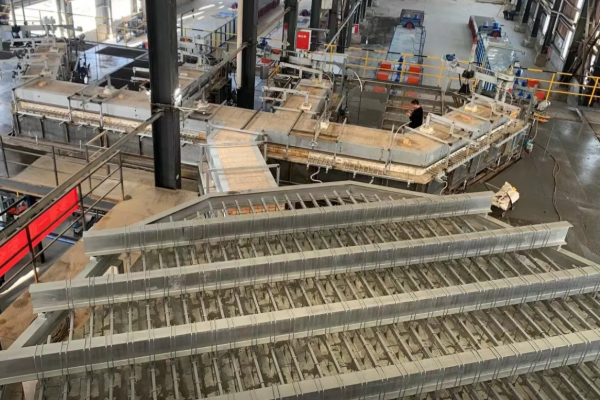
The cold-top vertical melting furnace is currently the most representative structural form among all-electric melting furnaces. Its core feature is that the melting process is completed vertically within a depth of approximately 1–3 meters, rather than advancing horizontally as in flame furnaces.
The top of the furnace is a continuous batch layer, called the "cold-top layer." This batch layer consists of unmelted batch and partially melted material, with a thickness typically maintained at 20–30 cm. The existence of the cold top serves multiple functions: first, thermal insulation—the low thermal conductivity of the batch layer significantly reduces heat loss from the melt surface; second, condensation—gases generated by chemical reactions of the glass batch are condensed by the relatively low-temperature batch layer during their ascent, re-solidified, and fall back into the melt, especially for volatile components such as fluorine and boron, where the capture effect of the cold top significantly reduces component loss and emissions; third, protection—the batch layer prevents the melt surface from being directly exposed to the furnace atmosphere, reducing alkali vapor corrosion of the upper structure.
Below the cold top is the melting zone, which is also the core region for electrode placement. Electrodes are typically inserted at an angle or horizontally, and the molten glass between electrodes heats up due to resistive heating. Diagonal electrode arrangement provides the longest inter-electrode distance and the highest resistance, allowing higher power to be applied. The temperature in the melting zone is typically between 1200–1500°C, with localized temperatures near the electrodes being even higher.
The lower part of the furnace is the refining zone. After the molten glass reaches this region, the temperature gradually decreases, flow becomes more stable, and fine bubbles gradually rise to the surface under the effects of reduced viscosity and surface tension. Since there is no physical partition between the melting zone and the refining zone, the flow state of the molten glass and the temperature gradient determine the refining efficiency. A throat is usually provided at the bottom of the refining zone, through which qualified molten glass flows out to subsequent processes.

2.3 Electrode System and Temperature Distribution
Electrodes are the "heart" of an all-electric melting furnace, and their material selection, arrangement, and cooling design directly determine the furnace‘s operating efficiency and the service life of refractories.
Molybdenum electrodes are the most widely used electrode material in glass electric melting, owing to their good electrical conductivity and resistance to molten glass corrosion at high temperatures. Molybdenum electrodes are typically inserted horizontally through the sidewall in rod or plate form, with the electrode root cooled by a water jacket to prevent excessive oxidation and corrosion. Tin oxide electrodes are used in certain specialty glass systems sensitive to molybdenum contamination.
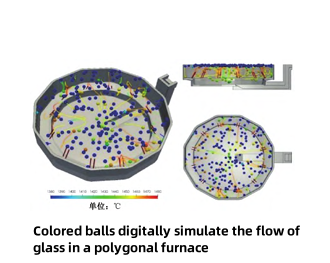
The temperature distribution near the electrodes is one of the most critical issues in electric melting furnace design. Since current flows into the molten glass in a concentrated manner at the electrode surface, the current density reaches its highest value near the electrodes, and the Joule heating effect causes the molten glass temperature around the electrodes to be significantly higher than the average furnace temperature. In the deep melting tank, the localized temperature near the electrodes can reach 1700–1800°C, while at the cold-top surface, the temperature may be only 100–150°C.
This enormous temperature gradient poses a dual challenge to refractories. The refractories in the electrode region must withstand sustained ultra-high temperatures and strong corrosion, while refractories in the lower furnace and throat areas face thermal stresses caused by temperature gradients. Inclined electrode installation is an effective measure to mitigate the effect of excessively high electrode tip temperatures on the sidewall, but it does not fundamentally eliminate the non-uniformity of temperature distribution.
III. Service Environment and Failure Mechanisms of Refractories in Electric Melting Furnaces
3.1 Chemical Corrosion
The corrosion of refractories by molten glass is the most important failure mechanism in electric melting furnaces. Alkaline oxides (Na₂O, K₂O) in molten glass react with components such as SiO₂ and Al₂O₃ in refractories, forming low-melting-point compounds and gradually dissolving the refractory surface.
The corrosion process of fused zirconia-corundum blocks (AZS) is typical. AZS blocks consist of three phases: baddeleyite (ZrO₂), corundum (Al₂O₃), and a silicate glass phase. The glass phase is the weakest link in the structure, with a relatively low softening temperature, and is the first to be dissolved upon contact with molten glass. The loss of the glass phase exposes the corundum phase, which subsequently gradually dissolves into the molten glass. Baddeleyite is the most corrosion-resistant component, but it still dissolves slowly at high temperatures.
It is worth noting that the "exudation" behavior of the glass phase in AZS blocks has a direct impact on glass quality. When the glass phase in refractories exudes into the molten glass, it may form localized silica-rich or sodium-rich regions, causing stone, cord, or bubble defects. Therefore, modern AZS block production tends to reduce glass phase content and increase the glass phase exudation temperature. The oxidation-based electric melting process reduces the carbon content of products to below 0.005%, and the glass phase exudation temperature can be increased to 1450°C.
3.2 Thermal Stress and Thermal Shock
Although temperature fluctuations in electric melting furnaces are not as severe as during flame furnace reversal, localized temperature changes in the electrode region, heating rates during furnace heating-up, and power adjustments during operation can all induce thermal stresses in refractories.
Zirconia-based refractories have relatively high thermal expansion coefficients and limited thermal shock resistance. When refractories experience rapid temperature changes, the temperature difference between the surface and interior generates stress, and if it exceeds the material‘s strength limit, cracks form. During the furnace heating-up stage, if the heating curve is improperly designed, zirconia-based refractories may "crack" due to excessive temperature gradients, forming through-thickness cracks that become channels for molten glass penetration and corrosion.
3.3 Special Problems in the Electrode Region
Refractories in the electrode region face the most extreme service conditions. In addition to the aforementioned high temperature and corrosion, the cooling effect of the electrode water jacket creates steep temperature gradients in the refractories, generating additional thermal stress. At the same time, "leakage current" through the refractories is also an issue that requires attention.
Both molten glass and refractories are conductive at high temperatures. When the resistivity of the refractory is lower than that of the molten glass, part of the current may flow from the electrodes through the refractory rather than through the molten glass, causing internal heating of the refractory and exacerbating localized overheating and corrosion. Therefore, in electric melting furnace design, especially for specialty glass electric melting furnaces, it is necessary to select refractories with resistivity higher than that of the molten glass, or to suppress leakage current through electrode arrangement and power control.
IV. Selection Logic of Refractories for Different Zones of Electric Melting Furnaces
4.1 Sidewall and Electrode Region: Dominance of Fused Zirconia-Corundum Blocks
The sidewall and electrode region in direct contact with molten glass are the most severely corroded parts of an electric melting furnace. Fused zirconia-corundum blocks (AZS) dominate this region due to their excellent resistance to molten glass corrosion.
AZS blocks are classified into three main grades based on ZrO₂ content: 33%, 36%, and 41%. The higher the ZrO₂ content, the stronger the corrosion resistance, but the higher the cost and thermal expansion coefficient. In electric melting furnaces, the most severely corroded areas such as the electrode region and throat typically use 41% ZrO₂ grade AZS blocks, i.e., ER1711 or the domestic grade AZS 41#. Practical experience with all-electric melting furnaces for high borosilicate glass shows that corrosion at the three-phase interface where the melting tank batch layer contacts the molten glass even exceeds that near the hot spot, and this area also requires 41# fused AZS blocks.
The selection of electrode blocks is particularly critical. The temperature around the electrodes can reach 1800°C, while simultaneously withstanding the cooling effect of the electrode water jacket, imposing extremely high requirements on high-temperature corrosion resistance and thermal stability. 41# fused AZS blocks are currently the most ideal material for this location. Throat cover blocks also face the risk of upward drilling corrosion by molten glass and also require 41# AZS blocks.
In areas with relatively mild corrosion, such as non-electrode regions of the melting tank and the tank bottom, 33# or 36# AZS blocks, or sintered AZS blocks, can be considered as economical alternatives. Sintered AZS blocks have slightly lower density and corrosion resistance than fused products, but their cost advantage still gives them application space in small and medium-sized furnaces.

4.2 Cold-Top Layer and Upper Structure: Applicability of Clay Blocks
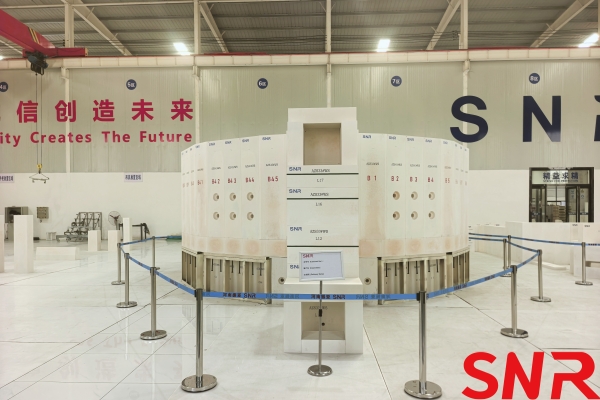
The unique feature of all-electric melting furnaces is that the space above the glass melt surface is at an extremely low temperature. During normal operation, the upper space temperature inside the furnace does not exceed 250°C, and only during furnace heating-up does it experience higher temperatures.
This temperature condition greatly relaxes the requirements for refractories in the upper structure. Ordinary clay blocks can meet the service requirements of the upper structure of cold-top electric melting furnaces, without the need for high-purity silica blocks or fused materials required in flame furnaces. Clay blocks have an Al₂O₃ content of 30%–45% and a refractoriness of approximately 1350–1500°C, which is sufficient for the upper space of cold-top electric melting furnaces.
However, the furnace heating-up stage is the "testing period" for upper structure refractories. During heating-up, the furnace interior temperature may reach over 1000°C, and the thermal shock stability and high-temperature strength of clay blocks must meet requirements. In addition, for large electric melting furnaces using the "one-step heating-up" method, the refractory selection for the upper structure may need to be re-evaluated.
4.3 Tank Bottom: Layered Design and Material Gradient
The tank bottom of electric melting furnaces typically employs a layered structure that balances performance and cost. The base layer uses large clay blocks for load-bearing and insulation, above which zircon or AZS ramming material is laid as a transition layer, and the uppermost part in contact with molten glass uses different grades of AZS blocks or high-zirconia materials depending on the degree of corrosion.
Zircon ramming material has unique value in tank bottom applications. Its low thermal expansion coefficient and flexible installation allow it to adapt to complex geometric shapes for tank bottom forming. In high-temperature areas of the melting zone, zircon ramming material can serve as a buffer between AZS blocks and the base layer, mitigating thermal stress mismatch.
4.4 Throat and Refining Zone: Application of 41# AZS and High-Zirconia Materials
The throat is the channel through which molten glass flows out of the melting tank. The flow velocity of molten glass here is relatively high, and the scouring and corrosion effects on refractories are significant. At the same time, although the temperature at the throat is lower than the hot spot of the melting zone, the "upward drilling" phenomenon of molten glass—i.e., molten glass penetrating upward along refractory block joints—is the main failure mode. Therefore, throat cover plates and sidewalls typically use 41# fused AZS blocks to maximize resistance to corrosion and drilling.
In specialty glass electric melting furnaces, the throat and refining zone may face requirements more sensitive to glass quality. High-zirconia cast blocks (ZrO₂ content 85%–95%) have become high-end choices for these locations due to their extremely low glass phase exudation and excellent corrosion resistance. High-zirconia blocks also have relatively high resistivity, making them suitable for electrode block applications where leakage current suppression is required.
4.5 Special Considerations for Refractories in Specialty Glass Electric Melting Furnaces
Different glass systems have significantly different requirements for refractories. High borosilicate glass contains large amounts of B₂O₃ and SiO₂, has a high melting temperature (above 1600°C), and high molten glass viscosity, with corrosion of refractories dominated by physical scouring and chemical dissolution. The refractory life of all-electric melting high borosilicate furnaces is typically shorter than that of flame furnaces, and 41# fused AZS blocks are the first choice for electrode zones and throats.
The volatile components of fluorine-containing and lead-containing glasses cause more complex corrosion of refractories. Fluorides react with SiO₂ in refractories to form SiF₄ gas, causing structural damage to the material. PbO in lead glass has a strong dissolving ability for the corundum phase. For such glasses, the chemical inertness advantage of high-zirconia cast blocks is more prominent.
Glass fiber furnaces are extremely sensitive to refractory contamination. Refractory stones introduced into fiber glass significantly reduce fiber strength. The sidewall and neck of E-glass fiber furnaces can use isostatically pressed dense chromium oxide blocks, with a service life of 6–7 years.
V. Influence of Furnace Heating-Up Process on Refractory Performance
5.1 Importance of Furnace Heating-Up
Furnace heating-up is the critical transition process of an electric melting furnace from cold to hot state. During heating-up, refractories undergo temperature rise from room temperature to 1200–1500°C, with complex physical and chemical changes occurring internally: moisture removal, binder sintering, crystalline phase transformation, thermal expansion, etc. Improperly designed heating curves may cause refractories to crack and spall, laying hidden dangers for subsequent operation.
As mentioned earlier, refractory stones account for over 80% of glass defects, and a considerable portion of these is directly related to the furnace heating-up process. The case of a soda-lime glass liquor bottle electric melting furnace is typical: the furnace developed stone defects approximately 10 days after completing heating-up and entering normal production. Scanning electron microscopy analysis confirmed that the stone composition was zirconia-based refractory material, originating from spalling of AZS blocks in the melting tank.
5.2 Limitations of Silicon Carbide Rod Radiant Heating
In this case, the furnace used silicon carbide rod radiant heating for heating-up. The silicon carbide rods were arranged in the upper part of the melting tank, at a considerable distance from the tank bottom. As heating-up progressed, the measured temperature at the lower furnace temperature measurement point was 350°C lower than that at the upper part, indicating that the zirconia-based refractories at the tank bottom and throat area failed to reach the temperature required by the heating curve.
Heating-up preheating lasted 193 hours, but at 184 hours, the lower temperature measurement point was still far below the set value. When cullet was added, the glass melt level rose to near the temperature measurement point, and electrodes began to be energized. At this time, the temperature of the molten glass near the electrodes rose sharply, causing the already "under-heated" zirconia-based refractories to withstand large temperature differential fluctuations. Severe temperature changes caused surface crazing of the zirconia-based material, and in severe cases, cracking.
5.3 Optimization Directions for Furnace Heating-Up Process
For electric melting furnaces with melting tank depths exceeding 2000 mm, the silicon carbide rod radiant heating method has inherent limitations: radiant heat cannot effectively reach the deep parts of the furnace. Solutions include: extending the heating-up time to accommodate the temperature rise requirements of deep materials; using auxiliary heating means (such as bottom electrode preheating); or considering the match between tank depth and heating-up method at the design stage.
"One-step heating-up" is the development direction of heating-up technology for large electric melting furnaces. This method precisely controls electrode power and glass melt level rise rate during the heating-up process, synchronously establishing temperature gradients and avoiding the temperature discontinuity caused by the traditional "heat up first, then add batch" approach.
VI. Core Principles and Optimization Directions for Refractory Material Selection
6.1 Zoned Material Selection and Performance Gradient
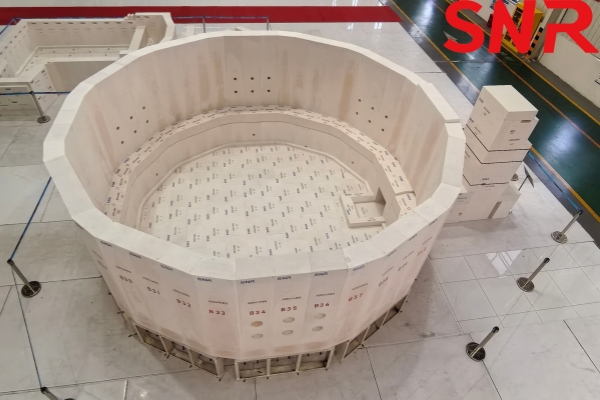
The corrosion conditions and temperature environments of different zones in electric melting furnaces vary greatly, and zoned material selection is the basic principle for balancing performance and cost. The electrode zone and throat, as the most severely corroded areas, should use 41# fused cast AZS blocks or high-zirconia cast blocks; non-electrode areas of the melting tank can use 33# or 36# AZS blocks; the tank bottom can use AZS blocks or sintered AZS blocks combined with ramming material depending on the degree of corrosion; the upper structure can significantly reduce material grade under cold-top conditions, using clay blocks.
The core of this "performance gradient" design concept is to use the highest quality materials where they are most needed, avoiding cost waste from "over-design" and premature failure from "under-design."
6.2 Balance Between Corrosion Resistance and Thermal Shock Resistance
Zirconia-based refractories have an inherent trade-off between corrosion resistance and thermal shock resistance. Higher ZrO₂ content improves resistance to molten glass corrosion, but the high thermal expansion coefficient of ZrO₂ makes the material more sensitive to temperature changes. In the electrode region and during furnace heating-up, thermal shock damage is often the precursor to material failure.
Optimization directions include: reducing carbon content and glass phase content of AZS blocks through oxidation-based melting processes, increasing glass phase exudation temperature; microstructural regulation of high-zirconia blocks, utilizing the microcrack toughening mechanism of ZrO₂ grains to absorb thermal stress; strictly controlling heating rates during furnace heating-up to avoid excessive instantaneous temperature gradients in refractories.
6.3 Resistivity Matching and Leakage Current Suppression
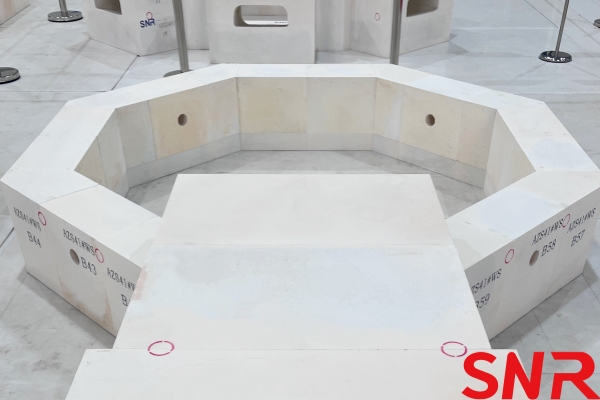
For all-electric melting furnaces, especially specialty glass electric melting furnaces, the resistivity of refractories is a parameter that requires special consideration. When the resistivity of the refractory at high temperature is lower than that of the molten glass, current may preferentially flow through the refractory, causing internal heating and accelerated corrosion of the material. High-zirconia cast blocks, due to their high resistivity characteristics, have unique advantages in electrode block and specialty glass electric melting furnace applications.
By adjusting the alkali metal content and K₂O/Na₂O ratio in refractories, their high-temperature resistivity can be regulated. Reducing alkali content and increasing the K₂O ratio can increase resistivity. This principle provides a direction for the development of refractories specifically for electric melting furnaces.
6.4 Glass Quality-First Material Selection Logic
Among the multiple objectives of refractory material selection, glass quality should be placed first, followed by furnace life, and finally initial cost. Corrosion and spalling of refractories directly produce stone, bubble, and cord defects, and their impact on product quality often far exceeds the procurement cost of the material itself. For high-end applications such as optical glass, electronic glass, and pharmaceutical glass, the low exudation characteristics of refractories may even be more critical than corrosion resistance.
High-zirconia cast blocks are precisely the product of this logic: although far more expensive than conventional AZS blocks, their extremely low glass phase exudation and excellent anti-contamination performance make them the inevitable choice for high-quality specialty glass melting furnaces.
VII. Conclusion
Glass electric melting technology, with its high efficiency and clean characteristics, is expanding from the specialty glass field to a broader range of glass varieties. The cold-top operation, vertical melting structure, and flexible electrode arrangement of all-electric melting furnaces provide process advantages that flame furnaces find difficult to achieve. However, the special operating conditions of electric melting furnaces also impose more refined requirements on refractories.
From fused zirconia-corundum blocks to high-zirconia cast blocks, from sidewall to upper structure, from electrode zone to throat, refractory material selection requires comprehensive consideration of multiple factors including corrosion conditions, temperature distribution, thermal stress state, and resistivity matching. The furnace heating-up process, as the starting point of the furnace life cycle, has an influence on the subsequent service performance of refractories that cannot be ignored.
In the future, as electric melting furnaces develop toward larger scale and higher output, and as quality requirements for specialty glass continue to rise, performance optimization and precise selection of refractories will increasingly become core elements of competitiveness in electric melting technology. The in-depth practice of concepts such as zoned material selection, performance gradient design, and resistivity regulation will provide solid support for the long-life, high-efficiency, and high-quality operation of electric melting furnaces.
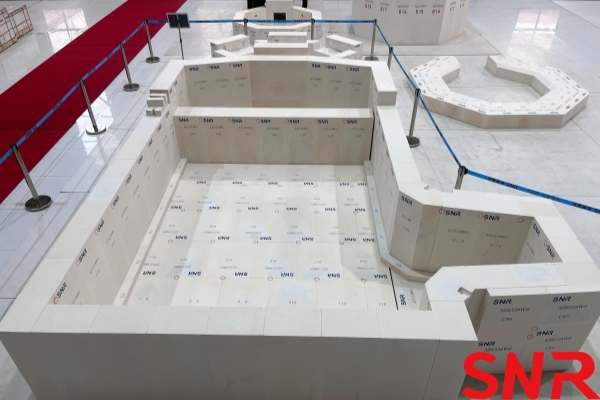
Henan SNR Refractory Co., Ltd. has been specializing in the production of fused cast AZS blocks for more than 25 years. We use high-quality raw materials and advanced fusion and casting technology and equipment to provide customers with high-quality products. From raw material procurement to finished product delivery, every step is strictly quality inspected to ensure that every indicator meets the standards, so you can use it with confidence.
Should you have any inquiries or specific requirements, our team is ready to provide professional support and tailored solutions.
 Contact Information:
Web: www.snr-azs.com
Email: [email protected]


 +86-18203976036
