

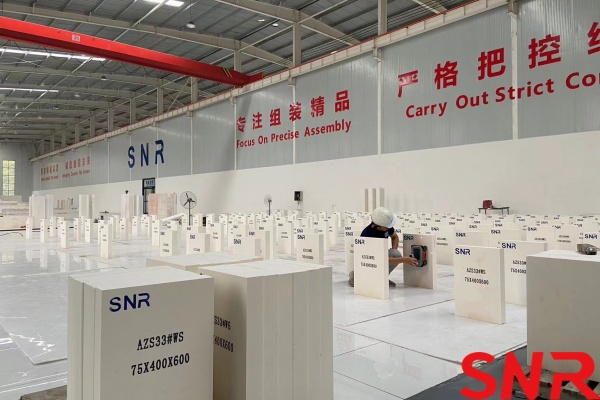
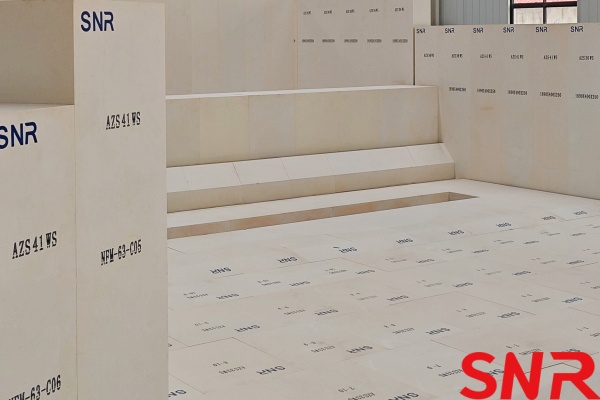
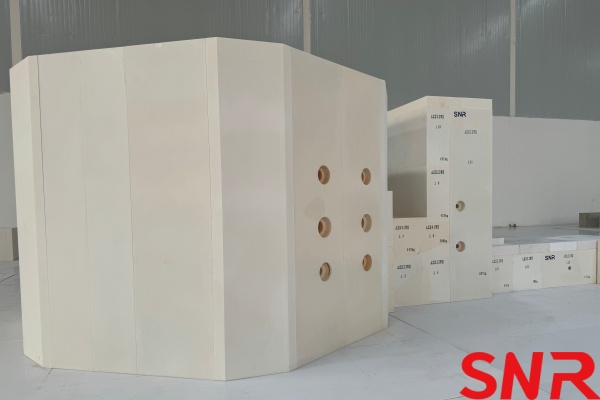
AZS (fused cast alumina-zirconia-silica) refractory blocks, as the core material in critical parts of glass furnaces, experience damage evolution during the heating (glass furnace baking) phase that directly determines the structural integrity and service life of the glass furnace. As the core thermal equipment in glass production, the continuous and stable operation of a glass furnace is directly linked to the enterprise‘s production efficiency, product quality, and economic benefits. Fused cast AZS refractory blocks, owing to their exceptional high-temperature strength, resistance to glass melt corrosion, and thermal stability, are widely used in critical glass furnace areas such as sidewalls, electrode blocks, throats, and doghouses. These areas are subjected to prolonged exposure to high temperatures ranging from 1400 to 1600°C and endure multiple effects, including glass melt erosion, temperature fluctuations, and structural constraints, making them the most vulnerable zones in the glass furnace. Glass furnace heating, as a critical step before glass furnace commissioning, is fundamentally a process of achieving dehydration, sintering, phase transformation, and stress release of refractory blocks through controlled temperature ramping. The rationality of this process directly determines the initial damage to fused cast AZS blocks, which often propagates during long-term production, eventually leading to cracking, spalling, or even failure, thereby forcing premature glass furnace repairs.
Based on the thermal-mechanical-phase transformation multi-field coupling theory, extensive industrial measurement data, and finite element simulation results, this paper systematically analyzes the damage mechanisms of fused cast AZS blocks during the heating process. These include the kinetics of thermal stress accumulation and crack initiation driven by temperature gradients, the volumetric change effects caused by zirconia phase transformation and its associated delayed damage, the stress concentration patterns induced by geometric features such as electrode holes, and the "cold core effect" and contradictory thermal shocks arising from cooling systems. Drawing on engineering practice cases from world-leading glass enterprises, the paper elaborates on the optimization boundaries of heating process parameters (such as peak heating temperature, heating rate, and expansion control accuracy) and their impact on the long-term safe operation of the furnace. Additionally, the application prospects of intelligent heating control technologies in the context of Industry 4.0 are explored. The aim is to provide glass engineering professionals with a comprehensive theoretical foundation, operational guidelines, and optimization strategies to help extend glass furnace campaign life from the traditional 3–4 years to over 8–10 years, reduce production costs, and promote green and low-carbon development in the industry.
1. Introduction
A glass furnace is a continuous high-temperature thermal equipment, and its operational cycle (cold repair interval) is typically determined by the degree of damage to the refractory materials. The damage to refractories is a complex physicochemical process, involving the synergistic effects of high-temperature oxidation, glass melt corrosion, thermal shock, stress accumulation, and other factors. During glass production, the glass furnace must maintain stable high-temperature operation for extended periods. Once refractory blocks in critical areas are damaged, it not only affects glass product quality (e.g., causing bubbles, stones, cords) but can also lead to glass furnace shutdown for repairs, resulting in significant economic losses. According to statistics, the direct economic loss in China‘s glass industry due to premature glass furnace cold repairs exceeds ten billion yuan annually, and over 60% of these premature cold repairs are closely related to initial damage formed during the glass furnace baking stage.
In critical glass furnace areas such as the sidewall, electrode blocks, and throat, the materials are subjected to long-term scour and corrosion by high-temperature glass melt, as well as frequent temperature fluctuations, imposing extremely high demands on refractory performance. AZS (Alumina-Zirconia-Silica) fused cast blocks are among the most excellent high-temperature refractories available. Manufactured through a fusion-casting process, they develop a dense crystalline structure, combining the high strength and corrosion resistance of the corundum phase with the excellent thermal stability of the zirconia phase, making them an irreplaceable material choice for such critical parts. Compared to traditional clay blocks and high-alumina bricks, fused cast AZS blocks exhibit 3-5 times better resistance to glass melt corrosion and over twice the high-temperature mechanical strength, effectively withstanding structural deformation and material corrosion in high-temperature environments, providing a fundamental basis for prolonged glass furnace service life.
However, in practical engineering applications, the actual damage to many glass furnaces does not originate during normal production but stems from microscopic damage formed during the initial heating (glass furnace baking) phase. During baking, fused cast AZS blocks undergo drastic temperature changes from room temperature to over 1450°C, accompanied by a series of physicochemical processes such as moisture expulsion, phase transformations, volume expansion, and contraction. During this process,superposition of multiple stresses are generated within the block, including thermal stress, transformation stress, and structural constraint stress. When the stress reaches the material‘s fracture strength, micro-cracks initiate. These initial micro-cracks gradually propagate during subsequent production under the effects of glass melt scour, temperature fluctuations, and stress cycling, evolving from micro-cracks into macro-cracks. This ultimately leads to block cracking, spalling, penetration, and even major safety accidents like glass furnace leakage or collapse.
Currently, the baking process in most Chinese glass enterprises still relies on the empirical control of operators, lacking scientific theoretical guidance and precise parameter regulation. This results in relatively severe initial damage to fused cast AZS blocks during baking, with an average glass furnace life of only 4-6 years, far behind the international advanced level (8-12 years). With the transformation and upgrading of the glass industry, the demand for extended glass furnace life, higher efficiency, and lower carbon emissions is becoming increasingly urgent. Deeply understanding the impact mechanism of the heating process on AZS blocks, revealing damage evolution laws, and formulating scientifically sound baking processes and full-cycle control strategies have become key technical issues urgently needing resolution in the current glass industry.
2. Overview of Fused Cast AZS Block Material Properties and Heating Conditions
2.1 Phase Composition and Thermophysical Properties of AZS Block
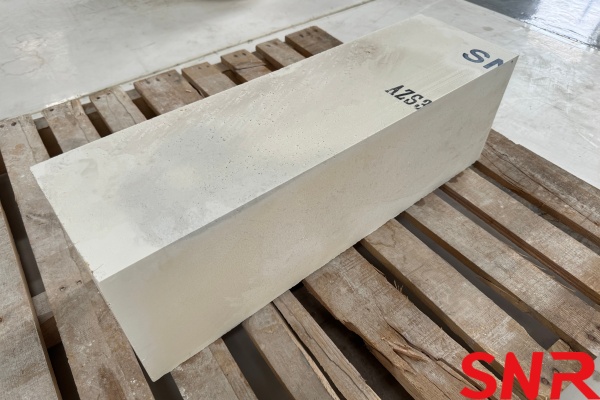
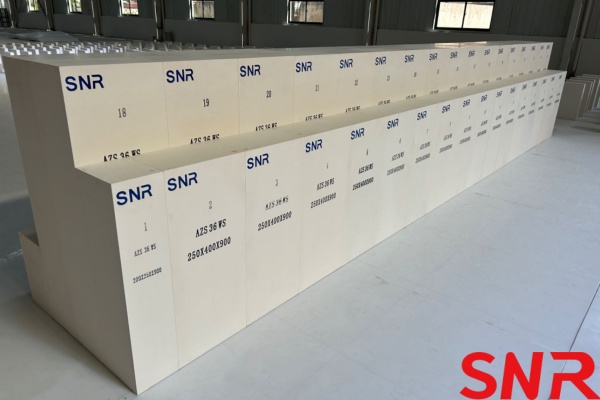
AZS blocks are typically manufactured through a fusion-casting process, which mainly includes raw material batching, melting, casting, annealing, and finishing. The raw material ratio and melting temperature directly determine the phase composition and properties of the AZS block. The typical chemical composition range for AZS blocks is: Al₂O₃ 48-52%, ZrO₂ 32-41%, SiO₂ 10-16%, with small amounts of impurities like CaO, Fe2O3,TiO2. Al₂O₃, ZrO₂, and SiO₂ are the core components. Their proportions significantly affect the phase composition and properties. For example, higher ZrO₂ content enhances corrosion resistance and thermal stability but increases brittleness; higher Al₂O₃ content increases high-temperature strength but may reduce thermal shock resistance; SiO₂ primarily acts as a flux, lowering the melting temperature and improving sintering performance, but excessive SiO₂ forms too much glass phase, reducing the high-temperature softening point and corrosion resistance.
The phase composition of AZS blocks mainly includes corundum phase (α-Al₂O₃), baddeleyite/zirconia phase (ZrO₂), and glass phase. These three phases interweave to form a dense composite structure, collectively determining the comprehensive properties of the AZS block:
Corundum phase (α-Al₂O₃): As the main crystalline phase in AZS blocks, accounting for 45-55% of the total phase volume, it forms the skeletal structure of the block. The corundum phase has an extremely high melting point (2050°C), excellent high-temperature strength, hardness, and resistance to glass melt corrosion. It effectively withstands structural deformation and glass melt scouring in high-temperature environments and is the core component for bearing high-temperature loads. The crystal structure of corundum is hexagonal close-packed with strong interatomic bonds, and its high-temperature modulus of rupture can exceed 100 MPa, meeting the strength requirements for critical glass furnace areas.
Baddeleyite/Zirconia phase (ZrO₂): Present as a solid solution in AZS blocks, accounting for 30-40% of the total phase volume, it is a key component affecting the volume stability and thermal shock performance of AZS blocks. ZrO₂ undergoes crystalline phase transformations at different temperatures, accompanied by significant volume changes, directly impacting the structural integrity of AZS blocks during heating. In the AZS system, due to the presence of stabilizers like Y₂O₃ and CaO and solid solution effects, the phase transformation temperature range of ZrO₂ shifts, effectively mitigating the hazards of volume mutation associated with phase changes, while enhancing the block‘s thermal stability.
Glass phase: Fills the spaces between corundum and zirconia grains, accounting for 10-15% of the total phase volume, mainly composed of SiO₂ and minor impurities like Na₂O and K₂O. The glass phase has a certain fluidity at high temperatures, playing a role in sintering and stress buffering. It fills gaps between grains, making the block structure denser. During temperature changes, plastic deformation of the glass phase can absorb some stress, alleviating stress concentration. However, the glass phase has poor high-temperature stability; above 1200°C, it gradually softens, reducing the block‘s high-temperature strength and making it susceptible to corrosion by glass melt, leading to surface spalling.
The thermophysical properties of AZS blocks are key factors determining thermal stress evolution and damage levels during heating. Typical thermophysical parameters (average values from room temperature to 1000°C) are as follows:
♦ Thermal expansion coefficient: 7.8 × 10⁻⁶ / K. This value directly determines the volume expansion of the brick during temperature changes. AZS blocks have a relatively low thermal expansion coefficient, indicating relatively gradual volume changes during heating, which helps reduce thermal stress generation. However, due to the low thermal conductivity of AZS blocks, uneven temperature distribution can still generate significant thermal stress.
♦ Thermal conductivity: 2.5 W/(m·K) at 1000°C. AZS blocks have low thermal conductivity, classifying them as low thermal conductivity refractories. This means that during heating, heat transfer from the hot face to the cold face is slow, easily forming large temperature gradients, thereby generating thermal stress. Conversely, low thermal conductivity helps reduce heat loss from the glass furnace interior, improving thermal efficiency.
♦ Elastic modulus: 100-120 GPa. The elastic modulus reflects the material‘s resistance to elastic deformation. AZS blocks have a high elastic modulus, indicating small elastic deformation under load and strong rigidity. However, this also implies poor resistance to plastic deformation; when stress exceeds the material‘s yield strength, it is prone to brittle fracture.
♦ Modulus of Rupture (Flexural strength): 80-120 MPa at room temperature; the Modulus of Rupture (MOR) at high temperature (1000°C) is approximately 100 MPa, showing a slight decrease. The modulus of rupture is an important indicator of a block‘s resistance to bending failure. The stability of its high-temperature flexural strength directly determines the structural integrity of the block in high-temperature environments.
Additionally, properties like density and porosity also influence the block‘s performance during heating. Typically, AZS blocks have a density of 3.6-3.8 g/cm³ and porosity below 5%. This dense structure effectively resists the penetration and corrosion of glass melt, reduces residual moisture, and thus minimizes damage from steam pressure cracking during heating.
2.2 Characteristics of the Heating Curve During the glass furnace Baking Stage
Baking a glass furnace is a slow heating process lasting 7-15 days. Its core purpose is to progressively expel moisture remaining from the refractory installation, achieve uniform sintering and phase transformation of the blocks, and release internal stresses, avoiding block cracking due to excessively rapid temperature changes. The heating curve for the baking process is formulated based on the thermophysical properties, phase transformation regular of AZS blocks, and glass furnace structure characteristics. A typical baking curve is divided into three stages, each with distinct heating rates, temperature ranges, and core tasks, as detailed below:
Low-temperature dehydration stage (Room temperature - 200°C): The core task of this stage is to eliminate moisture remaining in AZS blocks and other refractories after installation, including free water and bound water. During installation, AZS blocks absorb some moisture due to the use of mortars and environmental humidity. If this moisture evaporates rapidly during heating, it generates enormous vapor pressure inside the block. When this pressure exceeds the block‘s strength limit, it can cause micro-cracks or even bursting. Therefore, the heating rate in this stage is extremely slow, typically controlled at 2-5°C/h. Good ventilation inside the glass furnace must be maintained to promptly expel evaporated moisture. Additionally, this stage requires gradually preheating the glass furnace steel structure to avoid excessive thermal stress caused by large temperature differences between the steel and refractories, which could lead to structural deformation.
Medium-temperature phase transformation stage (200°C - 900°C): The core tasks of this stage are to complete partial lattice adjustments and quartz phase transformations within the AZS blocks and achieve initial sintering of the block body. In the 200-900°C range, SiO₂ in AZS blocks undergoes crystalline transformations (e.g., quartz → tridymite → cristobalite), accompanied by certain volume changes. Simultaneously, the glass phase within the block begins to soften, promoting sintering between grains and making the block structure denser. The heating rate in this stage can be gradually increased, typically controlled at 5-10°C/h. As the temperature rises, the block‘s strength and density progressively improve, but certain thermal and transformation stresses also develop. These need gradual release through slow heating. Furthermore, this stage requires close monitoring of the temperature distribution inside the glass furnace to ensure uniformity across all areas, preventing stress concentration caused by localized overheating or underheating.
High-temperature sintering and stabilization stage (900°C - 1450°C): This stage carries the highest risk and requires the most stringent control during the entire baking process. The core tasks are to complete the crystalline phase transformation of zirconia within the AZS blocks, achieve final sintering of the bricks, and simultaneously raise the glass furnace temperature to the initial level required for production. In the 900-1450°C range, ZrO₂ in AZS blocks undergoes a drastic crystalline transformation (monoclinic → tetragonal), accompanied by significant volume changes. Meanwhile, the glass phase within the block softens fully, the bonding between grains becomes tighter, and the block‘s strength, density, and corrosion resistance reach optimal levels. However, this stage also exhibits the most pronounced superimposed effect of thermal stress, transformation stress, and structural constraint stress. Improper control of the heating rate or uneven temperature distribution can lead to severe crack damage in the blocks. Therefore, the heating rate in this stage requires strict control. It is typically kept ≤15°C/h within the 900-1150°C range (the core zirconia transformation zone), and can be appropriately increased to 10-15°C/h from 1150°C to 1450°C. The "soaking at temperature steps" method is crucial, involving holds at key temperatures (e.g., 1050°C, 1150°C) to ensure uniform phase transformation and complete stress relaxation.
It is precisely during this complex heating process that AZS blocks endure the superposition of thermal stress, transformation stress, and structural constraint stress. The generation, evolution, and superposition of these stresses directly determine the extent of initial damage to the AZS blocks, thereby influencing the long-term service life of the glass furnace. Therefore, in-depth analysis of the generation mechanisms and evolution patterns of each stress type is fundamental to formulating a scientifically sound baking process.
3. Thermal Stress Accumulation and Crack Initiation Dynamics
3.1 Formation Mechanism of Stress Field Driven by Temperature Gradient
Thermal stress is one of the primary stresses generated in AZS blocks during heating. Its root cause is the non-uniform temperature distribution within the block, leading to different thermal expansion amounts in different parts. The integrity of the block and structural constraints limit this non-uniform expansion, thereby generating interacting stresses within the block. When heating begins inside the glass furnace, the flame space or electric heating elements rapidly raise the temperature of the block‘s hot face. Meanwhile, the cold face, protected by insulation and characterized by the block‘s low thermal conductivity, lags significantly in temperature response, forming a substantial temperature gradient. This nonlinear characteristic of temperature distribution directly drives the generation and evolution of thermal stress.
Specifically, the formation of thermal stress can be divided into three stages: First stage (initial heating), the hot face temperature rises quickly, initiating thermal expansion, while the cold face remains at a low temperature with minimal expansion. Due to the integral constraint of the block, the free expansion of the hot face is restricted by the cold face, resulting in compressive stress in the hot face region and tensile stress in the cold face region. Second stage, as heating continues, heat gradually transfers inward, and the cold face temperature slowly rises, beginning its thermal expansion. However, a temperature gradient still exists between the hot and cold faces, so the expansion of the hot face remains greater. Thermal stress continues to accumulate, with compressive and tensile stress values increasing. Third stage, when the temperature distribution within the block tends towards uniformity, the temperature difference between the hot and cold faces diminishes, and thermal expansion amounts across different parts converge. Thermal stress gradually relaxes. However, if the temperature gradient during heating was excessively large, causing thermal stress accumulation to exceed the material‘s fracture strength, cracks will have initiated within the block. Once formed, these cracks further damage the block‘s integrity, leading to even more uneven temperature distribution, thereby exacerbating thermal stress accumulation and crack propagation.
The magnitude of thermal stress in AZS blocks primarily depends on factors like temperature gradient, thermal expansion coefficient, elastic modulus, and thermal conductivity. Their quantitative relationship can be described by thermoelasticity theory. According to Fourier‘s law of heat conduction and thermoelasticity equations, the thermal stress σ inside the block can be expressed as: σ = α · E · ΔT / (1-μ), where α is the thermal expansion coefficient, E is the elastic modulus, ΔT is the maximum temperature difference within the block, and μ is Poisson‘s ratio (typically 0.25-0.30 for AZS blocks). This formula shows that the larger the temperature difference ΔT, the greater the thermal stress σ; the higher the thermal expansion coefficient α and elastic modulus E, the greater the thermal stress σ; and the larger Poisson‘s ratio μ, the smaller the thermal stress σ. Since AZS blocks have relatively high thermal expansion coefficient and elastic modulus, and low thermal conductivity, large temperature gradients are easily formed during heating, making them highly prone to generating significant thermal stress. When this thermal stress exceeds the material‘s fracture strength, crack initiation occurs.
Furthermore, the structural constraints of the glass furnace can exacerbate thermal stress accumulation. AZS blocks are typically bonded together with glass furnace steel structures and other refractories using mortars, forming an integral unit. The thermal expansion coefficient of steel (approximately 12×10⁻⁶ /K) is much smaller than that of AZS blocks. During heating, the thermal expansion of AZS blocks is far greater than that of the steel structure. The rigidity of the steel structure restricts the free expansion of AZS blocks, generating additional constraint thermal stress within the blocks. This constraint stress superimposed with the thermal stress from temperature gradients further increases the overall stress level inside the block, accelerating crack initiation and propagation.
3.2 Interpretation of Finite Element Simulation Results
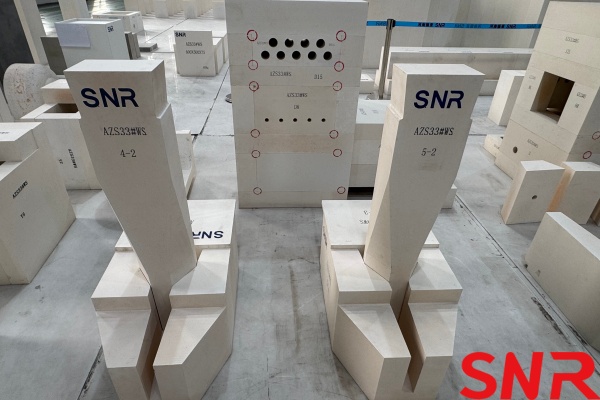
To precisely reveal the thermal stress evolution and crack initiation characteristics of AZS blocks during heating, a research institution conducted thermo-structural coupled simulations using ANSYS finite element software on a standard-sized AZS electrode block (500mm × 300mm × 200mm). The simulation strictly followed actual industrial baking conditions. The loading curve adopted the actual baking curve of a large float glass line (heating rate 6°C/h from 0-600°C, 8°C/h from 600-1000°C, 12°C/h from 1000-1450°C, with 5-hour soaks at 1050°C and 1150°C). The thermophysical and mechanical parameters of the block used the typical values mentioned earlier. Boundary conditions were set as: temperature load on the hot face, adiabatic condition on the cold face (simulating the actual glass furnace insulation layer), elastic constraints around the block (simulating structural restraint after installation), and free boundary at the electrode hole (simulating the gap after actual electrode installation).
Through simulation, the temperature distribution, thermal stress evolution, and crack initiation characteristics of the AZS electrode block during heating were obtained. The core simulation results are as follows:
Time node and stress threshold: At the 42nd hour of heating, the hot face temperature reached approximately 145°C, the cold face temperature about 38°C, and the maximum internal temperature difference reached 107°C. At this point, the maximum principal stress inside the block first reached the material‘s modulus of rupture (100 MPa), meeting the critical condition for crack initiation. This indicates that under this baking condition, the AZS electrode block began to show crack initiation after 42 hours of heating. This result aligns highly with observations from actual industrial cases, where ultrasonic inspection of AZS electrode blocks in many float lines during the later stages of baking (40-48 hours) revealed a small number of micro-cracks.
Crack initiation location: The simulation results showed that the crack initiated at a location approximately 0.13 meters from the hot face, inside the cross-section, rather than on the block surface. This phenomenon can be explained by the temperature gradient distribution: the hot face, with the highest temperature and maximum expansion, is in direct contact with the high-temperature flame. The glass phase on the surface softens at high temperatures, imparting some plastic deformation capacity that can absorb part of the thermal stress and alleviate stress concentration. In contrast, the region 0.13m from the hot face experiences the steepest temperature gradient. Its thermal expansion is intermediate, constrained both by the highly expanded hot face region and the minimally expanded cold face region, leading to the most severe thermal stress accumulation. Moreover, the block in this region is in an elastic state and cannot release stress through plastic deformation, making it the initial position for crack initiation. This simulation result also explains the phenomenon observed in many actual cases of "intact surface but internal cracking," where AZS blocks appear undamaged on the surface but already contain internal micro-cracks. These micro-cracks gradually propagate during subsequent production, eventually leading to block failure.
Stress concentration areas: The simulation results clearly indicated that the stress level at the step of the electrode hole was 30-50% higher than in non-perforated areas of the same cross-section, making it the main area of stress concentration inside the block. This is because the electrode hole disrupts the continuity of the block, creating a geometric discontinuity. During heating, thermal expansion in this area is constrained, unable to deform freely, causing stress accumulation at the root of the step and forming a stress concentration. Additionally, the block around the electrode hole, constrained by the electrode itself, experiences even less thermal expansion, increasing the expansion mismatch with the surrounding block and further exacerbating stress concentration, making this area a high-risk zone for crack initiation.
Thermal stress evolution trend: In the initial heating stage (0-20 hours), the internal temperature gradient was small, thermal stress slow growth, and the maximum principal stress remained below 50 MPa, far lower than the material‘s modulus of rupture, so no cracks initiated. In the middle heating stage (20-42 hours), the temperature gradient increased rapidly, and thermal stress grew linearly, with the maximum principal stress rising from 50 MPa to 100 MPa, reaching the crack initiation threshold. In the later heating stage (after 42 hours), as the soaking phases began, the internal temperature distribution gradually became uniform, the temperature gradient decreased, and thermal stress slowly started to relax. The maximum principal stress decreased slightly, but cracks had already initiated and might propagate slightly during stress relaxation. Entering the high-temperature sintering stage, the glass phase softened, enhancing plastic deformation capacity, leading to further thermal stress relaxation. Crack propagation slowed, but the cracks could not fully close, forming permanent initial damage.
The simulation also revealed that the heating rate significantly impacts thermal stress evolution and crack initiation time: When the heating rate was increased to 10°C/h (0-600°C) and 12°C/h (600-1000°C), crack initiation time advanced to 38 hours, and the peak maximum principal stress reached 112 MPa, a 12% increase compared to the original curve‘s peak stress. When the heating rate was reduced to 4°C/h (0-600°C) and 6°C/h (600-1000°C), crack initiation time was delayed to 48 hours, and the peak maximum principal stress dropped to 92 MPa, an 8% decrease compared to the original curve‘s peak stress. This result fully demonstrates that slow heating effectively reduces the rate of thermal stress accumulation, delays crack initiation time, and minimizes initial damage, providing an important theoretical basis for optimizing baking processes.
4. Protection of Electrodes and Damage to blocks by Water/Air Cooling
In glass furnace design, electrodes are critical components for implementing electric boosting and maintaining stable high-temperature operation. Common electrode types include molybdenum, tin, and graphite electrodes. Molybdenum and tin electrodes, due to their excellent electrical conductivity and high-temperature stability, are widely used in high-end glass production lines such as float and photovoltaic glass. However, these electrodes are highly susceptible to oxidation at temperatures above 1000°C, leading to electrode wastage, breakage, and affecting normal glass furnace operation. To slow down electrode oxidation at high temperatures and extend electrode service life, glass furnace designs typically include electrode cooling systems, mainly water-cooling and air-cooling systems.
Water cooling systems are currently the most widely used electrode cooling method. Their working principle is to circulate cooling water to carry away heat from the electrode surface, maintaining the electrode‘s operating temperature within a safe range (typically <200°C). A water cooling system usually consists of cooling water pipes, cooling jackets, circulating water pumps, cooling towers, etc. The cooling jacket encases the electrode, in close contact, and cooling water circulates within the jacket,carry away heat generated by the electrode, which is then dissipated in the cooling tower before re-circulation. Water cooling systems have high cooling efficiency, can rapidly reduce electrode temperature, and are suitable for high-power electrodes and high-temperature conditions. However, their structure is relatively complex and requires regular maintenance to prevent cooling water leakage.
Air cooling systems are mainly used for low to medium power electrodes and in scenarios sensitive to cooling water leakage. Their working principle involves using a blower to direct ambient air onto the electrode surface,carry away heat, and controlling the electrode operating temperature below 250°C. Air cooling systems have a simple structure, are easy to maintain, and have lower cost, but their cooling efficiency is relatively lower, making them suitable for less demanding temperature conditions.
Whether water-cooling or air-cooling, the core function is to protect the electrode,slow down oxidation, extend electrode life, and ensure continuous and stable glass furnace operation. Practice has proven that electrodes equipped with cooling systems can have their service life extended by 3-5 times, significantly reducing electrode replacement costs and glass furnace downtime for maintenance.
Based on the analysis in this article, the future improvements for glass furnace baking processes and the application of AZS blocks can be approached from the following practical aspects:
First, refine the baking curve. Currently, many domestic enterprises still rely on empirical control. In the future, the curve should be strictly formulated based on the characteristics of AZS blocks. Especially in the critical zirconia phase transformation zone of 900-1150°C, the heating rate must be strictly controlled (≤15°C/h), and sufficient soaking time should be set at key temperature points (such as 1050°C and 1150°C) to allow complete phase transformation and full stress relaxation. The dehydration rate in the low-temperature stage (below 200°C) must also be slow enough to avoid internal micro-cracks caused by steam pressure.
Second, pay attention to "invisible" damage. Simulation results show that cracks often initiate inside the block (about 0.13 meters from the hot face) while the surface remains intact. This means that visual inspection after baking is far from sufficient. In the future, where conditions permit, non-destructive testing methods such as ultrasound can be introduced to inspect the interior of critical blocks (e.g., electrode blocks) for early detection of hidden defects.
Third, optimize the cooling system matching. Electrode cooling systems are necessary, but their thermal shock to the blocks is an objective reality. Future design considerations could include: appropriately reducing cooling intensity (such as adjusting water flow or air volume) while ensuring electrode safety, to avoid "over-cooling" that exacerbates the temperature difference inside the block; or adding a buffer layer between the electrode and the block to reduce direct thermal-mechanical interaction.
In summary, extending the service life of a glass furnace does not require highly sophisticated new technologies; the key lies in "putting existing scientific understanding into practice." Strictly implementing the baking curve based on AZS block characteristics, paying attention to internal damage inspection, optimizing cooling system matching, and enhancing the professional skills of operators—by doing these fundamental tasks well, it is entirely feasible to steadily increase the average furnace life from the current 4-6 years to more than 8 years, reduce unplanned cold repairs, lower costs, and achieve tangible economic benefits.

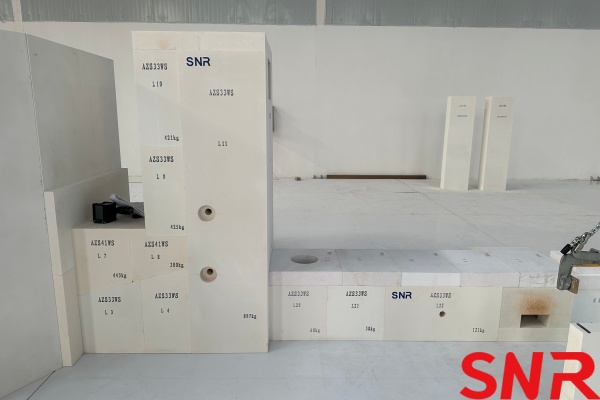
Henan SNR Refractory Co., Ltd. is dedicated to the manufacture, research and development of fused cast AZS refractory blocks and bonded refractory materials for the glass industry. Meanwhile, SNR can provide total solutions and services for glass furnace design, glass furnace construction, renovation, and upgrading. Please contact me if you have any requirements.
CONTACT: 
[email protected]/ WhatsApp:+86 15670323812


 +86-18203976036