

In the core areas of a glass melting furnace—the melting tank, throat, and feeder channel—refractory materials endure extreme conditions: temperatures exceeding 1600°C, intense corrosion and erosion from molten glass, and thermal shock from temperature fluctuations. In such a "purgatory," Fused Cast AZS Blocks (also known as fused cast zirconia-alumina-silica refractories) have become the key material ensuring the service life of glass furnaces and the quality of glass products, thanks to their excellent corrosion resistance, high refractoriness under load, and remarkable resistance to molten glass penetration.
The numbers in AZS grades—33, 36, 41—are seemingly simple codes, but they represent fundamental differences in zirconia (ZrO₂) content and signify substantial variations in material properties, performance characteristics, and ultimately, application suitability. These numbers are not arbitrary; they are carefully calibrated indicators that directly correlate with the block‘s microstructure, phase composition, and high-temperature behavior. What performance secrets lie behind these numbers? How do they directly impact the lifespan of a glass furnace, the quality of the glass produced, and the overall production costs? This article will delve deeply into the technical characteristics, comparative performance analysis, and strategic selection considerations for the three grades—AZS33, AZS36, and AZS41—providing a comprehensive technical reference for the design, construction, and maintenance of modern glass furnaces.
1. The "Identity Code" of AZS: Chemical Composition and Microstructure
2. Physical Properties: The First Line of Defense Against Penetration
3. High-Temperature Service Performance: The "Ultimate Test" in Molten Glass
4. Practical Applications and Selection Strategy
1. The "Identity Code" of AZS: Chemical Composition and Microstructure
1.1 The Origin of Grade Designations
AZS is an abbreviation of the three chemical components in the Al₂O₃-ZrO₂-SiO₂ ternary system, arranged in descending order of content: A for Al₂O₃, Z for ZrO₂, and S for SiO₂. The numbers in the grade, such as 33, 36, and 41, primarily indicate the mass percentage of zirconia (ZrO₂)—this is not just a naming convention but a key criterion for performance classification and quality grading in the refractory industry.
According to industry standard JC-493-2001 and related technical data, the chemical composition comparison of different AZS block grades is as follows:

1.2 The Logic Behind Composition Differences
From AZS33 to AZS41, the changes in chemical composition follow a clear and purposeful logical chain, carefully engineered to optimize performance for different application requirements:
Decisive Role of ZrO₂ Content : At high temperatures, ZrO₂ forms a dense protective layer of baddeleyite (monoclinic zirconia) crystals, which is fundamentally responsible for the AZS material‘s exceptional resistance to molten glass corrosion. This baddeleyite-rich layer acts as a physical barrier, effectively slowing the penetration and dissolution of the block by aggressive molten glass. As the zirconia content increases progressively from 33% to 41%, the material‘s corrosion resistance correspondingly and measurably improves. According to rigorous testing standards for zirconia-corundum refractories used in glass furnaces, the AZS-33 grade requires a ZrO₂ content of 32%-34%, while the AZS-41 grade demands 40%-42%, reflecting the higher performance expectations for this premium grade.
Inverse Relationship of SiO₂ Content : As ZrO₂ increases, the SiO₂ content, which is the main source of the intergranular glassy phase, must be correspondingly reduced. An excessive glassy phase, particularly one with lower viscosity, can significantly lower the material‘s refractoriness and high-temperature mechanical strength, making it more susceptible to penetration, corrosion, and creep by molten glass under operating conditions. AZS41 boasts the lowest SiO₂ content (≤13%), indicating superior high-temperature stability and minimal glassy phase exudation under extreme thermal and chemical loads.
Strict Control of Impurity Elements : Regardless of the grade, the total impurities and the content of Fe₂O₃+TiO₂ are subject to rigorous limits. Excessive impurities can catalyze undesirable reactions, reduce the material‘s high-temperature stability, exacerbate the risk of molten glass corrosion, and potentially introduce discoloration or defects (such as stones or cords) that negatively affect the final glass quality. This is particularly critical for the production of high-clarity glasses like container glass, flat glass, and specialty technical glasses.
1.3 Microstructural Differences
The petrographic structure of AZS Blocks consists of a corundum-baddeleyite eutectoid (an intricately intergrown crystalline matrix) and a continuous or discontinuous glassy phase filling the interstices between these crystals. As the zirconia content increases, the proportion of the baddeleyite phase in the material correspondingly increases, forming a denser, more interlocked, and chemically resistant microstructural skeleton. Research indicates that the chemical composition, particularly the precise SiO₂ and Na₂O content, as well as the uniform distribution of zirconia throughout the matrix, significantly influence both the content and the high-temperature viscosity of the glassy phase, thereby critically affecting the glass exudation behavior and long-term dimensional stability of the refractory.
2. Physical Properties: The First Line of Defense Against Penetration
The chemical composition determines the theoretical upper limit of material performance, but the physical structure—especially density, pore size distribution, and permeability—determines the extent to which these properties can be realized in practical, demanding applications.
The comparison of physical property indicators for different AZS block grades is as follows:

2.1 Bulk Density
From AZS33 to AZS41, bulk density shows a consistent and significant upward trend. AZS41 achieves the highest density (≥3.90 g/cm³) due to its optimized chemical formulation, reduced glassy phase content, and precisely controlled production process (often involving specialized casting and annealing techniques). Higher bulk density means the material is fundamentally denser and more compact, making it significantly more difficult for molten glass, with its low viscosity at high temperatures, to penetrate into the block interior through any remaining micro-channels or pores.
2.2 Apparent Porosity
Apparent porosity is another key indicator of material density and interconnected pore structure. Low porosity drastically reduces molten glass penetration pathways and significantly enhances the material‘s resistance to both chemical corrosion and physical erosion. It also improves resistance to thermal shock by minimizing internal stress concentrations. AZS41 exhibits the lowest apparent porosity (≤1.3%), building the most robust and effective physical barrier against the ingress of corrosive molten glass and furnace atmosphere.
It is worth noting that different casting processes (e.g., PT—Regular Casting, producing standard blocks; QX—Tilt Casting, which improves density and reduces void formation; WS—Shrinkage Void-Free Casting, the most advanced technique yielding nearly theoretically dense material with minimal internal shrinkage cavities) also profoundly affect the density and internal soundness of the final product. For the same nominal grade, using more advanced casting techniques can further enhance bulk density and overall performance reliability.
3. High-Temperature Service Performance: The "Ultimate Test" in Molten Glass
Performance tests conducted in specialized laboratories are designed to rigorously simulate the severe conditions inside an operating glass furnace. Several key indicators directly and quantitatively reveal the behavioral differences of various AZS block grades in practical, long-term applications:

3.1 Corrosion Rate by Molten Glass
This is the most intuitive and practically significant indicator of refractory durability; smaller numerical values directly translate to longer potential service life under identical operating conditions. After measuring corrosion depth following 36 hours of immersion in standard soda-lime glass at 1500°C, AZS41 exhibits the lowest corrosion rate (≤1.30 mm/24h), again conclusively confirming the substantial advantages conferred by high ZrO₂content and a minimized, more refractory glassy phase. AZS36 demonstrates an intermediate performance level (≤1.50 mm/24h), offering a balance of durability and cost, while AZS33 shows a relatively higher corrosion rate (≤1.60 mm/24h), suitable for less demanding zones.
3.2 Glass Phase Exudation Behavior
Comprehensive research clearly shows that the chemical composition, especially the precise levels of SiO₂ and Na₂O (which act as fluxes), and the uniform distribution of the zirconia phase, critically influence both the total content and, more importantly, the high-temperature viscosity of the glassy phase within the refractory. This, in turn, governs the glass exudation phenomenon—the slow squeezing out of the glassy phase under thermal load and gravity. Higher zirconia content intrinsically means a lower proportion of the potentially exudable glassy phase, thereby significantly reducing high-temperature glass exudation and maintaining the block‘s dimensional stability and surface integrity. AZS41, with its minimized SiO₂ content (≤13%), demonstrates superior resistance to glass exudation and exceptional microstructural stability under the most extreme operating conditions.
3.3 Bubble Generation Rate
For high-value-added products such as optical glass, high-clarity container glass, electronic glass substrates, and pharmaceutical tubing, bubbles (also known as seeds or blisters) are considered critical, often fatal, defects. When AZS Blocks contact molten glass, bubbles may potentially form due to complex oxidation-reduction reactions, decomposition of residual impurities, or release of trapped gases from the glassy phase. A lower bubble generation rate directly indicates less contamination of the valuable molten glass batch and is therefore a paramount quality criterion. AZS41 performs best on this highly sensitive indicator (≤1.0%), making it the preferred, and often mandatory, choice for applications with exceptionally stringent glass quality requirements, such as in the production of LCD glass or transparent fused silica.
3.4 Alkali Vapor Corrosion Resistance
In modern oxy-fuel fired glass furnaces, which feature higher partial pressures of water vapor and alkali species in the atmosphere, alkali vapor corrosion becomes a significantly more important consideration compared to conventional air-fuel furnaces. Research indicates that while standard fused cast AZS Blocks (AZS33) may generate an increased amount of glassy phase on their surface when exposed to concentrated alkali vapor, their inherently low apparent porosity effectively limits the rate of alkali vapor penetration into the deeper block structure, resulting in surprisingly good overall alkali vapor corrosion resistance. Higher zirconia content grades, such as AZS36 and AZS41, with their even lower porosity and more refractory phase assemblage, theoretically possess even superior resistance to this aggressive form of chemical attack, contributing to longer upper structure life in oxy-fuel furnaces.
4. Practical Applications and Selection Strategy
Based on this analysis, the conclusion seems clear: AZS41 leads comprehensively in all key performance indicators. However, in practical engineering, cost is an unavoidable factor. The high cost of ZrO₂ raw materials and complex production processes make AZS41 significantly more expensive than AZS33.
Therefore, the wisdom in furnace design and maintenance lies in "adapting to local conditions"—there is no single best material, only the most suitable choice for each specific application.
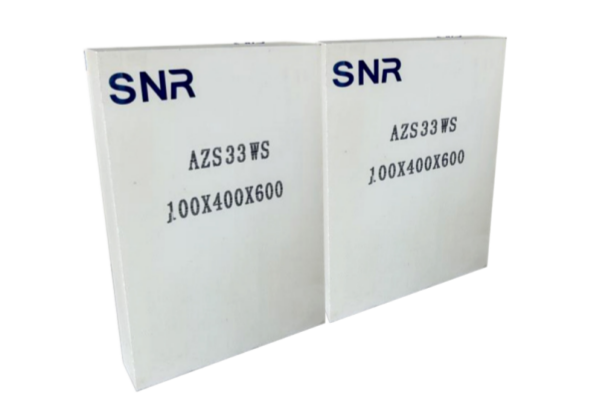
4.1 Application Scenarios for AZS33
AZS33, as the basic grade, is suitable for areas with relatively mild corrosion conditions. For example:
Upper structure of the glass furnace
Cooling section
Certain areas of regenerators
Research shows that in oxy-fuel glass furnaces, although fused cast AZS Blocks (AZS33) generate more glassy phase, their alkali vapor corrosion resistance remains excellent due to low apparent porosity. For standard soda-lime glass production, AZS33 meets service requirements in most non-critical areas while offering good economic efficiency.

4.2 Application Scenarios for AZS36
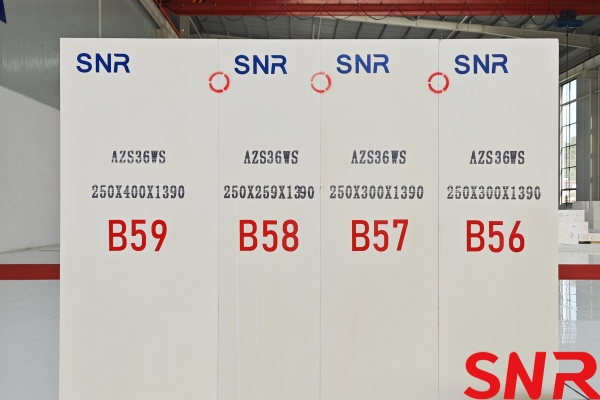
AZS36, as the mid-range grade, offers better corrosion resistance than AZS33 and lower porosity, suitable for areas with moderate corrosion intensity:
Upper tank walls
Areas around the doghouse
Certain hot spot regions
In situations where both performance and cost need to be balanced, AZS36 is often the ideal choice.
4.3 Application Scenarios for AZS41
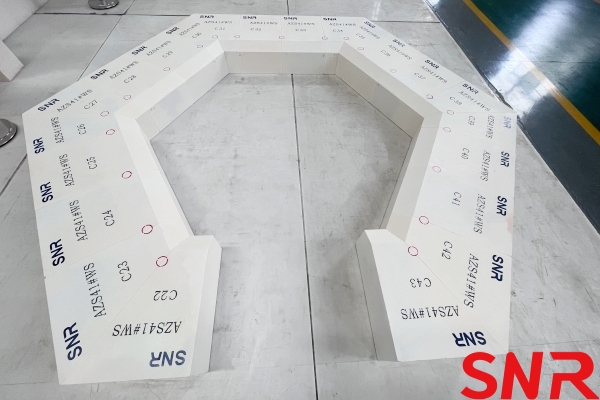
AZS41, as the high-end grade, plays an irreplaceable role in the areas with the most intense contact with molten glass and the highest temperatures:
Melting tank walls: Directly withstands strong molten glass flushing
Throat: The area with the fastest molten glass flow and most severe corrosion
Area around electrode ports: High current density zone in electric furnaces
High-quality glass production areas: Applications with strict requirements for defects like bubbles and stones
For high-value-added products such as optical glass, electronic glass, and pharmaceutical glass, although the initial investment for AZS41 is higher, it effectively extends furnace life, ensures product quality, and provides significant overall benefits.
4.4 Comprehensive Selection Recommendations
In practical engineering, a reasonable selection strategy is typically:
Top-tier materials for critical areas: In the most severely corroded areas like the melting tank walls and throat, use the highest-performing AZS41 to maximize furnace lifespan.
Cost-effective materials for secondary areas: In areas with relatively mild corrosion, choose AZS36 or AZS33 to optimize overall costs.
Pay attention to casting process: Even for the same grade, products manufactured using Shrinkage Void-Free (WS) casting are denser and suitable for critical locations.
Consider the glass type: For high-alkali glass or specialty glass, it may be necessary to upgrade the overall selection grade.
As the glass industry‘s demand for high-performance, cost-effective refractory materials continues to grow, the development direction of AZS materials is gradually focusing on the following points:
5.1 Microstructural Optimization
Through nano-scale additives or novel sintering techniques, further reduce porosity and enhance grain bonding strength. Research shows that optimizing the Al₂O₃-ZrO₂ eutectic structure in AZS33 can significantly improve its corrosion resistance.
5.2 Development of Composite Systems
Explore composite systems of AZS with other materials, such as the Al₂O₃-ZrO₂-SiO₂-Cr₂O₃ refractory system. At high temperatures, Cr₂O₃ forms a solid solution with Al₂O₃ while also entering the glassy phase to increase its viscosity, thereby raising the glass phase exudation temperature and enhancing corrosion resistance.
5.3 Development of High-Zirconia Materials
High-zirconia blocks with ZrO₂ content above 90% exhibit excellent thermal shock performance, with corrosion resistance superior to AZS blocks containing 40% ZrO₂. At 1500-1600°C, they have no glassy phase exudation and cause minimal contamination to the glass.
5.4 Intelligent Quality Control
Utilize AI and big data analytics to monitor key parameters during the production process in real-time, reducing performance fluctuations between batches.
The differences between the three grades—AZS33, AZS36, and AZS41—essentially boil down to the progressive increase in zirconia content from 33% to 41%. This brings a stepwise improvement in corrosion resistance, accompanied by a corresponding increase in cost. Deeply understanding the physical and chemical implications behind these indicators and matching them with the actual operating conditions of different furnace zones is not only a fundamental skill for technical personnel but also a strategic step towards optimizing furnace design, extending service life, and enhancing the quality of the final glass product.
As industry experts state: "The wisdom in furnace design and maintenance lies in ‘adapting to local conditions‘—there is no single best material, only the most suitable choice for each specific application." In the complex system of a glass furnace, placing the right material in the correct position is the essence of engineering technology.
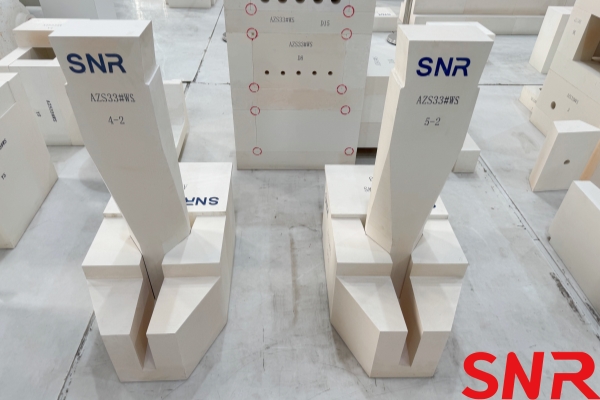
Henan SNR Refractory Co., Ltd. has been specializing in the production of fused cast AZS blocks for more than 25 years. We use high-quality raw materials and advanced fusion and casting technology and equipment to provide customers with high-quality products. From raw material procurement to finished product delivery, every step is strictly quality inspected to ensure that every indicator meets the standards, so you can use it with confidence.
Should you have any inquiries or specific requirements, our team is ready to provide professional support and tailored solutions.
 Contact Information:
Web: www.snr-azs.com
Email:[email protected]


 +86-18203976036