

Introduction
According to relevant surveys and statistics, China‘s glass production and consumption rank among the highest in the world. Since the glass production process generates substantial energy consumption and carbon emissions, the carbon emissions of China‘s glass industry are significantly higher than those of other countries. In an era where energy conservation and emission reduction are increasingly important, the emission reduction situation in China‘s glass industry is not optimistic. Therefore, it is necessary to objectively and meticulously analyze the scope, types, and current status of carbon emissions from flat glass in China, and actively explore effective technical measures for energy saving and emission reduction in production processes, so as to effectively control CO₂ emissions from glass production and achieve the core goal of energy conservation and emission reduction.
1. Composition and Types of Carbon Emissions from Flat Glass in China
In the production process of flat glass in China, carbon dioxide emissions mainly come from three forms: purchased electricity and heat to meet production needs, conventional fossil fuel consumption, and process emissions.
1.1 Fuel Combustion Emission Pathways
Carbon dioxide generated during flat glass production arises from the following three pathways: first, CO₂ emissions from the combustion of fossil fuels during glass melting; second, CO₂ from the combustion of fuels used by auxiliary facilities during transportation within the production process, including but not limited to boilers, internal transport vehicles, etc.; third, CO₂ emissions from external transportation processes.
1.2 Emission Composition of Flat Glass Production
(1) Carbon powder oxidation
Reducing agents are important additives in the raw material composition for flat glass production, usually mainly carbon powder. Their main function is to improve the melting efficiency of glass raw materials. To achieve rapid heating, the decomposition temperature of sodium sulfate needs to be accelerated so that sodium sulfate decomposes and reduces more quickly. During this process, carbon is oxidized and converted to carbon dioxide.
(2) Decomposition of carbonates
The raw materials for flat glass include various carbonate materials such as pure limestone. These carbonates decompose at high temperatures, releasing large amounts of carbon dioxide.
1.3 Purchased and Exported Electricity and Heat Emissions
(1) Purchased electricity and heat emissions
The amount of CO₂ emissions generated during the production process from electricity and heat purchased by glass manufacturers to meet production needs.
(2) Exported electricity and heat emissions
The amount of CO₂ emissions generated during the use of electricity and heat by enterprises.
2. Carbon Emission Analysis of the Flat Glass Manufacturing Process
According to China‘s greenhouse gas emission accounting standards and reporting requirements for flat glass production enterprises, the total carbon emissions of a flat glass producer are calculated. The calculation includes emissions from fossil fuel consumption during flat glass production, emissions from carbonate decomposition and carbon oxidation, as well as emissions corresponding to purchased electricity and heat, and emissions from the use of electricity and heat. The core indicator for measuring the carbon emission intensity of flat glass production enterprises is the CO₂ emission per unit product. This indicator not only reflects the production management level of the enterprise itself but is also a crucial metric for controlling carbon emissions. It serves as the primary basis for flat glass producers to engage in carbon emission trading and to manage the risks associated with carbon trading. Currently, in the allocation of carbon emission allowances for flat glass producers in China, two allocation methods are used: the benchmark method and the historical intensity method. Different regions adopt different allocation methods, but the core allocation basis remains the carbon emission intensity per unit product of flat glass enterprises.
2.1 Impact of Fused Cast AZS Refractory Blocks on Carbon Emissions from Flat Glass Production
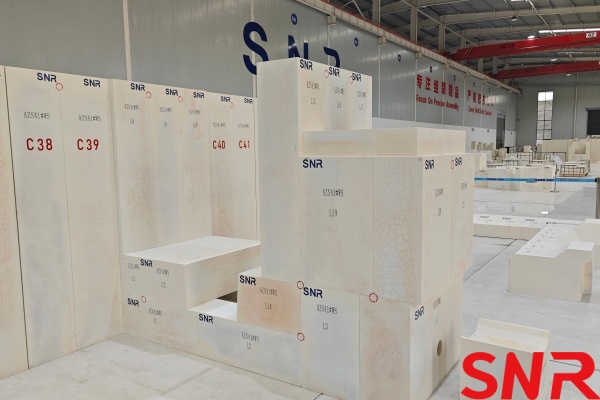
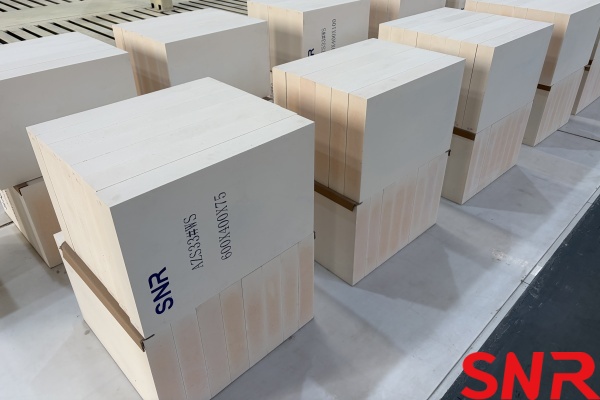
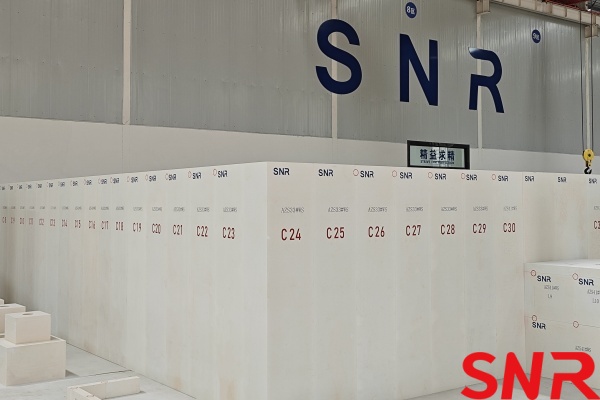
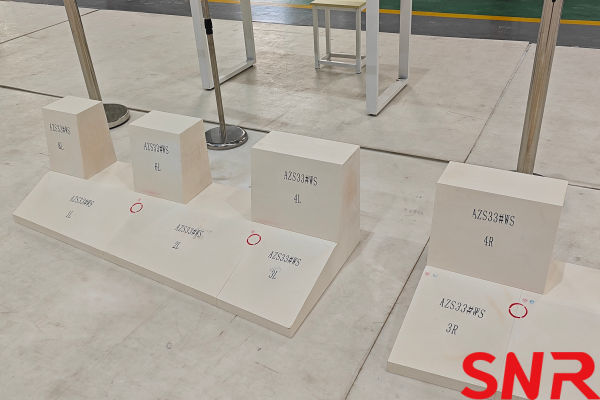
Fused cast AZS refractory block (full name: fused cast alumina-zirconia-silica refractory block) is a high-performance refractory material mainly composed of alumina (Al₂O₃), zirconia (ZrO₂), and silica (SiO₂), manufactured through high-temperature melting and crystallization. It exhibits excellent characteristics such as high-temperature resistance, corrosion resistance, erosion resistance, and good thermal insulation. It is an ideal lining material for glass melting furnaces. Its impact on carbon emissions from flat glass production is mainly reflected in the following aspects:
a) The excellent thermal insulation performance of fused cast AZS refractory blocks can effectively reduce heat loss from the glass furnace, decrease fuel consumption, and thereby reduce CO₂ emissions from fuel combustion. Heat loss in glass furnaces mainly includes heat dissipation through the glass furnace body and flue gas heat loss, with glass furnace body dissipation accounting for the largest proportion. Traditional refractory blocks have poor insulation performance, resulting in high surface temperatures and substantial heat dissipation into the air, causing energy waste. In contrast, the thermal conductivity of fused cast AZS blocks is much lower than that of traditional blocks, effectively blocking heat transfer, reducing glass furnace surface temperature, and minimizing heat loss. According to relevant data, using fused cast AZS blocks as glass furnace lining can reduce glass furnace heat loss by 15%–25%, correspondingly lower fuel consumption by 10%–20%, and thus cut fuel combustion carbon emissions by 10%–20%.
b) The high-temperature and corrosion resistance of fused cast AZS blocks extend the glass furnace‘s service life, reduce the frequency and duration of glass furnace repairs, improve production efficiency, and indirectly lower carbon emissions. The lining of a glass furnace operates for long periods under high temperature and highly corrosive conditions. Traditional refractory blocks have a shorter service life, typically 3–5 years, whereas fused cast AZS blocks can last 8–12 years, more than doubling the lifespan. Glass furnace repairs require production halts and consume significant manpower, materials, and financial resources, and also generate certain energy consumption and carbon emissions. Extending the glass furnace life reduces the number of repairs and downtime, improves production continuity, lowers energy consumption and emissions during maintenance, and avoids losses caused by production interruptions.
c) The erosion resistance of fused cast AZS blocks reduces the erosion of the glass furnace lining by molten glass, preventing temperature drops caused by lining damage, and thus reducing additional fuel consumption and carbon emissions needed to maintain temperature. During the flow of molten glass in the glass furnace, it exerts strong erosive forces on the lining. Traditional refractory blocks have poor erosion resistance, are prone to wear and spalling, leading to internal temperature drops. To maintain the melting temperature, extra fuel must be consumed, increasing carbon emissions. fused cast AZS blocks, with their excellent erosion resistance, effectively resist molten glass erosion, maintain lining integrity, stabilize glass furnace temperature, and avoid extra fuel consumption and emissions due to temperature declines.
d) The high recycling value of fused cast AZS blocks enables resource circulation, further reducing carbon emissions. After reaching the end of their service life, fused cast AZS blocks can be recovered, crushed, processed, and reused as raw materials for producing refractory blocks or other building materials, achieving resource recycling and reducing the exploitation and consumption of primary mineral resources. The mining and processing of primary mineral resources involve substantial energy consumption and carbon emissions. The recycling of fused cast AZS blocks reduces the use of primary resources, thereby lowering emissions in related stages and promoting green circular development
3. Carbon Emission Control Measures in the Glass Industry
Based on the current carbon emission status and existing problems in China‘s flat glass industry, effective carbon emission control measures are formulated targeting the main sources and key links of emissions, from aspects such as technological transformation, fuel optimization, management improvement, and policy guidance. At the same time, the optimized selection and use of key consumables like fused cast AZS refractory blocks are integrated to comprehensively enhance the energy saving and emission reduction level of the glass industry and promote its transformation toward green and low-carbon development.
3.1 Optimizing Production Processes to Improve Energy Efficiency
Optimizing production processes is the core of carbon reduction in the glass industry. Through technological transformation of key production stages such as glass melting, forming, and annealing, energy efficiency is improved, energy consumption and carbon emissions are reduced. Combined with the optimized application of fused cast AZS refractory blocks, the energy-saving and carbon-reduction effects are further strengthened.
3.1.1 Promoting Oxygen Combustion Systems to Enhance Combustion Efficiency
The fuel combustion efficiency during the glass melting stage directly affects fuel consumption and total carbon emissions. Promoting oxygen combustion systems is an effective means to enhance combustion efficiency and reduce carbon emissions. Currently, oxygen combustion systems are mainly divided into oxy-fuel combustion and oxygen-enriched combustion, each with its advantages; enterprises can choose according to their actual conditions.
Oxygen-enriched combustion refers to adding a certain proportion of oxygen to the combustion air during the burning process, increasing the oxygen concentration in the combustion air (typically 25%–35%) to achieve enhanced combustion. Its specific advantages are as follows: first, by introducing an oxygen-rich oxidant, the volume of the oxidant is effectively reduced, decreasing the amount of air brought into the combustion process. This not only enhances combustion and speeds up the burning rate but also effectively reduces heat loss in exhaust gases, promotes combustion efficiency, and reduces fly ash in flue gas emissions, lowering pollutant emissions. Second, oxygen-enriched combustion facilitates the separation and recovery of CO₂ because the volume fraction of CO₂ in the flue gas increases from 10%–15% in traditional air combustion to 30%–40%. Moreover, the flue gas from oxygen-enriched combustion mainly consists of water vapor and CO₂, with little or no nitrogen, making CO₂ capture, separation, and treatment simpler and more efficient, laying a foundation for CO₂ recycling. Third, oxygen-enriched combustion results in higher oxygen content inside the glass furnace, more complete fuel combustion, effectively improving the glass furnace temperature field, making the internal temperature more uniform and stable, which not only enhances glass quality but also reduces extra fuel consumption and carbon emissions caused by temperature fluctuations.
Oxy-fuel combustion systems use pure oxygen as the combustion oxidant, replacing traditional air combustion. Their combustion efficiency is higher, and carbon emission intensity is lower. Oxy-fuel systems completely eliminate the influence of nitrogen in the air, and the CO₂ volume fraction in flue gas can reach over 80%, facilitating CO₂ recovery and utilization. At the same time, oxy-fuel combustion reduces flue gas volume, lowers exhaust heat loss, further improves energy efficiency, and reduces fuel consumption and carbon emissions. Relevant data show that adopting oxy-fuel combustion can reduce fuel consumption by 20%–30% and CO₂ emissions by 20%–30%, with significant emission reduction effects.
It should be noted that the promotion and application of oxygen combustion systems need to be coordinated with the optimization of glass furnace lining materials to fully realize their energy-saving and carbon-reduction potential. Because the combustion temperature in oxygen systems is higher, the requirements for high-temperature resistance and corrosion resistance of lining materials are more stringent. Fused cast AZS refractory blocks meet these requirements, with a high-temperature resistance of over 1800°C, effectively resisting the high-temperature erosion caused by oxygen combustion, extending glass furnace life, reducing glass furnace heat loss, further improving energy efficiency, and lowering carbon emissions. Therefore, while promoting oxygen combustion systems, fused cast AZS refractory blocks should be selected as glass furnace linings to optimize glass furnace structure and achieve synergistic energy-saving and carbon-reduction effects.
3.1.2 Applying Low-Temperature Melting Technologies to Reduce Melting Temperature
The glass melting temperature is a key factor affecting fuel consumption and carbon emissions. For every 10°C reduction in melting temperature, fuel consumption can be reduced by 1%–2%, and correspondingly, CO₂ emissions can be cut by 1%–2%. Therefore, applying low-temperature melting technologies to lower the glass melting temperature is an important measure to reduce fuel consumption and carbon emissions.
The core of low-temperature melting technology lies in optimizing the chemical composition of glass raw materials, selecting appropriate fluxes, and increasing the proportion of cullet to lower the melting temperature and reduce fuel consumption. Specific measures include: first, optimizing the chemical composition of raw materials, choosing a batch composition more suitable for low-temperature melting, reducing the amount of high-melting-point raw materials, and increasing the proportion of low-melting-point materials, e.g., appropriately increasing the number of fluxes such as soda ash and sodium sulfate to lower the melting temperature. Second, selecting efficient fluxes such as fluorides and borides, which can effectively reduce the melting temperature and viscosity of glass, accelerate the melting process and reduce fuel consumption. Third, increasing the cullet ratio. The melting point of cullet is much lower than that of virgin raw materials; adding cullet to the glass furnace can effectively lower the glass furnace temperature and reduce fuel consumption. Relevant data show that for every 10% increase in cullet addition, the glass furnace temperature can be reduced by at least 5°C. If the cullet ratio exceeds 50%, the glass furnace temperature can drop by more than 50°C, fuel consumption can be reduced by 5%–10%, and CO₂ emissions can also be cut by 5%–10%.
In addition, the application of low-temperature melting technologies can also reduce the wear of fused cast AZS refractory blocks and extend their service life. As the melting temperature decreases, the temperature field inside the glass furnace becomes milder, and the erosion effect of molten glass on the blocks weakens, reducing damage and spalling, thereby prolonging the block life and further lowering production costs and carbon emissions.
3.1.3 Promoting Preheating Technologies to Reduce Energy Loss
Preheating glass batch and combustion air can effectively utilize industrial waste heat, reduce the thermal load of the glass furnace, decrease fuel consumption and carbon emissions, and is an important technical means for energy saving and carbon reduction in the glass industry.
Batch preheating technology refers to preheating the batch using waste heat from glass furnace flue gas before the batch enters the glass furnace, increasing the batch temperature, reducing the heating time and fuel consumption inside the glass furnace. For every 100°C increase in batch preheating temperature, fuel consumption can be reduced by 5%–8%, and CO₂ emissions can be correspondingly reduced by 5%–8%. Currently, batch preheating technologies include hot air preheating and waste heat boiler preheating, among others. Enterprises can choose according to their production scale and technical level. For example, hot air preheating uses waste heat from glass furnace exhaust to heat air via a hot air stove, and then uses the heated air to preheat the batch. This technology has simple equipment and low investment cost, suitable for small and medium-sized glass enterprises. Waste heat boiler preheating uses waste heat from glass furnace exhaust to generate steam through a waste heat boiler, and then uses the steam to preheat the batch. This technology has high preheating efficiency and significant energy-saving effects, suitable for large glass enterprises.
Combustion air preheating technology uses waste heat from glass furnace exhaust to preheat combustion air, increasing the air temperature, enhancing combustion effects, and reducing fuel consumption. For every 100°C increase in combustion air temperature, fuel consumption can be reduced by 4%–6%, and CO₂ emissions can be correspondingly reduced by 4%–6%. Combining combustion air preheating with oxygen combustion systems can achieve even more significant energy-saving and carbon-reduction effects, further improve combustion efficiency and reduce carbon emissions.
It should be noted that the promotion of preheating technologies requires good glass furnace insulation to minimize waste heat loss. The excellent thermal insulation performance of fused cast AZS refractory blocks can effectively reduce glass furnace heat loss, maintain a high level of exhaust waste heat, provide sufficient heat for batch and combustion air preheating, improve preheating efficiency, and reduce fuel consumption and carbon emissions, forming a synergistic effect with preheating technologies.
3.2 Optimizing Fuel Structure
Unreasonable fuel structure is one of the main reasons for the high carbon emission intensity of the glass industry. At present, China‘s glass industry still relies heavily on high-carbon fuels such as heavy oil and diesel, while the utilization rate of low-carbon fuels like natural gas is low, and the proportion of new energy applications is even smaller. Low-carbon fuels such as natural gas, coke oven gas, and biomass have much lower carbon content than traditional high-carbon fuels like heavy oil and diesel, and thus produce significantly less CO₂ during combustion. For example, the carbon emission factor of natural gas is about 2.16 kg CO₂/m³, while that of heavy oil is about 3.11 kg CO₂/kg. Under the same calorific value, CO₂ emissions from natural gas combustion are more than 30% lower than those from heavy oil. Therefore, optimizing fuel structure, reducing dependence on high-carbon fuels, and promoting the application of low-carbon fuels and new energy are important measures for carbon reduction in the glass industry.
Government authorities should introduce relevant policies to increase support for glass enterprises using low-carbon fuels, for example, providing price subsidies for low-carbon fuels such as natural gas and coke oven gas to reduce fuel costs; encouraging enterprises to carry out fuel structure transformation, and providing tax incentives and financial subsidies for enterprises adopting low-carbon fuels. At the same time, the industry should strengthen technological research and development to promote the application of low-carbon fuels in glass production.
For small and medium-sized glass enterprises, due to limited funds and technology, fuel structure optimization can be carried out gradually, first reducing the use of high-carbon fuels such as heavy oil and diesel, and gradually increasing the proportion of low-carbon fuels like natural gas and coke oven gas, ultimately achieving the replacement of high-carbon fuels with low-carbon fuels. For large glass enterprises, they should take the lead in fully replacing low-carbon fuels and promote the production mode combining oxy-fuel combustion with natural gas to further enhance energy-saving and carbon-reduction effects.
3.3 Optimizing the Selection of Key Consumables to Enhance Synergistic Effects of Energy Saving and Carbon Reduction
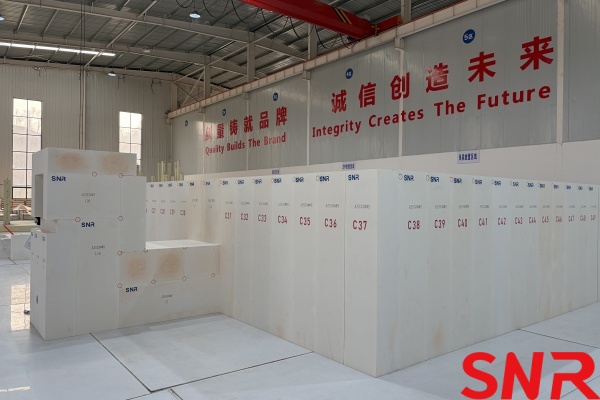
The selection and use of key consumables have a significant impact on energy consumption and carbon emissions in the glass industry. Among them, fused cast AZS refractory blocks, as the core lining material for glass furnaces, their optimized selection and use can effectively improve glass furnace energy efficiency and reduce carbon emissions. Therefore, the optimized application of fused cast AZS refractory blocks should be taken as one of the important measures for carbon reduction in the glass industry.
3.3.1 Promoting the Application of Fused Cast AZS Refractory Blocks
At present, some glass enterprises in China still use traditional refractory materials such as clay bricks and high-alumina bricks as glass furnace linings. These materials have poor thermal insulation performance, high-temperature resistance, and corrosion resistance, resulting in large glass furnace heat loss and short service life, which not only increases production costs but also leads to increased energy consumption and carbon emissions. Therefore, promoting the application of fused cast AZS refractory blocks to replace traditional refractory materials is an important way to save energy and reduce carbon in the glass industry.
Government authorities and industry associations should strengthen publicity and guidance, promote the excellent performance and energy-saving and carbon-reduction effects of fused cast AZS refractory blocks, and encourage glass enterprises to choose them as glass furnace linings. At the same time, increase support for fused cast AZS block manufacturers, promote technological upgrading of the blocks, reduce production costs, and improve their market competitiveness. Glass enterprises should, based on their actual production conditions, gradually replace traditional refractory materials and select fused cast AZS blocks for lining high-temperature areas such as glass furnace walls, breastwalls, and burner ports, fully leveraging their advantages in insulation, high-temperature resistance, corrosion resistance, and erosion resistance to reduce glass furnace heat loss, extend glass furnace life, and lower energy consumption and carbon emissions.
For example, after a large flat glass enterprise replaced traditional high-alumina bricks with fused cast AZS refractory blocks as glass furnace lining, glass furnace heat loss was reduced by 20%, fuel consumption decreased by 15%, and annual CO₂ emissions were cut by 1,200 tons. At the same time, the glass furnace service life was extended from 4 years to 10 years, and maintenance costs were reduced by 60%, achieving remarkable energy-saving, carbon-reduction, and economic benefits.
3.3.2 Optimizing the Use and Maintenance of Fused Cast AZS Refractory Blocks
Simply selecting fused cast AZS blocks is not enough; their use and maintenance must also be optimized to fully realize their energy-saving and carbon-reduction effects and extend their service life. Specific measures are as follows:
► Reasonably design the glass furnace lining structure. According to the temperature and corrosion conditions in different glass furnace zones, select fused cast AZS blocks of different specifications and properties to ensure the rationality and stability of the lining, reducing heat loss and block wear.
► Strengthen daily maintenance and management of the glass furnace. Regularly inspect the glass furnace lining, promptly detect and handle brick damage or spalling to avoid temperature drops and energy waste caused by lining damage.
► Optimize glass furnace operation processes, control parameters such as temperature and pressure, avoid excessive temperature fluctuations, reduce the erosion of refractory blocks by molten glass, and extend block life.
► Establish a recycling system for fused cast AZS blocks. Recover, crush, and process end-of-life fused cast AZS blocks for reuse in producing refractory blocks or other building materials, achieving resource recycling and reducing carbon emissions.
3.3.3 Promoting Technological Upgrading of Fused Cast AZS Refractory Blocks
As the requirements for energy saving and carbon reduction in the glass industry continue to rise, higher performance demands are placed on fused cast AZS blocks. Therefore, technological upgrading of fused cast AZS blocks should be promoted, developing high-performance, low-energy, and environmentally friendly fused cast AZS blocks to further enhance their energy-saving and carbon-reduction effects.
Fused cast AZS block manufacturers should strengthen technological research and development, optimize production processes, improve the density, strength, and insulation performance of blocks, reduce their thermal conductivity, and further reduce glass furnace heat loss. At the same time, develop new formulas for fused cast AZS blocks, increase the content of zirconia and alumina, enhance high-temperature resistance, corrosion resistance, and erosion resistance, and extend service life. In addition, develop environmentally friendly production processes for fused cast AZS blocks to reduce energy consumption and pollutant emissions during manufacturing, achieving a green and low-carbon transformation in refractory brick production.
Glass enterprises should strengthen cooperation with fused cast AZS block manufacturers, jointly develop high-performance fused cast AZS blocks suitable for their own production needs, customize products according to the enterprise‘s production processes and glass furnace parameters, further enhance energy-saving and carbon-reduction effects, and achieve mutual benefits.
Concluding Remarks
Through the above discussions, we have gained a relatively comprehensive understanding of the current carbon emission status, composition types, characteristics of carbon emissions during the manufacturing process, and the impact of key consumables such as fused cast AZS refractory blocks on carbon emissions in China‘s flat glass industry. In an environment where environmental pollution and resource and energy tensions remain unresolved, and against the background of the global "dual carbon" goals being deeply promoted, the glass industry, as a high-energy-consumption and high-emission industry, faces enormous emission reduction pressure, but also welcomes opportunities for green and low-carbon transformation.
China‘s glass industry has the highest carbon emissions in the world. To reverse this situation and achieve the goals of carbon peak and carbon neutrality, the urgent task is to focus on strengthening research on emission reduction measures in the glass industry, starting from optimizing production processes, adjusting fuel structure, optimizing the selection of key consumables, establishing and improving emission standards and management systems, and strengthening technological research and talent cultivation. Multiple measures should be taken simultaneously and coordinated to continuously improve the industry‘s energy saving and carbon reduction level.
Fused cast AZS refractory blocks, as the core lining material for glass furnaces, play an important role in energy saving and carbon reduction in the glass industry. Promoting the application of fused cast AZS blocks, optimizing their use and maintenance, and advancing their technological upgrading can effectively reduce glass furnace heat loss, extend glass furnace life, lower fuel consumption and carbon emissions, and achieve a win-win situation of energy saving, carbon reduction, and economic benefits. In the future, with the continuous advancement of energy-saving and carbon-reduction technologies and the improvement of relevant policies, and with the widespread application of high-performance consumables such as fused cast AZS blocks, China‘s glass industry will gradually realize green and low-carbon transformation, contributing to the efficient implementation of China‘s energy conservation and emission reduction efforts and the achievement of global "dual carbon" goals.
At the same time, the green and low-carbon transformation of the glass industry is a long-term and systematic project requiring the joint efforts of the government, enterprises, industry associations, and all sectors of society. The government should strengthen policy guidance and supervision, enterprises should actively assume emission reduction responsibilities, increase technological transformation and research and development investment, industry associations should play a bridging role to promote coordinated industry development, and all sectors of society should give more attention and support, forming a strong synergy to promote the green and low-carbon transformation of the glass industry, and jointly promote high-quality and sustainable development of China‘s glass industry.
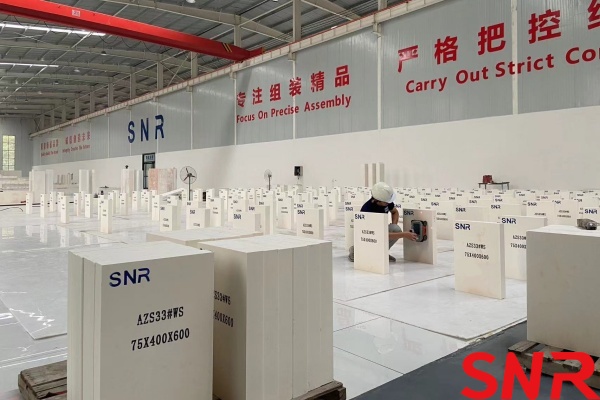

Henan SNR Refractory Co., Ltd. is dedicated to the manufacture, research and development of fused cast AZS refractory blocks and bonded refractory materials for the glass industry. Meanwhile, SNR can provide total solutions and services for glass furnace design, glass furnace construction, renovation, and upgrading. Please contact me if you have any requirements.
CONTACT: 
[email protected]/ WhatsApp:+86 15670323812


 +86-18203976036