

The routine maintenance of key components in float glass melting glass furnaces is fundamental to extending glass furnace service life, prolonging the overall production line campaign, and improving economic benefits. This paper takes common issues in the regenerators of float glass furnaces as the subject of discussion, focusing on the causes of regenerator plugging, its effects, and common treatment methods. Additionally, some effective routine control and preventive measures are proposed, providing useful references for extending glass furnace service life.
1. Introduction
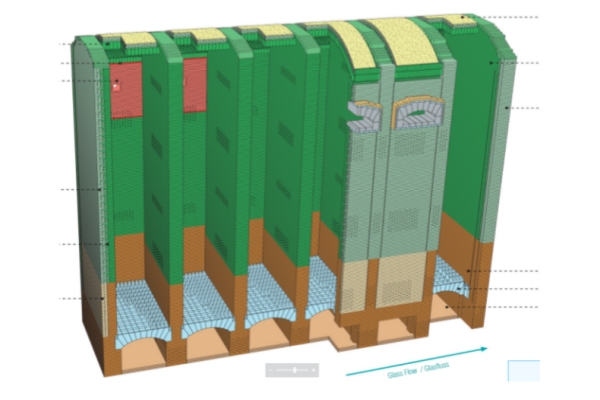
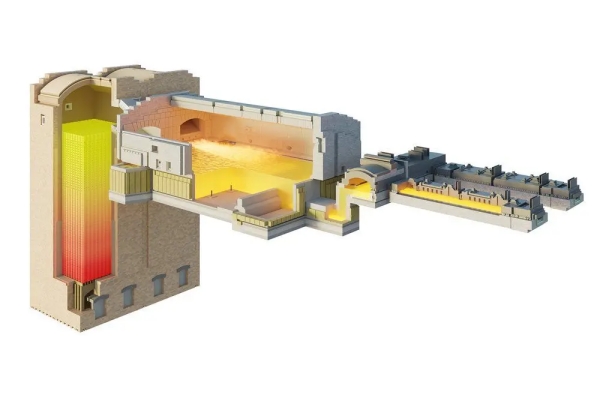
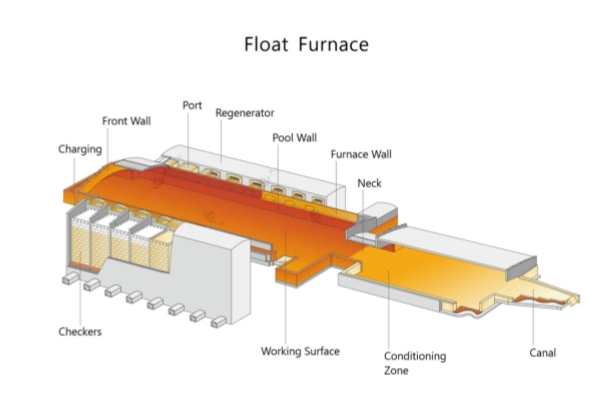
There are several longitudinally symmetrical and independently partitioned regenerators on both sides of a glass melting glass furnace. During production, they not only serve the heat exchange function between combustion air and exhaust gases, but also act as passages for combustion air entering the glass furnace, thus participating in the combustion system. At the same time, they serve as exhaust gas discharge passages, participating in the glass furnace waste gas removal process. They play a vital role in maintaining process stability within the glass furnace and are figuratively likened to the "lungs" of the glass furnace. Therefore, if the regenerators are not used and maintained scientifically and reasonably during production, it will affect the normal operation of the melting glass furnace, leading to reduced production capacity, and in severe cases, directly impact the glass furnace lifespan.
2. Causes of Regenerator Plugging
Through component analysis of the plugging material in the regenerator checkerwork and the ash accumulation at the bottom of the regenerator, it has been determined that the plugging material is mainly composed of SO₃, Na₂O, CaO, etc. In the regenerator plugging material and ash deposits, most are alkali sulfate oxides volatilized from the batch materials, which are closely related to the use of sulfate fining agents. Since high-temperature sulfates condense from liquid to solid state at around 900 °C, the components volatilized from the high-temperature melting zone batch enter the checkerwork, condense and accumulate in the cooler parts of the regenerator. As the checker temperature further decreases, they gradually adhere to the surface of the refractory materials in the low-temperature zones of the checkerwork. Over time, continuous accumulation leads to checker plugging. On the other hand, under the influence of the draft in the regenerator, batch dust near the doghouse is carried back into the regenerator by the reversing flame, also causing checker plugging. From the perspective of the plugging locations in the regenerator checkerwork, the more severely plugged areas in individual regenerators are mostly located at the edges of the regenerator. The main reason is the temperature distribution difference, which results in lower temperatures at the edges, exacerbating the condensation of alkali sulfate oxides and leading to plugging.
3. Effects of Regenerator Plugging
Taking natural gas-fired glass furnaces as an example, if the regenerators are not properly used and maintained on a daily basis, the following issues may arise: poor combustion conditions for natural gas, leading to increased energy consumption; increased flue gas volume within the glass furnace, accelerating glass furnace erosion and refractory damage, thus shortening glass furnace life; changes in the gas flow direction within the glass furnace, disrupting the originally stable process. Additionally, problems such as excessively long flames in individual ports, aggravated regenerator refractory damage, severe checker brick plugging, and clogging of the regenerator rider arches may occur. Ultimately, this leads to unstable melting conditions, reduced melting capacity, and a series of problems related to energy consumption, output, quality, glass furnace maintenance, and cost, forming a vicious cycle.
4. Routine Maintenance of Regenerators
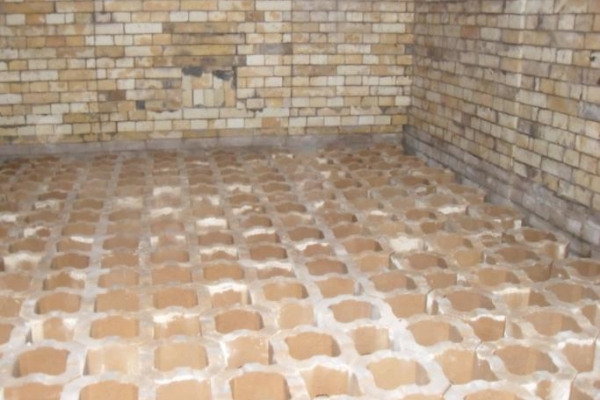
By observing the shadow of the checker bottom through the bottom openings, monitoring changes in branch flue temperatures, and using endoscope inspections, the condition of checker plugging can be detected in time. In the early stages, some measures can be taken, such as blowing ash accumulation on the rider arches through the cleaning ports, adjusting and opening the branch flue dampers to increase the flue gas passage through the checkerwork and raise the checker temperature; appropriately reducing the air flow to the plugged port to minimize heat loss from the checkerwork, thereby maintaining basic stability of the checker temperature. However, these methods can only alleviate checker plugging to a certain extent and cannot solve the root problem. Moreover, some measures may affect the glass furnace process. Therefore, when checker plugging is found to be severe, timely treatment is required. Common treatment methods include:
4.1 Mechanical Unblocking Method
The mechanical unblocking method involves unblocking the checker openings from the bottom, i.e., using a poke bar for manual unblocking. Generally, from the bottom of the rider arch on the firing side (or occasionally from the non-firing side), connected poke bars are used to break the plugging material inside the checker openings by impact, causing it to fall down. Due to the considerable height of the checkerwork, it is usually necessary to fabricate long poke bars or multi-section detachable connecting poke bars according to the size of the checker openings, with the top section having a pointed tip and side wings on the bar.
Since the working area has high temperatures, work is mostly carried out on the upstream side, and the firing reverses every 20 minutes, with an effective working time of about 15–18 minutes per cycle. Coupled with the large number of checker openings, the progress of mechanical unblocking is relatively slow. During mechanical unblocking, the corresponding branch flue damper is usually first lowered or fully closed to reduce the passage of hot gases; meanwhile, the regenerator cleaning doors are left open or partially open to allow air ingress for cooling the work area. However, the entry of cold air can cause glass furnace temperature drops and increased glass furnace pressure, among other issues. Additionally, because the bottom cleaning doors need to be opened multiple times for personnel access, this significantly affects the stability of the glass furnace process.
Currently, with the maturation of checker unblocking technology and the updating of protective equipment, some companies have begun to choose unblocking from the non-firing side. Unblocking from this side has less impact on the process, but the working environment temperature for personnel is higher, shift durations are shorter, and unblocking efficiency is further reduced. Moreover, the space at the bottom of the checkerwork is limited, and the checker openings near the edges close to the regenerator wall are generally more severely plugged, making unblocking more difficult and progress slower. Therefore, the focus is often on unblocking the middle areas to improve efficiency.
When there is excessive plugging material in the checker openings, the operation becomes very difficult, and sometimes unblocking is not possible. Hence, when using mechanical methods, the unblocking rate is generally relatively low. Especially in cases of large-area coking and plugging by alkali sulfate oxides, mechanical unblocking is very difficult to carry out.
4.2 Bottom-Firing Method
The bottom-firing method involves using special burner lances to heat the checker openings from the bottom of the regenerator checkerwork upwards, melting the accumulated plugging material in the openings so that it flows down. Currently, natural gas is mostly used, though liquefied petroleum gas or diesel are also options.
The load-bearing softening point temperature of the checker bricks is generally above 1400 °C, while the melting temperature of sulfate-based plugging materials is generally around 900–1100 °C. Therefore, by controlling the flame temperature of the burner lances at 900–1200 °C, the plugging material can be effectively melted while avoiding damage to the checker bricks. During actual treatment, it is also necessary to evaluate the condition of the checker bricks and rider arches. During the bottom-firing process, localized co-melting between the plugging material and the checker bricks may occur, so the control of flame temperature and direction is extremely critical. Generally, experienced professional companies are contracted for this work. Additionally, if the plugging material consists of collapsed or fractured checker bricks, the heating method is basically ineffective for unblocking and may further increase the risk of collapse.
During the loading and unloading of burner lances and the cleaning of waste slag, the bottom cleaning doors of the regenerator need to be opened for personnel access, which has a certain impact on the glass furnace process for a short period. This heating process is continuous and requires personnel to work in shifts. Observation holes are reserved to facilitate monitoring of the operation and adjustment of the burner lance angles and positions. Operators work outside the regenerator, providing a relatively better working environment, and personnel only need to enter the regenerator during slag cleaning. This method has relatively faster progress and better unblocking results, and is mainly used for severely plugged checkerwork. Generally, the unblocking rate can reach over 80% through heating. The waste gases generated during the heating unblocking process, as well as the gaseous components produced by heating sulfates, have a significant impact on environmental emission data. Therefore, local environmental policies must be reviewed before operation, and advance notification to environmental protection departments is required, with real-time monitoring of the desulfurization and denitrification processes during the operation.
4.3 Hot Repair of Checker Bricks
Some enterprises neglect the protection of regenerators after commissioning, leading to severe plugging or damage to the checker bricks that cannot be addressed by mechanical unblocking or bottom-firing methods. In such cases, it becomes necessary to replace the checker bricks.
Hot repair of checker bricks refers to the method of replacing the checker bricks in one or more regenerators while the glass furnace is still in operation (without shutdown). This is generally used in the later stages of the glass furnace campaign when severe checker plugging or collapse severely affects production. Hot repair technology for checker bricks is currently relatively mature, with controllable safety risks. After hot repair, the regenerator functions essentially the same as a new regenerator. However, the costs for purchasing bricks, consumables, and construction are relatively high. The construction process has a certain impact on production and requires strict process control. The following points should be noted:
(1) Since the number of regenerators actually participating in combustion is reduced during the checker replacement process, and the large opening of hot repair doors allows cold air ingress for cooling, maintaining the glass furnace temperature is of paramount importance. Depending on temperature requirements, appropriately reducing the pull rate and adding cullet can compensate for the resulting heat deficit, minimizing production losses and speeding up process recovery after the hot repair.
(2) During the hot repair process, to prevent the temperature in the repair area from dropping too quickly, some natural gas combustion should be maintained in the port corresponding to the repair area. However, since the original combustion air passage has been dampered off, the required combustion air is provided by increasing the air-to-gas ratio in adjacent ports and by allowing some cold air infiltration through the insulation panels on the water-cooled beams. Therefore, the insulation panels on the water-cooled beams should not be sealed too tightly, so as to ensure basically normal combustion in that port and prevent the flame from becoming black. During operations such as opening or closing hot repair doors and cleaning doors, or installing or removing insulation panels, the amount of cold air infiltration changes suddenly. At these times, glass furnace pressure and flame combustion conditions will change significantly, and timely and sufficient adjustments to the heat input and air-to-gas ratio must be made according to actual conditions to ensure normal glass furnace pressure and flame characteristics.
(3) The number of layers of the replaced checker bricks should be consistent with the original design, so as to maintain, to the greatest extent possible, the heat storage capacity of the repaired regenerator equal to that of the other regenerators, thereby ensuring that the preheating temperature of the combustion air remains unchanged and improving combustion efficiency.
5. Routine Preventive Maintenance of Regenerators
Problems in regenerators do not arise solely from unreasonable process conditions at a single point in time; they usually develop over a relatively long period. Therefore, it is necessary to establish a scientific, reasonable, and comprehensive set of procedures for the use and maintenance of the regenerator system.
(1) Regularly conduct checker bottom shadow inspections to accurately monitor and evaluate changes in checker plugging: The change in the shadow at the bottom of the regenerator checkerwork is the most intuitive indicator of checker plugging conditions.
(2) Monitor the temperature changes at the regenerator crown and branch flue, and set warning temperature values. When the temperature reaches or approaches this warning value, process adjustments should be made to prevent accidents in the regenerator. Changes in the branch flue temperature reflect, to a certain extent, the degree of checker openness and have a certain predictive value. When a particular checker becomes plugged, the flue gas volume passing through that checker decreases, causing its temperature to drop, while it may also cause the temperature of adjacent checkers to rise due to increased gas flow. Lower temperatures make volatiles in the flue gas more prone to condensation, further aggravating the plugging; excessively high temperatures accelerate checker erosion and endanger safety.
(3) Individual port damper openings: There is still some debate regarding the proper opening of individual port dampers. The general view is that the primary function of the exhaust-side dampers is only to extract waste gases. Based on this view, the opening of each port damper should be determined according to the amount of waste gas generated in the corresponding section of the melting glass furnace.
(4) Establish a long-term checker maintenance plan. Based on routine glass furnace inspection results, regularly unblock plugged checker openings and clean ash accumulation under the regenerator rider arches.
(5) The glass furnace atmosphere affects the ability of the glass melt to fine and eliminate bubbles. Therefore, during the checker unblocking process, constant attention must be paid to the combustion condition of the burners and the residual oxygen levels in each regenerator, so as to ensure a stable glass furnace atmosphere.
(6) When establishing the glass furnace temperature curve, consideration should be given to protecting the regenerators. Conditions such as excessively long flames or excessively high temperatures should be avoided, as they can directly damage the regenerators.
6. Conclusion
The occurrence of problems in regenerators usually takes a relatively long time. Checker plugging may be caused by collapsed checker bricks, or by sulfate condensation, dust accumulation, or a combination of factors. The root cause of brick deformation and collapse is that the service temperature of the bricks exceeds their load-bearing softening point. The proper use and maintenance of the regenerator system is one of the important tasks after a plant is commissioned. When checker plugging occurs, appropriate treatment should be carried out to ensure, as much as possible, the normal stability of the production process. At the same time, it is necessary to establish a set of reasonable and comprehensive procedures for the use and maintenance of the regenerator system, which can, to a certain extent, effectively prevent and slow down checker plugging.
By Zoe Lee. For inquiries, please click here contact me.


 +86-18203976036