

How can glass furnaces achieve better energy savings? This is a difficult problem for many enterprises today.
Glass factories are major energy consumers. The primary energy-consuming part of a glass factory is the glass furnace, which accounts for over 75% of total energy consumption. Therefore, focusing on energy savings in glass furnaces is a matter of urgency. Over the years, we have adopted many energy-saving measures in areas such as glass batch formulation, charging systems, combustion systems, furnace structure, furnace body insulation, waste heat utilization, and operational control, achieving significant results. Many plants have seen marked reductions in fuel consumption indicators, with some reaching first-class or special-class furnace levels. However, compared to international standards, there remains a considerable gap. We must continue our efforts to further reduce energy consumption. Several energy-saving approaches are proposed below:
1. Raising Glass Melt Temperature Without Increasing Flame Temperature
7. Changing Batch Formulation and Batch Pelletizing
8. Using High-Quality Refractory Materials with Reasonable Compatibility
1. Raising Glass Melt Temperature Without Increasing Flame Temperature
Raising the glass melt temperature accelerates the melting rate and shortens melting time, thereby increasing output and reducing unit consumption. Specific methods are:
(A) Increase radiant heat transfer from the flame space to the glass melt.
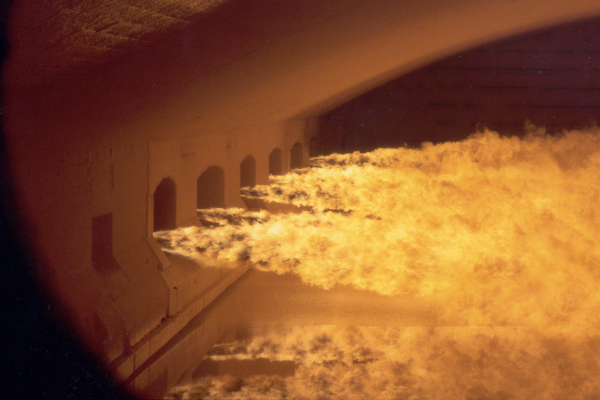
 Glass melt selectively absorbs radiant energy. Wavelengths below 3 microns can penetrate the melt surface and transmit downward. What can emit radiant energy below 3 microns are carbon particles in the flame and the inner wall surfaces of the furnace space. Therefore, increasing flame emissivity (through oxygen-deficient atmospheres or carbon addition measures) and maintaining a high emissivity value of the furnace masonry (related to the surface roughness and temperature of the masonry. The emissivity values of fireclay bricks and silica bricks at high temperatures are: 0.61-0.62 at 1000°C, 0.52-0.53 at 1200°C, 0.47-0.49 at 1400°C. The emissivity value of fused cast refractory blocks at high temperatures is 0.4-0.5) can increase the radiant heat transfer from the flame space to the glass melt.
Eliminate the "cold air" film near the melt surface. Attention should be paid to the height of the burner block bottom plate from the melt surface and the flame ejection angle. Oxygen lancing measures can also be considered (overseas, injecting oxygen at speeds of 195-500 m/s accelerates heat transfer, raising the flame temperature near the melt surface by about 100°C).
(B) Improve the temperature or temperature uniformity of the glass melt within the furnace tank.
The viewpoint is to increase heat transfer from the flame to the glass melt by lowering the melt surface temperature. Lowering the melt surface temperature simultaneously improves the temperature uniformity of the glass melt in the depth direction. Measures to achieve this include:
Bottom bubbling (attention must be paid to the purification of the bubbling medium and the corrosion of the bubbler bricks).
Deepening the tank depth–This can intensify vertical convection, improving the temperature uniformity of the glass melt in the depth direction, while also adapting to higher melting rates.
Furnace body insulation.
Electric boosting.
This approach is based on increasing the glass melt temperature in the refining zone, reducing return flow, and selecting high-quality glass melt to enter the throat. This can improve the output and quality of the glass melt and reduce losses from return flow. The measure to achieve this is: installing a low, wide sill to create a shallower refining zone, combined with a submerged throat (submerging may not be necessary when melting dark-colored glass).
Most factories report that homogenization is a key process affecting product quality. Currently, the homogenization process is largely in a state of "inherent deficiency and acquired imbalance." After entering the furnace, the batch material struggles to maintain its pre-mixed uniformity, causing compositional inhomogeneity. The thermal permeability of the glass melt and heat dissipation from the furnace to the surroundings cause temperature inhomogeneity. Relying solely on natural diffusion for homogenization is clearly insufficient. Therefore, forced homogenization measures must be adopted. Currently effective measures include: bottom bubbling (most noticeable for dark-colored glass), forehearth stirring, draining from the working end or forehearth bottom (providing a drain hole), and forehearth electric heating.
When using stirring measures, attention must be paid to the stirring position, stirrer immersion depth, and stirring process, otherwise the desired effect will not be achieved. The material quality of domestic stirrers is an issue that urgently needs resolution. Surface melt flow can not only enhance transverse flow and improve temperature uniformity, but also pull away surface scum and cords. The size of the ear scoop should be appropriate to avoid excessive heat loss. Draining can be continuous or intermittent.
Electric heating can significantly improve temperature uniformity in the depth direction of the forehearth channel, but the temperature distribution at the horizontal plane of the melt may not always improve. Electrode shape, determination of glass melt resistance between electrodes, and methods for electrode adjustment, installation, and maintenance are issues requiring attention when adopting electric heating. While implementing forced homogenization measures, the role of natural diffusion must still be fully utilized. Therefore, careful consideration must be given to the size of the working end and the length of the forehearth during design.
The stability of gob shape, size, and temperature is a prerequisite for ensuring forming quality and output. The degree of separation between the forehearth and the working end, as well as the forehearth‘s cross-section, dimensions, insulation status, heating system, and cooling system, are the main factors affecting stable feeding. Full separation between the forehearth and the working end allows the forehearth to maintain an independent operating regime free from interference. The practice in some plants of not using full separation and instead relying on heat from the melting zone to heat the forehearth is debatable.
A saddle-shaped cross-section at the bottom of the forehearth can reduce transverse temperature differences. Appropriately deepening the spout can increase static pressure head, making gob temperature more stable. The length and width of the forehearth should be determined based on the melt flow rate and output requirements. A slightly longer forehearth is advantageous for temperature adjustment, accommodating changes in flow rate over a wider range.
Heat dissipation from the forehearth is substantial, especially at the spout area, so insulation must be strengthened. The heating and cooling system must be able to flexibly and reliably adjust the glass melt temperature and maintain temperature uniformity. The cooling system provides coarse adjustment, while the heating system provides fine adjustment. Most people believe that a combined system of multi-nozzle gas heating and electric heating is ideal.

(A) Reduce unavoidable heat losses, such as heat dissipation from the furnace body surface, radiation heat loss from openings, and heat carried away by gases escaping from openings and brick joints. Measures include:
Furnace body insulation: China has achieved significant results using furnace body insulation in recent years, but this is only the initial stage. The insulation effect can be further improved. Directions include developing multi-layer composite insulation layers, using composite (e.g., sandwich-type, filled-type) insulating materials, developing bulk concrete-type insulating materials, and researching sealing materials compatible with various refractory materials.
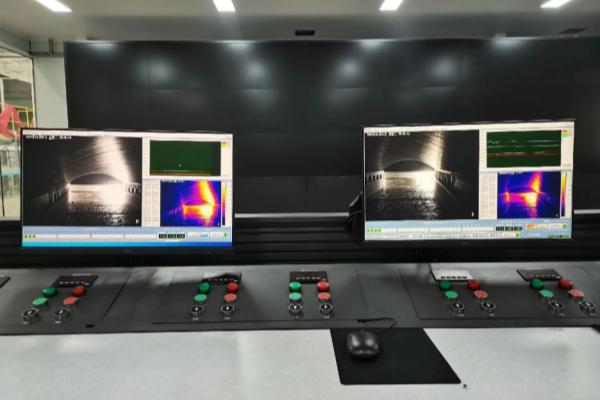
Sealing of openings and brick joints: Attention must be paid to locations such as charging openings, temperature measurement holes, and observation holes. Where conditions permit, fully enclosed charging machines (such as screw-type or enwrapping-type) should be selected. Embedded corundum tubes should be used for temperature measurement, and industrial television should be adopted to observe flames and melting conditions.
Furnace scale enlargement: The larger the furnace scale, the lower the heat dissipation per unit output.
(B) Reduce heat from reheating: Primarily, reduce the heat consumed by reheating return flow glass melt (typically, this heat accounts for about one-tenth of the heat consumed for glass melting). Measures include: installing a sill, submerging the throat, appropriately reducing the throat height, and appropriately lowering the temperature of the glass melt entering the throat.
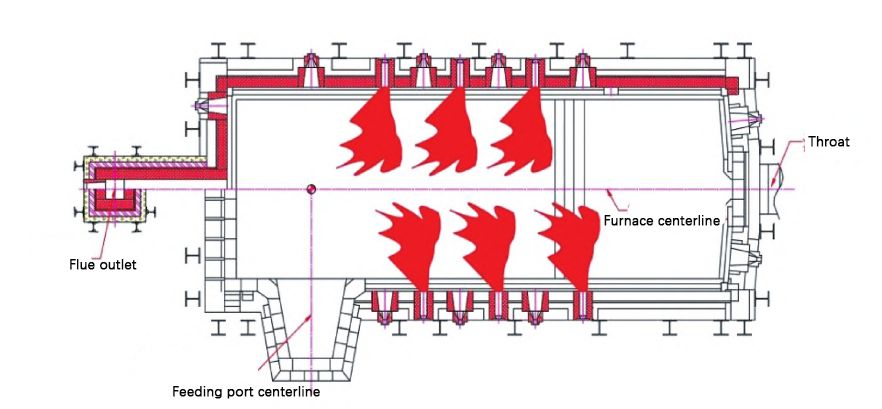
(A) The fuel must undergo complete combustion to release its full heat content. For oil firing, oil nozzles with excellent atomization performance should be selected (such as the domestically produced GNB-type internal-mixing nozzle, or mechanical-medium compound atomization nozzles from Japan, the US, and Germany); measures should be taken to enhance atomization, and the burner brick structure and front wall height must be designed to match the specific nozzle used. For gas firing, an appropriate momentum ratio between the air and gas should be determined, and it must be ensured that the air envelops the gas stream.
(B) Improve heat exchange efficiency and maximize the air preheating temperature. To achieve this, increase the heat transfer surface area of the checker bricks, use taller checker work, and adopt novel checker brick shapes and arrangements (such as cruciform and cylindrical bricks arranged in basket weave or chimney patterns). Also, research checker brick materials and the uniformity of gas flow distribution within the checker work (the uniformity of gas flow distribution is directly related to the utilization rate of checker bricks. Factors affecting distribution uniformity include the construction coefficient of the checker work and the ratio of the upper and lower channel volumes of the checker work to the total checker work volume).
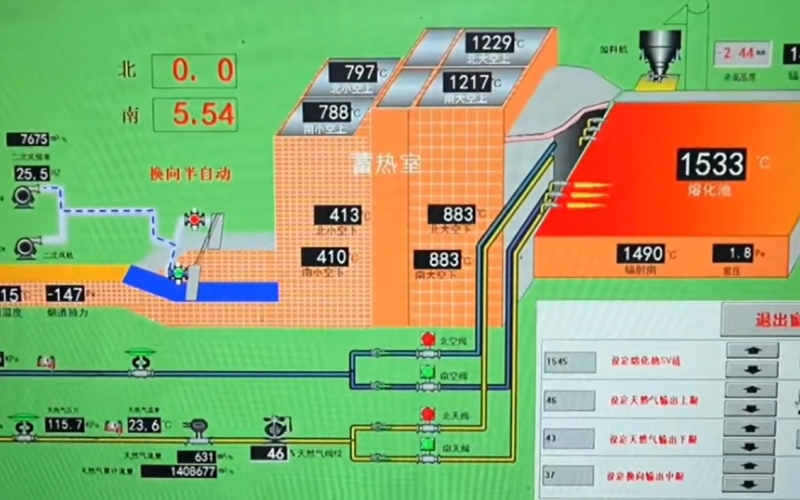
(C) Waste heat recovery from flue gas: The heat carried by the flue gas exiting the regenerators should be recovered as much as permissible conditions allow. Many plants have installed waste heat boilers in the flue system. A few plants have also installed heat pipes to recover heat. Additionally, research should be conducted on how to use flue gas waste heat to heat or even sinter the batch materials.
7. Changing Batch Formulation and Batch Pelletizing
(A) Incorporating a small amount of fluxing components into the batch formulation, such as lepidolite, can lower the glass melting temperature and accelerate glass melting, resulting in a noticeable increase in pull rate.
(B) Batch pelletizing: The shaping treatment of batch materials is a topic of concern for many. We advocate dry pelletizing. The batch is pressed into small pellets without adding binders. This can eliminate dust inside and outside the furnace, accelerate solid-phase reactions, and increase the contact surface area between the batch and the glass melt. This can shorten the melting time, extend the furnace life, and consequently reduce the specific heat consumption.
8. Using High-Quality Refractory Materials with Reasonable Compatibility
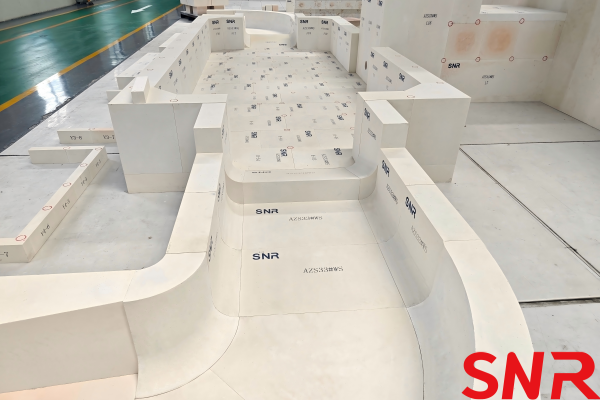
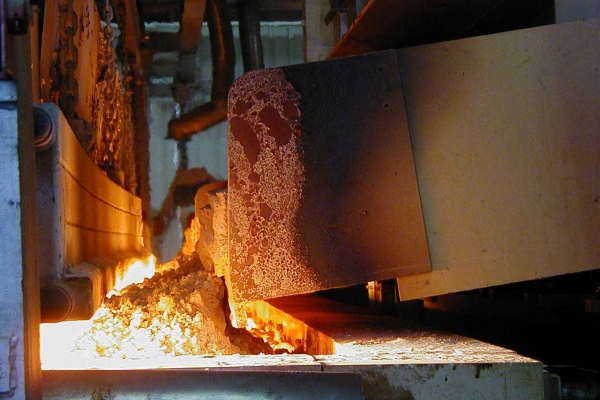
It is currently widely recognized that various high-quality, durable refractory materials (such as fused cast refractories, zircon, chrome, corundum, spinel, and basic refractories, high-density, high-strength refractories, etc.) must be used and reasonably matched to ensure the service life of the entire furnace synchronously extends. As is well known, the quality of the furnace construction materials critically impacts furnace output, glass quality, fuel consumption, and furnace life. We should also expand the use of high-quality refractory materials in more areas of the furnace. From a long-term perspective, spending more on refractory materials is worthwhile. Energy saving in glass furnaces covers a wide range of aspects and requires multi-party cooperation and joint efforts to achieve results.

In summary, energy saving in glass furnaces is a systematic engineering endeavor that spans the entire process of design, material selection, operation, and maintenance. It requires not only the macro-level optimization of furnace structure and operational regimes but also the precise micro-level control of every heat loss point, every combustion event, and every melt flow. From improving flame radiation efficiency to forced homogenization, from reducing ineffective heat losses to maximizing waste heat recovery, and from adopting pelletized batches and high-quality refractories—each pathway is interconnected and mutually supportive. Only by applying the above measures comprehensively and appropriately based on local conditions, and by continuously summarizing and innovating in practice, can we truly achieve high-efficiency, low-consumption operation of glass furnaces, injecting lasting momentum into the sustainable development of enterprises.
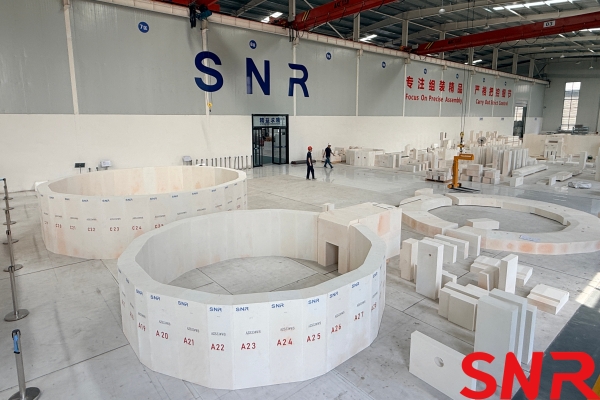
Henan SNR Refractory Co., Ltd. has been specializing in the production of fused cast AZS blocks for more than 25 years. We use high-quality raw materials and advanced fusion and casting technology and equipment to provide customers with high-quality products. From raw material procurement to finished product delivery, every step is strictly quality inspected to ensure that every indicator meets the standards, so you can use it with confidence.
Should you have any inquiries or specific requirements, our team is ready to provide professional support and tailored solutions.
 Contact Information:
Web: www.snr-azs.com
Email: [email protected]


 +86-18203976036