
Introduction: Furnace Top Condition Reflects the Fundamental Difference in Heating Methods
In the glass melting process, the operating condition of the furnace crown—whether it is covered by a layer of unmelted batch materials or directly exposed to high-temperature flames and thermal radiation—is not merely an operational detail but a direct external manifestation of the furnace‘s heating method. The so-called "cold-top" refers to a condition in which the crown is covered by a batch layer with a relatively low surface temperature, a state that occurs almost exclusively in all-electric melting furnaces. The so-called "hot-top" refers to a condition in which the crown is open and directly subjected to flame radiation and high-temperature flue gas scouring, which is the typical characteristic of flame-heated furnaces and flame-electric boosting furnaces.
All-electric melting furnaces rely on Joule heat generated by electric current passing through the high-temperature glass melt to achieve melting, with the glass melt itself serving as the heating element and the heat source originating from within the melting tank. Because heat is transferred from the bottom upward, the melt surface temperature is sufficiently high to sustain the melting reactions but not high enough to completely melt the uppermost layer of batch materials, which naturally forms the cold top. The surface temperature of the cold top typically ranges from 200°C to 400°C, allowing operators to carry out routine work near the crown—a stark contrast to the incandescent state of a hot-top furnace crown exceeding 1500°C.
Flame-heated furnaces and electric boosting furnaces, in contrast, rely on fuel combustion above the melt surface to release heat, with high-temperature flames and hot flue gases coming into direct contact with the crown structure, inevitably placing the crown in a hot-top state. Under these conditions, the inner surface temperature of the furnace crown typically reaches 1550°C to 1600°C, with localized hot spots even higher. The crown refractories must not only withstand extreme temperatures but also resist high-velocity flue gas scouring and chemical attack, making the service environment far more severe than that of the superstructure in cold-top furnaces.
The difference in heating mechanisms underlying these two crown conditions determines the temperature field distribution within the furnace, the chemical atmosphere environment, the behavior of volatile components, and consequently imposes distinctly different requirements on refractory material selection. Conventional large-scale cross-fired regenerative hot-top furnaces can achieve single-furnace capacities of 1000 tonnes per day or even higher, but suffer from high heat consumption and large capital investment, with thermal efficiency typically only 25% to 35%. All-electric cold-top furnaces are energy-efficient, environmentally friendly, produce glass of excellent quality, and can reduce volatile emissions by more than 90%, but due to limitations imposed by electrode arrangement and current distribution uniformity, single-furnace capacity is generally difficult to exceed 200 tonnes per day, making them more suitable for medium-to-high-end specialty glass production. Understanding this fundamental distinction is the first step toward scientific material selection and extended furnace campaign life, and serves as the foundation for glass engineering technicians to make rational decisions when facing different furnace types.
1. Operating Characteristics of Cold-Top All-Electric Melting Furnaces and Refractory Requirements
3. Main Types of Refractories and Their Performance Characteristics
4. Comparison of Refractory Selection Strategies under Cold-Top and Hot-Top Conditions
1. Operating Characteristics of Cold-Top All-Electric Melting Furnaces and Refractory Requirements
The most intuitive structural feature of a cold-top all-electric melting furnace is the layer of unmelted batch materials, typically 100 to 200 mm in thickness, that permanently covers the glass melt surface. This batch layer is not passively present but performs multiple critical thermal functions.
From the perspective of thermal efficiency, this batch layer serves as a highly effective insulating cover. The thermal conductivity of the batch materials is approximately 0.5 to 1.0 W/m·K, far lower than that of refractories. When heat generated by electrical resistance within the glass melt is transferred upward, it is reflected back into the melting tank upon encountering this low-thermal-conductivity batch layer, effectively confining heat within the melting zone. The thermal efficiency of all-electric furnaces can therefore reach above 80%, significantly higher than the 25% to 35% of conventional flame-heated furnaces. From the environmental protection perspective, this batch layer acts as a physical sealing barrier, effectively confining volatile components such as boron oxides, fluorides, and alkali metal oxides within the melting tank, greatly reducing hazardous gas emissions and chemical attack on the furnace superstructure. Measured data indicate that volatile emissions from all-electric cold-top furnaces can be reduced by more than 90% compared to hot-top furnaces of equivalent capacity—a significant reason why all-electric furnaces are favored under increasingly stringent environmental regulations. From the process perspective, the batch layer also provides auxiliary fining functions: bubbles rising from the glass melt are blocked by the cold batch layer and cannot escape directly, instead accumulating, coalescing, and collapsing beneath the layer, which actually facilitates the fining and homogenization of the glass melt.
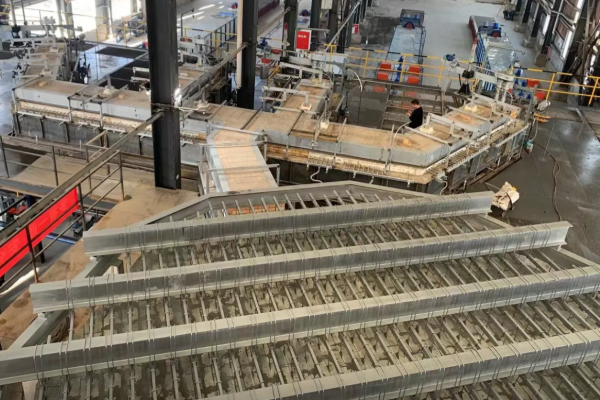
However, it is precisely the presence of this cold top that imposes highly unique performance requirements on refractories for all-electric furnaces.
- First, the tank walls, tank bottom, throat, and electrode port areas that come into direct contact with the glass melt are subject to long-term service at temperatures of 1450°C to 1580°C, enduring continuous scouring by high-temperature glass melt and intense chemical attack. The refractories are required to possess extremely high density (open porosity typically controlled below 2%), excellent corrosion resistance, and good high-temperature volume stability. Taking the tank wall hot spot area as an example, due to concentrated current density and strong glass melt convection, the corrosion rate in this area is often several times that of other furnace areas, making it the life-limiting critical zone of the entire furnace. The selection and maintenance of the hot spot area directly determine the furnace‘s cold repair cycle, which is why the refractory grade in this region is typically upgraded by one level compared to other tank wall areas.
- Second, electrical insulation performance is required. All-electric furnaces rely on electrodes to input current into the glass melt, and the refractories surrounding the electrodes are inevitably subjected to strong electric fields. If the electrical resistivity of the material at high temperatures is insufficient, shunt currents will form—current bypassing the glass melt and flowing directly through the refractory—causing both electrical energy waste and localized overheating that accelerates electrochemical corrosion of the material. In severe cases, this may even lead to melt-out accidents. Therefore, refractories used in electrode port and near-electrode areas must maintain sufficiently high electrical resistivity at elevated temperatures, a requirement that is almost never considered in refractory selection for flame-heated furnaces. In engineering practice, resistivity testing of electrode port bricks is an important quality control step, and substandard products are strictly prohibited from being used in critical locations.
- Third, thermal shock resistance is required. Although the temperature fluctuation amplitude in cold-top furnaces is smaller than that in hot-top furnaces, rapid localized temperature changes can still occur under conditions such as electrode switching, batch feed fluctuations, or reheating after shutdown, requiring refractories to possess adequate thermal shock resistance to prevent cracking and spalling. This is particularly critical during the reheating process after furnace shutdown for maintenance—improper heating rate control can cause electrode port brick cracking. Therefore, the coefficient of thermal expansion and thermal shock resistance parameters of refractories are essential indicators that must be examined during material selection.
From an engineering practice perspective, the refractory selection scheme for a 5-tonne-per-day opal fluoride glass all-electric melting furnace serves as a typical reference: electrode port bricks selected as AZS 41 full-density refractories, other critical areas in contact with the glass melt using AZS 33 full-density materials, tank bottom constructed with AZS 33 thin slab bricks combined with zircon-based ramming mass, bottom insulation thickness reaching 600 mm, side wall insulation thickness at 230 mm, with a design campaign life of 12 to 14 months. This configuration fully embodies the selection philosophy of "intensive investment in critical areas, graded selection for general areas, and optimized insulation structure." For larger production requirements, such as a 100-tonne-per-day borosilicate glass all-electric furnace, the selection standards must be further elevated—the throat and electrode ports often require upgrading to high-zirconia bricks or specially formulated low-glass-phase AZS bricks to ensure service life matching the longer design campaign (typically requiring 3 to 5 years). For electrode materials, molybdenum electrodes, with their high melting point (2620°C), good electrical conductivity, and weak reactivity with most glass melts, have become the mainstream choice for all-electric furnaces.
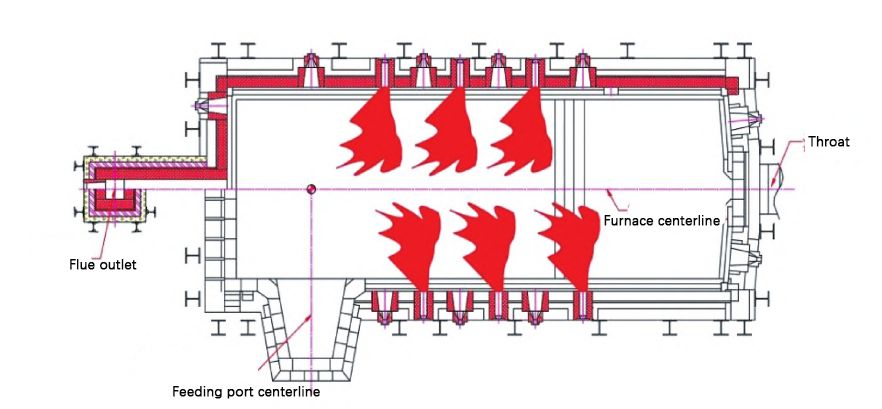
In stark contrast to cold-top all-electric furnaces, the crown and superstructure of hot-top flame-heated furnaces and flame-electric boosting furnaces are directly exposed to high-temperature flames and hot flue gases generated by fuel combustion. The furnace crown is the component subjected to the highest thermal load in the entire furnace, with service temperatures typically reaching 1550°C to 1600°C, and localized hot spots even higher. In regenerative furnaces, high-temperature flue gases scour the crown inner surface at velocities of 10 to 20 m/s, and this high-velocity gas flow not only brings intense convective heat transfer but also accelerates the kinetic processes of chemical corrosion reactions.
An even more challenging issue comes from chemical attack. During the melting of soda-lime glass, borosilicate glass, and other types, the volatilization of alkali metal oxides and boron oxides is unavoidable. Taking borosilicate glass as an example, B₂O₃ has a relatively high vapor pressure at elevated temperatures, and large quantities of boron-containing vapors rise to the crown area where, upon cooling, they condense on the refractory surface and within open pores, forming low-melting-point borate liquid phases. These liquid phases react with SiO₂ in silica bricks to form borosilicate melts of extremely low viscosity, accelerating refractory dissolution and structural spalling through a dissolution-diffusion mechanism. The corrosion products drip back into the glass melt under gravity, becoming sources of bubbles, striae, and stones, severely compromising the optical quality and homogeneity of the glass products. For high-quality products such as optical glass and electronic glass, such contamination is absolutely unacceptable.
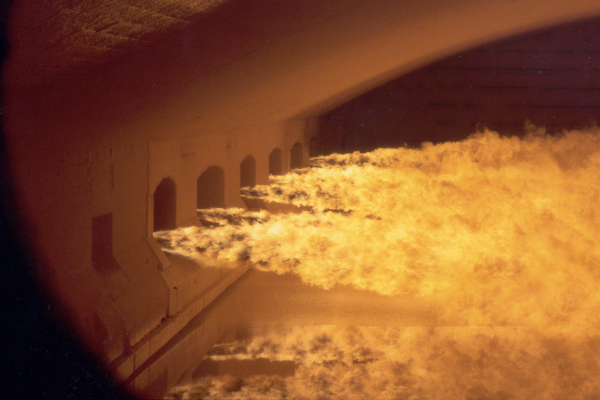
For soda-lime glass, the primary volatile component is Na₂O, which reacts with the crown silica bricks to form low-melting-point sodium silicate glass phases, similarly leading to structural loosening and strength degradation. Research indicates that crown refractories in glass melting furnaces, during service, continuously endure frequent temperature fluctuations and sustained high-temperature gas flow scouring, undergoing a series of irreversible and complex changes in composition and phase structure, including cristobalite precipitation and phase transformation (accompanied by volume changes), glass phase exudation and migration, and formation of new phases through reaction with corrosive media. These changes ultimately lead to structural degradation and failure of the material. These phase changes do not occur in isolation but are interrelated and progressively cumulative, eventually resulting in cliff-edge decline of overall material performance.
Furthermore, the application of oxy-fuel combustion technology in hot-top furnaces in recent years has further intensified the corrosive environment of the superstructure. Under oxy-fuel combustion, the combustion gas is industrial oxygen with purity above 90%, the nitrogen content in the combustion space is greatly reduced, flame temperatures increase, and the concentrations of water vapor and alkali vapor in the flue gas increase severalfold compared to air-fuel combustion. Water vapor can penetrate through open pores into the refractory, reacting with silicate phases and promoting component volatilization; alkali vapor reacts with SiO₂ and Al₂O₃ in the material to form low-melting-point liquid phases, with corrosion rates significantly accelerated. This trend is driving superstructure refractories toward higher-grade materials, and conventional silica bricks in oxy-fuel furnaces have experienced substantially shortened service life, making them no longer economically viable.
Therefore, refractory selection for hot-top furnaces must consider two fronts simultaneously: the lower structure in contact with the glass melt requires corrosion resistance, while the superstructure requires high-temperature resistance, alkali vapor resistance, and thermal shock resistance. The comprehensiveness and systematic nature of selection are higher and more complex than for cold-top furnaces. Selection errors in any single location can lead to premature furnace shutdown for cold repair, resulting in enormous economic losses.
3. Main Types of Refractories and Their Performance Characteristics
In current glass melting furnace engineering practice, the most widely applied and technologically mature refractory systems mainly include the following categories, each with its own performance boundaries and applicable service conditions.
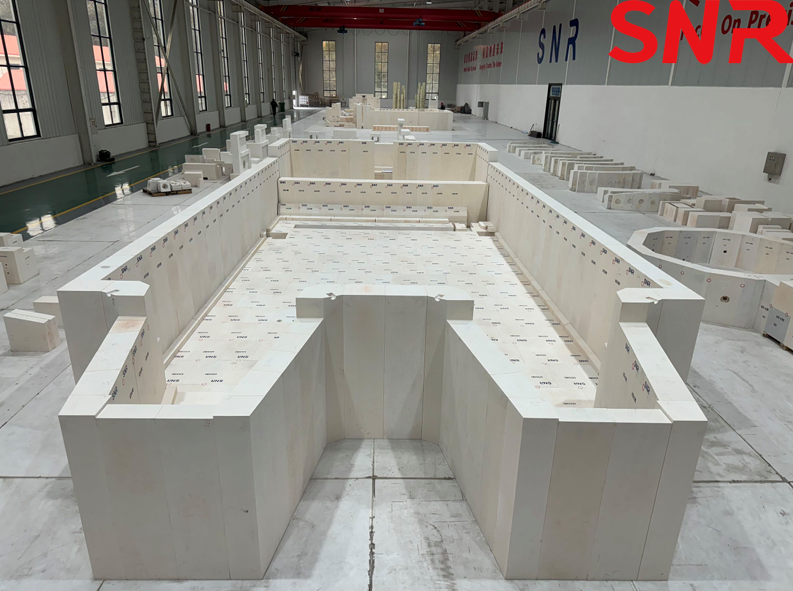
Fused-cast AZS bricks are the mainstream refractory product for glass melting furnaces, with ZrO₂ content ranging from 33% to 41% depending on the specific grade and application. Their excellent corrosion resistance originates from a unique microstructure—an interlocking eutectic skeleton formed by baddeleyite (ZrO₂) and corundum (Al₂O₃) crystals, with a silicate glass phase filling the interstices between the skeleton to provide bonding and stress relief. Corrosion resistance increases proportionally with ZrO₂ content: AZS 41 (ZrO₂ approximately 40.5%) exhibits a corrosion rate controllable to within 1.2 mm/24 h under standard test conditions of 1500°C × 36 h, significantly outperforming AZS 33 . However, the increased ZrO₂ content also raises the glass phase exudation temperature and substantially increases material cost, so graded selection is required in engineering practice based on the criticality of each furnace location. The glass phase content and its distribution play a decisive role in determining high-temperature performance—excessive glass phase accelerates creep deformation under load and provides pathways for alkali vapor penetration, while too little glass phase increases brittleness and complicates the manufacturing process. In terms of casting methods, zero-shrinkage casting (WS) concentrates shrinkage cavities into the riser portion through rational design, which is then removed during processing to yield virtually defect-free full-density products suitable for electrode ports and throats where requirements for dimensional accuracy and gas-tightness are most demanding. Conventional casting (PT), by contrast, is suitable for general areas such as side walls and tank bottoms, offering an optimal balance between performance and cost. Low-glass-phase AZS products developed in recent years (such as grades ER1685 and ER1711) reduce glass content from the traditional 16-20% to below 14% through optimized melting, casting, and annealing processes. This reduction significantly improves high-temperature creep resistance and alkali vapor corrosion resistance because the diminished glass phase provides fewer pathways for corrosive vapor penetration and reduces viscous flow deformation under load, making these products particularly suitable for hot-top furnace superstructures and oxy-fuel furnace crowns where combined thermal and chemical loads are most severe.
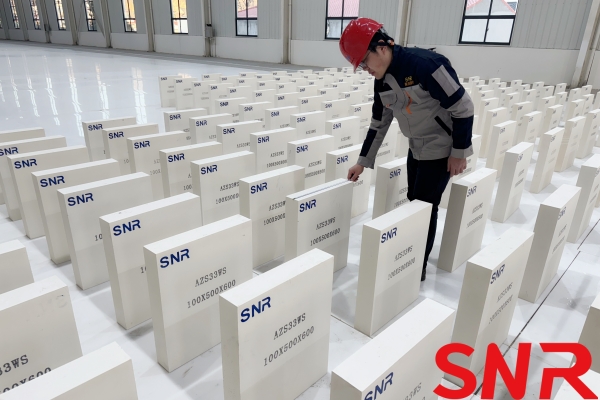

High-zirconia bricks are high-end refractories with ZrO₂ content exceeding 85%, with premium grades reaching 94.5% or more. They were originally developed to meet the highly corrosive melting conditions of specialty glasses such as color cathode ray tube glass and alkali-free glass for liquid crystal display substrates. Their microstructure consists almost entirely of baddeleyite crystals, providing exceptional corrosion resistance against virtually all glass compositions while causing minimal contamination of the glass melt—a critical requirement for producing glasses with high optical uniformity and strict purity standards. Laboratory corrosion tests have demonstrated that under identical conditions, the corrosion rate of high-zirconia bricks can be more than 50% lower than that of AZS 41 , and the material exhibits near-zero reactivity with most glass components. However, the cost of high-zirconia bricks is approximately 5 to 10 times that of ordinary AZS bricks, and their thermal expansion behavior is significantly anisotropic due to the crystallographic nature of baddeleyite. Baddeleyite undergoes a reversible monoclinic-to-tetragonal phase transformation at approximately 1100°C, accompanied by a volume change of about 7%, making these bricks extremely sensitive to heating schedules during furnace start-up—excessive heating rates can lead to severe thermal stress and brick cracking. Their thermal shock resistance is also inferior to AZS materials, rendering them unsuitable for applications involving frequent temperature fluctuations. Therefore, they are typically deployed in a targeted application strategy—only at the most critical locations such as throats, electrode ports, and tank bottom weirs in specialty glass furnaces where melt purity and corrosion resistance are paramount, rather than throughout the entire furnace.
Fused-cast α-β alumina bricks and β-alumina bricks provide an important supplement outside the Al₂O₃-SiO₂-ZrO₂ ternary system. β-alumina bricks contain relatively high levels of alkali metal oxides (Na₂O, K₂O, etc.) incorporated into their layered crystal structure, and the alkali ions located between the oxygen layers impart very low reactivity toward alkali vapors. This unique structural feature makes β-alumina bricks particularly suitable for hot-top superstructure applications such as crowns, breastwalls, and upper regenerator checkers, especially in soda-lime glass furnaces where alkali vapor concentrations are high. However, their glass melt corrosion resistance is significantly inferior to AZS materials, and they are more sensitive to temperature fluctuations, making them unsuitable for tank wall areas in direct contact with the glass melt. Fused-cast α-β alumina bricks have a structure in which α-Al₂O₃ (corundum) and β-Al₂O₃ coexist in varying proportions, combining the high corrosion resistance of the α phase with the alkali vapor resistance of the β phase. The ratio of α to β phases can be tailored during manufacturing to achieve the desired balance of properties for specific applications. These materials are commonly used in melting tank areas for high-borosilicate glasses and certain industrial glasses, as well as in structural locations requiring both corrosion resistance and alkali vapor resistance.
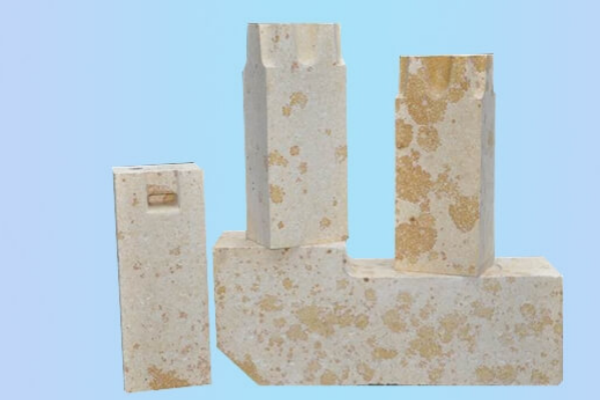
Silica bricks (SiO₂ content typically above 94%) were historically the most traditional and economical choice for glass furnace crowns. They exhibit excellent high-temperature strength and creep resistance due to their highly crystalline microstructure dominated by cristobalite and tridymite phases, which maintain structural stability up to temperatures approaching their softening point. This offers irreplaceable advantages in large-span crown structures where sagging under self-weight is a primary design concern. However, in hot-top furnaces, silica bricks have poor resistance to alkali vapor attack. When contacted by volatile R₂O components condensed on the brick surface, they react to form low-melting-point silicate liquid phases with viscosities as low as 1 to 10 poise at crown operating temperatures. These low-viscosity liquids penetrate deeply into the brick through open porosity, dissolving the cristobalite and tridymite skeletons and causing rapid structural degradation, surface spalling, and crown dripping accidents. For this reason, in modern hot-top furnaces—especially those melting high-volatility glass types such as borosilicate glasses, opal glasses, or those adopting oxy-fuel combustion technology—silica bricks are gradually being replaced by low-glass-phase fused-cast AZS bricks and fused-cast α-β alumina bricks. Nevertheless, in some large float glass furnaces producing soda-lime glass, where volatile attack is relatively mild and the cost advantage and high-temperature strength of silica bricks remain compelling, silica brick crowns still maintain a certain market share.
4. Comparison of Refractory Selection Strategies under Cold-Top and Hot-Top Conditions
Based on the above material systems, targeted adjustments must be made to selection strategies for the two different crown conditions: cold-top all-electric furnaces and hot-top flame-heated furnaces (including electric boosting).
The selection logic for cold-top all-electric furnaces can be summarized as "strengthening the bottom, simplifying the top." Because the batch layer provides protective coverage, the selection pressure on crown and superstructure refractories is greatly reduced, allowing relatively economical silica bricks or high-alumina bricks to be used, with more of the performance budget concentrated on the critical locations in direct contact with the glass melt. The tank wall hot spot area, throat, and electrode ports are the three core control points determining furnace life, and these locations should be preferentially equipped with AZS 41 full-density refractories. For particularly severe corrosion conditions, such as melting high-fluoride opal glasses or high-borosilicate glasses, further upgrading to high-zirconia bricks or specially formulated low-glass-phase AZS bricks is required. The tank bottom and side wall areas experience relatively lower thermal loads and scouring intensity, and can use AZS 33 full-density materials combined with ramming mass and insulation layers. Electrode port areas additionally require attention to high-temperature electrical resistivity, and when necessary, high-resistivity AZS products modified by doping (such as with Nb₂O₅, Ta₂O₅, and other high-valence oxides) should be selected. Insulation layer design is particularly important in cold-top furnaces, because after heat is blocked by the batch layer, conduction heat loss to the tank bottom and side walls becomes the primary loss pathway. A well-designed insulation structure is key to maintaining thermal efficiency above 80%, with bottom insulation thickness typically ranging from 400 to 600 mm and side wall insulation from 200 to 300 mm, with specific values determined by furnace scale and thermal calculations.
The selection logic for hot-top flame-heated furnaces and electric boosting furnaces is closer to "considering both upper and lower structures, comprehensive defense." In addition to ensuring the corrosion resistance of the lower melting tank structure, superstructure selection becomes an equally important issue. The crown and breastwalls not only endure the highest temperatures but also must resist chemical corrosion from alkali vapors, boron vapors, and other volatile components, as well as thermal shock damage from frequent temperature fluctuations. Conventional silica bricks are highly susceptible to alteration in high-temperature alkali vapor environments, with significantly shortened service life, and are gradually being replaced in modern hot-top furnace designs. Among the alternatives, low-glass-phase fused-cast AZS bricks are suitable for high-alkali environments, while fused-cast α-β alumina bricks are suitable for high-boron environments—each has its advantages and must be matched according to the specific glass composition and furnace atmosphere. For oxy-fuel hot-top furnaces, where water vapor and alkali vapor concentrations are multiplied compared to air-fuel combustion, upgrading crown materials to fused-cast alumina-based or low-glass-phase AZS-based systems is even more urgent.
From a life-cycle cost perspective, refractory investment in cold-top furnaces is concentrated in the lower melting tank, with total costs generally lower than for hot-top furnaces of equivalent capacity, but electricity operating costs are higher (electricity accounts for 30% to 40% of total costs). Refractory investment in hot-top furnaces is more uniformly distributed, with total quantity and total investment far exceeding those of cold-top furnaces, but fuel costs are lower and scale economies are significant. Selection decisions must comprehensively consider multiple dimensions, including construction investment, operating costs, product added value, environmental requirements, and expected campaign life.
Cold-top all-electric furnaces and hot-top flame-heated furnaces (including electric boosting furnaces) represent two different technological routes in the glass melting field, imposing fundamentally different service conditions on refractories. In cold-top furnaces, the superstructure experiences relatively mild thermal loads and chemical attack, with the selection focus concentrated on the corrosion resistance and electrical insulation of the melting tank areas in contact with the glass melt—a "focused defense" strategy. Hot-top furnaces, in contrast, must simultaneously address the scouring attack on the lower structure and the alkali vapor corrosion and high-temperature creep on the superstructure, requiring a more diverse and stringent selection system—a "comprehensive defense" selection logic.
In actual engineering practice, correct selection strategies should not rely solely on simple comparisons of material grades or empirical analogies, but should be based on systematic trade-offs involving multiple factors: furnace type, glass composition, heating method, design campaign life, and economic indicators. The graded use of AZS 41 and 33 , targeted application of high-zirconia products in specialty glass furnaces, promotion of low-glass-phase AZS products in superstructure applications, and upgrading to fused-cast alumina-based materials in oxy-fuel hot-top furnaces constitute the basic framework of current refractory selection for glass melting furnaces. With the continued expansion of oxy-fuel combustion technology, exploration of all-electric furnace scale-up trends, and ongoing refinement of life-cycle economic assessment methods, this framework continues to evolve and enrich, requiring engineering technicians to maintain continuous attention and tracking.
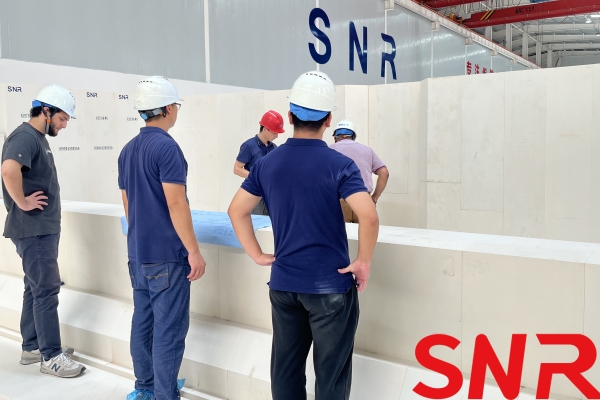
Henan SNR Refractory Co., Ltd. has been specializing in the production of fused cast AZS blocks for more than 25 years. We use high-quality raw materials and advanced fusion and casting technology and equipment to provide customers with high-quality products. From raw material procurement to finished product delivery, every step is strictly quality inspected to ensure that every indicator meets the standards, so you can use it with confidence.
Should you have any inquiries or specific requirements, our team is ready to provide professional support and tailored solutions.
 Contact Information:
Web: www.snr-azs.com
Email:[email protected]


 +86-18203976036