
Refractory materials constitute the fundamental structural and functional components of glass melting furnaces and have a decisive influence on glass quality, furnace campaign life, energy consumption, production stability, and overall manufacturing cost. In modern glass production, the refractory lining is not simply a passive structural material; it forms a critical interface between the high-temperature combustion environment, molten glass, batch materials, and glass furnace structure. The performance and service life of refractories directly affect glass furnace operation and, consequently, the economic performance of the entire production line.
The future development of glass melting technology depends, to a considerable extent, on continuous advances in refractory manufacturing technology, raw material purification, microstructural control, and product quality. From large-scale float glass lines and container glass furnaces to special glass and high-quality optical glass furnaces, the rational selection and scientific configuration of refractories are essential for achieving long glass furnace campaigns, stable thermal conditions, low glass contamination, and reduced specific energy consumption.
Because different areas of a glass furnace are exposed to significantly different combinations of temperature, chemical atmosphere, molten-glass flow, mechanical loading, alkali vapour, batch dust, and thermal cycling, no single refractory material can provide optimum performance throughout the entire glass furnace. Modern glass furnace design therefore follows the principle of graded refractory application, in which the material grade and type are selected according to the specific operating conditions of each zone.
Based on the structural characteristics and operating conditions of glass furnaces, this article systematically discusses the selection principles, performance requirements, degradation mechanisms, and typical refractory materials used in the main glass furnace sections. Particular attention is given to silica brick, fused cast AZS, α-β alumina, β-alumina, high-alumina brick, fireclay brick, magnesia brick, magnesia-alumina spinel brick, and direct-bonded magnesia-chrome brick. The objective is to provide a practical technical reference for refractory selection, glass furnace design, construction, maintenance, and campaign-life management.
1. Glass Furnace Geometry and General Layout
5. Cooling Zone, Throat, and Annealing Lehr — Auxiliary Refractory Selection
6. Thermal Expansion and Compatibility Between Refractory Materials
7. Influence of Glass Furnace Operation on Refractory Life
8. Modern Approaches to Refractory Selection and Glass Furnace Design
1. Glass Furnace Geometry and General Layout
For large-scale float glass production lines, a typical glass melting furnace consists of several interconnected functional sections, including the batch charging area, L-shaped suspended wall, melting zone, throat, cooling zone, working end, forehearth or distribution system, regenerators, and associated glass furnace superstructure. Each section has a distinct thermal and chemical environment and therefore requires a corresponding refractory design.
The L-shaped suspended wall is generally constructed from silica brick or other high-temperature refractory materials, depending on glass furnace design. Its main functions are to separate the batch charging area from the melting zone, control the flame and combustion space, and influence the movement of batch materials and combustion gases. Because this area is exposed to intense thermal radiation, alkali vapour, and batch dust, high-temperature stability and resistance to chemical attack are important considerations.
The melting zone is the principal area where batch materials are transformed into molten glass. The bottom and sidewalls are in prolonged contact with molten glass and therefore experience severe corrosion, dissolution, and mechanical erosion. Fused cast AZS blocks, α-β alumina, β-alumina, and other high-performance alumina-based refractories are selected according to the local temperature, glass composition, and required glass quality. The crown is generally constructed from high-purity silica brick because of its excellent high-temperature structural stability and compatibility with the thermal environment of the glass furnace.
The throat forms the transition between the melting zone and cooling zone. It is subjected to high temperature, glass flow, thermal gradients, and mechanical stresses. Silica brick is widely used because of its high-temperature performance and compatibility with the expansion characteristics of the surrounding silica-based structure. However, the exact refractory configuration should be determined according to glass furnace geometry, glass flow velocity, temperature distribution, and local corrosion conditions.
The cooling zone gradually reduces the temperature of the molten glass before it enters the forming or working area. Since the operating temperature is generally lower than that of the melting zone, α-β alumina and β-alumina refractories can provide excellent corrosion resistance in glass-contact areas. Silica brick and alumina-based materials are commonly used for non-contact structural components depending on the glass furnace design.
The working end and forehearth system require particularly careful refractory selection because they are closely associated with glass conditioning, homogenisation, temperature control, and delivery to the forming process. In high-quality glass production, refractory contamination from the sidewalls, bottom, channels, or superstructure must be strictly controlled because even small refractory-derived inclusions can adversely affect the quality of the final glass.
The annealing lehr, which controls the cooling rate of the glass ribbon after forming, operates under substantially lower temperatures than the glass melting furnace. Its refractory and insulation system therefore focuses more on thermal insulation, dimensional stability, resistance to thermal cycling, and mechanical durability. Fireclay brick and lightweight insulating refractory materials are commonly used in appropriate locations.
The regenerators are critical heat-recovery structures. Their refractory lining is exposed to alternating hot combustion gases and incoming combustion air, together with dust, alkali vapour, condensable compounds, and mechanical loads. High-alumina brick, fireclay brick, silica brick, magnesia-based materials, and direct-bonded magnesia-chrome brick may all be used, depending on the temperature zone and chemical environment.
The overall structural design of a glass furnace therefore follows the principle of graded material application. Since temperature fields, chemical attack intensity, mechanical abrasion, thermal cycling, and load conditions vary considerably from one zone to another, refractory materials must be selected according to the actual operating conditions of each individual location. Correct material selection must also take into account compatibility between adjacent refractory materials, thermal expansion, construction tolerances, and expected glass furnace operating conditions.
2. Crown (Arch)
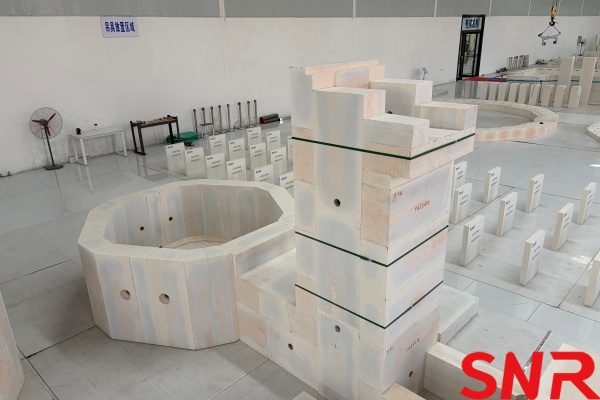
The crowns, including the skewbacks and other supporting components of the melting and cooling zones, operate continuously at temperatures approaching approximately 1600 °C. At the same time, they bear their own structural weight and are exposed to intense flame radiation, alkali vapour, batch dust, thermal gradients, and long-term high-temperature creep.
Consequently, refractory materials used in the crown must possess:
♦ Very high refractoriness;♦ High refractoriness under load;
♦ Excellent creep resistance at elevated temperature;
♦ Good structural stability during long-term service;
♦ Adequate thermal shock resistance;
♦ Low susceptibility to chemical attack by alkali vapour;
♦ Low tendency to contaminate the glass melt;
♦ Appropriate bulk density and thermal conductivity;
♦ Sufficient hot strength and dimensional stability.
Among the various refractory materials available, high-purity silica brick remains the preferred material for the crowns of many conventional glass melting furnaces.
High-quality silica brick is capable of withstanding severe crown operating conditions mainly because of its unique physicochemical characteristics.
First, its refractoriness under load approaches its refractoriness, typically exceeding approximately 1680 °C for high-quality grades. This provides excellent resistance to deformation under sustained high-temperature loading. In a properly designed glass furnace, silica brick can maintain the dimensional stability of the crown for many years.
Second, silica brick has good high-temperature structural stability and adequate compressive strength. The transformation behaviour of silica phases must nevertheless be carefully considered during manufacture, installation, and heat-up. Proper control of the initial glass furnace heat-up procedure is particularly important because silica refractories undergo reversible and irreversible volume changes associated with phase transformations.
Third, high-purity silica brick normally contains more than 96% SiO₂. Since SiO₂ is also the principal network-forming component of most commercial glass compositions, the chemical compatibility between the refractory and the glass is relatively favourable. This is particularly important for high-quality float glass, where refractory-derived contamination can lead to defects such as stones, cords, or other inclusions.
Fourth, high-quality silica brick has relatively abundant raw-material resources and is generally more economical than many advanced fused-cast or specialty refractory products. Its combination of high-temperature performance, chemical compatibility, availability, and cost effectiveness makes it difficult to replace in many crown applications.
However, crown refractories do not remain completely unchanged during service. Their microstructure and physical properties gradually evolve under the combined influence of temperature, atmosphere, alkali vapour, batch dust, and phase transformations.
Chemical attack from alkali-containing vapours and dust is one of the major causes of crown degradation. At the same time, temperature-induced phase migration, impurity redistribution, densification, and secondary phase formation can modify the structure of the hot face. In high-quality silica brick, however, the degradation process is not simply equivalent to rapid melting or dissolution.
Studies indicate that the high-temperature alteration of silica brick is largely associated with the migration of impurities and changes in secondary phases. In certain operating conditions, a self-purification effect may occur near the hot face as volatile or mobile impurities migrate and are removed from the working layer. This can increase the SiO₂ purity of the affected zone and, under favourable conditions, improve its high-temperature creep resistance and corrosion resistance.
Nevertheless, this effect should not be interpreted as meaning that silica brick is immune to corrosion. Excessive crown temperature, improper combustion atmosphere, excessive alkali concentration, batch dust deposition, local overheating, or inappropriate glass furnace pressure can accelerate crown deterioration.
Modern glass furnaces increasingly use accurate control of crown temperature, glass furnace pressure, combustion atmosphere, and heat distribution to minimise local overheating and chemical attack. With appropriate refractory quality, glass furnace design, and operating control, the service life of silica-brick crowns can be extended considerably. In some ultra-large float glass furnaces, crown campaign lives of approximately 8–10 years can be achieved under well-controlled operating conditions.
3. Sidewalls
3.1 Zones in Direct Contact with Molten Glass
The sidewalls of the melting and cooling zones that are directly exposed to molten glass are among the most demanding refractory applications in a glass furnace. These components must withstand high temperature, continuous chemical dissolution by the glass melt, convection and flow-induced erosion, thermal gradients, and mechanical stresses.
The primary requirements for glass-contact sidewall refractories are therefore:
♦ Excellent corrosion resistance against the specific glass composition;
♦ High resistance to mechanical erosion;
♦ High-temperature structural stability;
♦ Low glass contamination;
♦ Stable microstructure during long-term operation;
♦ Compatibility with adjacent refractory materials.
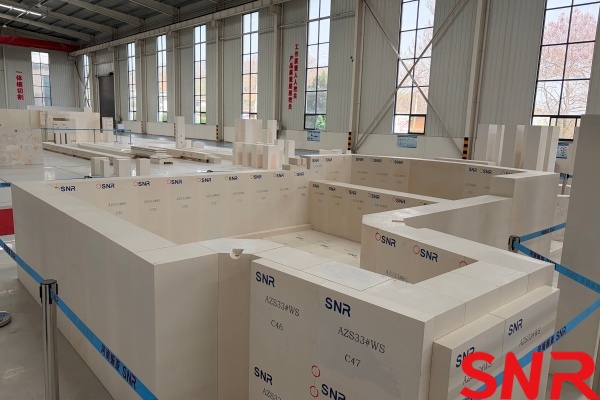
In domestic and international glass furnaces, fused cast AZS (alumina-zirconia-silica) blocks, α-β alumina bricks, and β-alumina bricks are widely used for glass-contact sidewalls. Fused cast AZS blocks exhibit excellent resistance to high-temperature glass corrosion because their characteristic fused-cast microstructure contains crystalline phases such as baddeleyite (ZrO₂) and α-Al₂O₃ embedded in a glassy matrix. The formation and distribution of these phases provide a corrosion-resistant structure that is difficult to reproduce in the same form through conventional sintering processes. The ZrO₂-containing phase contributes significantly to corrosion resistance. Under appropriate conditions, the reaction layer formed between the AZS surface and molten glass can possess relatively high viscosity, slowing the penetration and diffusion of glass components such as Na₂O and CaO into the refractory. This can reduce the rate of refractory dissolution and help suppress certain nephelinisation-related reactions.
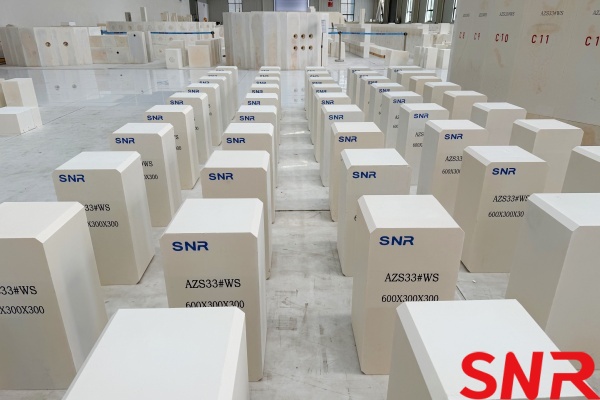
For this reason, fused cast AZS is widely used for the sidewalls and other glass-contact areas of the melting zone. The specific AZS grade should, however, be selected according to the glass composition, operating temperature, corrosion severity, glass furnace geometry, and required glass quality. In severe hot-spot areas of the melting zone, higher-performance grades such as AZS #41 or AZS #36 may be selected, while relatively cooler or less aggressive areas may employ AZS #33 or other grades according to the manufacturer‘s technical specifications.
α-β alumina and β-alumina bricks are another important group of glass-contact refractories. Their principal crystalline phase is alumina, while the amount of glassy phase is generally low. This microstructure provides good corrosion resistance and high-temperature stability. Compared with fused cast AZS, however, alumina refractories contain little or no ZrO₂ crystalline phase. Consequently, the reaction layer formed during corrosion may have different viscosity and diffusion characteristics, and the long-term corrosion behaviour can vary according to glass composition and operating temperature. Importantly, material selection cannot be based solely on the nominal maximum temperature of the glass furnace. When the operating temperature is below approximately 1350 °C, α-β alumina and β-alumina can exhibit excellent corrosion resistance and may outperform fused cast AZS under certain glass compositions and operating conditions. This makes alumina-based refractories particularly attractive for the cooling zone, forehearth, feeder channels, and lower-temperature glass-contact areas. Their use can also reduce the potential risk associated with zirconia-related crystallisation or refractory-derived zirconia inclusions in certain high-quality glass applications.
The selection between AZS and alumina-based materials should therefore be made on the basis of the actual glass composition, temperature, flow conditions, corrosion mechanism, and quality requirements rather than simply applying one material throughout the glass furnace.
3.2 Zones Not in Direct Contact with Molten Glass — Upper Structure / Breastwalls
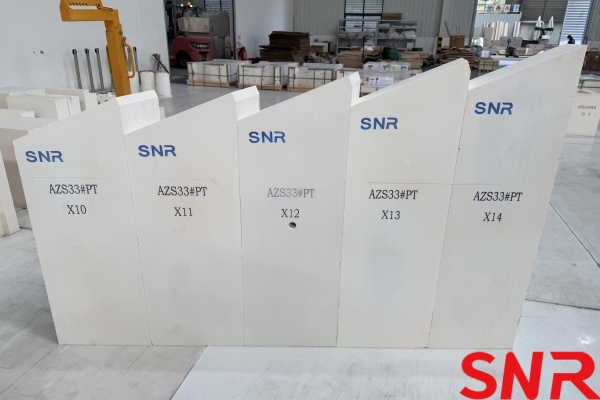
The upper portions of the melting and cooling zone sidewalls that are not directly exposed to molten glass are commonly referred to as breastwalls or upper sidewalls. These areas experience a different combination of service conditions from the glass-contact zone. The main sources of attack include alkali vapour, batch dust, flame radiation, thermal cycling, and local temperature fluctuations. Although direct glass corrosion is absent, chemical attack from the glass furnace atmosphere can still be significant over a long campaign. Depending on glass furnace design, breastwalls may be constructed from silica brick, high-alumina or corundum-based refractories, or other specialised materials. Both silica and alumina-based materials can meet the basic requirements for high-temperature strength and resistance to atmospheric attack, but their selection should be matched to the local thermal and chemical conditions. Hanger bricks and straight bricks are commonly used in these areas because their geometry facilitates installation, structural support, replacement, and connection with adjacent sidewall components. Proper dimensional accuracy is particularly important because gaps or misalignment between individual bricks can create local hot spots, promote alkali penetration, or increase mechanical stress.
The breastwall design must also consider thermal expansion compatibility with adjacent structures, particularly the crown, sidewalls, suspended walls, and supporting steelwork. Differential thermal expansion can generate significant stresses during glass furnace heat-up and normal operation. If these stresses are not properly accommodated, cracking, displacement, or spalling may occur.
Therefore, refractory selection and structural design should be considered together. Expansion joints, mortar joints, brick tolerances, anchoring systems, and cooling arrangements all contribute to the long-term stability of the glass furnace superstructure.
4. Regenerators
4.1 Regenerator Crown and Sidewalls
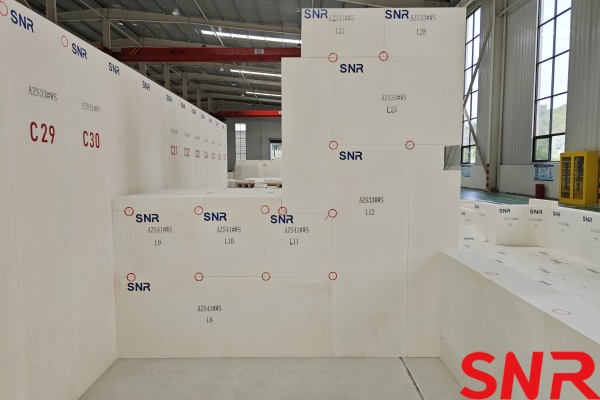
Regenerators are essential components of traditional glass melting furnaces because they recover heat from exhaust gases and transfer it to incoming combustion air. Their refractory linings are exposed to high temperatures, thermal cycling, dust deposition, alkali vapour, condensable compounds, and mechanical loads. The severity of chemical and thermal attack generally varies with the height of the regenerator. Therefore, refractory selection should follow a graded configuration corresponding to the temperature and corrosion conditions in the upper, middle, and lower sections.
The regenerator crown and upper sidewalls may be constructed from high-quality silica brick where operating temperatures exceed approximately 1400 °C and the thermal conditions are suitable. The excellent creep resistance and high-temperature dimensional stability of silica brick make it suitable for long-term structural service.
For the middle sidewalls, where temperatures are typically in the range of approximately 1000–1200 °C, low-porosity fireclay brick and high-alumina brick may be used. Low-porosity fireclay brick provides a good balance between cost, mechanical strength, and resistance to atmospheric attack, while high-alumina brick offers higher refractoriness under load and generally better resistance to alkali-related corrosion.
The lower regenerator sections, commonly operating below approximately 900 °C, are subjected to lower thermal loads but may experience significant mechanical loading, cold-air impact, and thermal cycling. Ordinary fireclay brick and low-porosity fireclay brick are therefore frequently used because they provide adequate strength and durability at relatively low cost.
In recent years, the use of magnesia-chrome, direct-bonded magnesia-chrome, and magnesia-alumina refractories has increased in selected regenerator zones. These basic refractories can offer excellent resistance to certain alkali and sulphate-containing atmospheres, particularly in glass furnaces using fuels with relatively high sulphur content.
However, alkaline refractories must be selected carefully because their compatibility with the glass furnace atmosphere, glass composition, and environmental requirements must all be considered. The choice of magnesia-chrome materials should also take into account modern environmental and regulatory considerations related to chromium-containing refractories.
4.2 Checkerwork
The checkerwork is the core heat-exchange component of a regenerator. Checker bricks operate under a combination of high temperature, mechanical load, dust deposition, alkali vapour, sulphur-containing compounds, and repeated thermal cycling. Because the checker passages must remain open to ensure effective gas flow, deposition and structural deterioration can rapidly reduce heat-transfer efficiency. Plugging, deformation, cracking, and collapse of checkerwork are therefore among the major causes of glass furnace performance deterioration and, in severe cases, cold repair shutdowns.
The principal requirements for checker refractories include:
♦ High mechanical strength;
♦ Good refractoriness under load;
♦ Low creep rate;
♦ Excellent resistance to alkali attack;
♦ Low tendency for dust adhesion;
♦ Resistance to sulphate-related corrosion;
♦ Good thermal shock resistance;
♦ Slow structural deterioration;
♦ Stable dimensions and adequate permeability.
The refractory grade must be selected according to the temperature and corrosion conditions at different heights of the checkerwork.
Top of Checkerwork
The top section is normally the most severe operating region. Temperatures may reach approximately 1400–1540 °C, while exposure to alkali vapour and dust is also particularly intense. Magnesia brick is commonly used in this region. High-quality magnesia refractories contain a high proportion of periclase crystals and relatively little silicate bonding phase. A well-developed direct-bonded microstructure can provide excellent resistance to high-temperature chemical attack. The direct-bonded structure also helps reduce the penetration of corrosive components and can slow certain structural deterioration processes caused by alkali vapour. Proper microstructural control is essential because excessive secondary phases or inappropriate impurity levels can significantly reduce the service life of checker bricks.
Upper Section
The temperature in the upper section may be approximately 1100–1430 °C. 95% magnesia brick, generally containing MgO ≥ 95%, can provide an appropriate balance between corrosion resistance, high-temperature strength, and cost. Compared with premium grades, 95% magnesia brick may provide sufficient performance under less severe conditions while reducing refractory cost. However, actual selection should still consider the fuel type, alkali loading, sulphur content, dust characteristics, and expected campaign duration.
Middle Section
The middle section is particularly challenging because it often corresponds to the condensation zone for alkali sulphates, including compounds such as Na₂SO₄ and K₂SO₄. Temperatures are typically around 800–1100 °C. In this temperature range, magnesia-based checker materials can react strongly with SO₃, Na₂O, and other alkali-containing species. Low-melting-point complex compounds may form, resulting in volume changes, structural loosening, cracking, and accelerated deterioration.
For this reason, ordinary magnesia brick is generally unsuitable for the most aggressive portions of this zone.
Alternative materials include:
♦ Magnesia-alumina spinel brick;
♦ Direct-bonded magnesia-chrome brick;
♦ Magnesia-zirconia brick;
♦ Forsterite brick.
Among these materials, magnesia-alumina spinel brick has become one of the mainstream choices for many applications. The spinel phase can accommodate certain alkali components and reduce the tendency for destructive expansion reactions. Its combination of chemical resistance, thermal stability, and mechanical strength makes it particularly suitable for the alkali condensation region.
The exact material selection should nevertheless be based on the actual chemistry of the glass furnace atmosphere and operating experience rather than on temperature alone.
Lower Section
The lower checker section generally operates below approximately 800 °C. Compared with the upper sections, the chemical attack is less severe, but mechanical loading remains important. The checkerwork is also closer to the flue system and may be exposed to cold-air impact and thermal cycling. Therefore, good thermal shock resistance, sufficient mechanical strength, and cost effectiveness become the main considerations. Low-porosity fireclay brick, typically with apparent porosity in the range of approximately 12–18%, is commonly used. It provides adequate load-bearing capacity and durability while keeping the overall cost of the checkerwork under control. The overall checkerwork design must also consider checker hole geometry, gas velocity, pressure drop, dust deposition, thermal expansion, and ease of future inspection and replacement. A refractory with excellent intrinsic corrosion resistance may still perform poorly if the checker design promotes excessive dust deposition or uneven gas distribution.
5. Cooling Zone, Throat, and Annealing Lehr — Auxiliary Refractory Selection
The cooling zone is an important transition region in which molten glass moves from the high-temperature melting zone toward the forming and conditioning areas. The temperature is generally controlled within approximately 1200–1350 °C, although the actual temperature profile varies according to glass furnace design, glass composition, production rate, and required glass quality. The crown of the cooling zone and the throat are often constructed using silica brick in order to maintain compatibility with the thermal expansion characteristics of the melting-zone crown and minimise structural stress at the transition.
The throat is particularly sensitive because it represents a narrow passage through which a large volume of molten glass continuously flows. Its refractory lining must therefore withstand both chemical corrosion and hydraulic erosion. Local temperature distribution and glass flow velocity should be considered when selecting the refractory grade.
For cooling-zone sidewalls directly contacting molten glass, α-β alumina and β-alumina bricks are often highly attractive because their corrosion resistance can be excellent below approximately 1350 °C. Compared with AZS, alumina-based refractories can also reduce concerns related to zirconia-containing corrosion products in certain high-quality glass applications.
These materials are therefore widely considered for applications involving high-quality flat glass, container glass, and other products where glass purity and low inclusion levels are critical.
The annealing lehr operates at considerably lower temperatures, commonly within approximately 600–1000 °C, depending on the specific process stage. Unlike the glass melting furnace, the main refractory requirements are resistance to thermal cycling, dimensional stability, mechanical durability, and thermal insulation.
Ordinary fireclay brick, lightweight insulating refractory brick, and other insulating materials can be used according to the local temperature and load requirements. The objective is to maintain the required temperature gradient while minimising unnecessary heat loss and maintaining mechanical stability.
6. Thermal Expansion and Compatibility Between Refractory Materials
Refractory selection for the entire glass furnace cannot be considered independently for each individual brick type. Thermal expansion compatibility between adjacent materials is equally important. Different refractories have different coefficients of thermal expansion and different phase-transformation behaviours. Silica brick, for example, exhibits characteristic expansion associated with its polymorphic transformations, while alumina, AZS, magnesia, and fireclay refractories exhibit different thermal expansion characteristics. Therefore, sufficient expansion joints and appropriate construction allowances must be provided at interfaces between dissimilar refractory materials.
For example, when silica brick is connected with corundum or alumina-based refractory, insufficient allowance for differential expansion can result in excessive compressive stress during heat-up. Conversely, excessive gaps may allow hot gases or alkali vapour to penetrate the refractory structure and accelerate local deterioration.
Transition zones between the glass melting furnace, throat, cooling zone, and regenerators are particularly sensitive. Intermediate refractory materials, flexible structures, carefully designed expansion joints, or appropriate construction sequences may be required to reduce differential thermal stresses.
The design should also consider the interaction between refractory expansion and the steel structure. Glass furnace steelwork, buckstays, suspension systems, and cooling arrangements must provide sufficient flexibility to accommodate thermal movement without generating excessive pressure on the refractory lining.
7. Influence of Glass Furnace Operation on Refractory Life
Even the highest-grade refractory materials cannot achieve their expected service life if glass furnace operation is poorly controlled. Refractory wear is closely related to operating conditions such as temperature distribution, glass furnace pressure, combustion atmosphere, glass level, batch charging pattern, fuel composition, and cooling intensity. Local overheating is one of the most important causes of accelerated refractory wear. Excessive temperature increases the dissolution rate of glass-contact refractories and may accelerate creep and deformation of superstructure refractories. Similarly, excessive alkali vapour concentration can accelerate chemical attack on silica and alumina refractories, while abnormal sulphur conditions may significantly influence regenerator and checker corrosion. Glass flow also plays an important role. Areas with high local flow velocity can experience significantly greater mechanical erosion than relatively stagnant regions. Consequently, refractory selection should consider not only static corrosion resistance but also the combined effects of corrosion and hydrodynamic erosion. Cooling systems must likewise be carefully controlled. Excessive external cooling can create steep thermal gradients and increase thermal stress, whereas insufficient cooling may allow the refractory hot face to reach excessive temperatures. The objective is therefore to establish a stable thermal equilibrium that limits refractory wear without compromising glass furnace efficiency.
8. Modern Approaches to Refractory Selection and Glass Furnace Design
Modern glass furnace engineering increasingly relies on numerical simulation and data-driven analysis to optimise refractory selection. Finite element analysis (FEA) can be used to evaluate thermal stress, structural deformation, and expansion behaviour, while thermodynamic and computational fluid dynamics (CFD) models can assist in predicting temperature distribution, combustion behaviour, glass flow, and corrosion conditions. By combining these tools with actual glass furnace operating data, engineers can identify high-risk areas before construction and optimise the refractory configuration accordingly. Modern refractory development is also moving toward higher purity, controlled grain size distribution, improved bonding systems, reduced open porosity, and optimised microstructures. For fused cast AZS, for example, controlling the distribution and morphology of crystalline phases is essential for achieving a favourable balance between corrosion resistance and glass quality. For alumina-based refractories, reducing impurities and controlling the amount and distribution of the glassy phase can improve corrosion resistance. For magnesia-based refractories, direct bonding and microstructural uniformity are critical factors affecting resistance to alkali and sulphate attack.
At the same time, refractory selection is increasingly influenced by environmental considerations. The use of chromium-containing refractories, for example, requires careful assessment of service conditions, disposal requirements, and environmental regulations. This is encouraging the development and application of alternative materials such as magnesia-alumina spinel and other chromium-free systems where technically and economically feasible.
9. Conclusion
The selection of refractories for glass melting furnaces is by no means a simple process of assigning different materials to different structural components. It is a systematic engineering discipline involving high-temperature chemistry, glass-refractory interaction, fluid mechanics, heat transfer, structural mechanics, thermal expansion, glass furnace operation, and economic management.
From high-purity silica brick used in the crown, to fused cast AZS and alumina-based refractories used in glass-contact sidewalls, and from high-alumina and fireclay materials in regenerators to magnesia-alumina spinel and other specialised refractories in checkerwork, every material represents a carefully balanced solution between temperature, chemical attack, mechanical loading, thermal stress, glass quality, service life, and cost.
A successful refractory design should therefore not focus solely on the nominal temperature rating of a material. Instead, it must evaluate the actual temperature field, chemical environment, glass composition, flow conditions, mechanical stress, thermal expansion, refractory interfaces, construction quality, and operating strategy of the glass furnace as an integrated system.
In practical glass furnace engineering, refractory quality and glass furnace operation are inseparable. Even a premium refractory product may experience premature failure if the glass furnace temperature is improperly distributed, the atmosphere is poorly controlled, cooling conditions are excessive or insufficient, or the refractory installation does not meet the required construction tolerances.
As the glass industry continues to develop toward higher product quality, lower specific energy consumption, longer glass furnace campaigns, greater production stability, and improved environmental performance, refractory technology will continue to evolve toward higher purity, optimised microstructures, improved corrosion resistance, longer service life, and greater sustainability.
Ultimately, the future of glass melting technology will depend not only on the development of more advanced refractory materials, but also on the ability to integrate refractory science, glass furnace design, digital simulation, intelligent process control, and operational experience into a unified engineering system. Such an integrated approach provides a solid technical foundation for extending glass furnace campaign life, maintaining stable glass quality, reducing energy consumption, and improving the overall economic performance of modern glass production.
About SNR Refractory
With extensive experience in the refractory industry and a strong focus on glass furnace applications, Henan SNR Refractory Co., Ltd. is committed to providing reliable refractory products and technical solutions for glass melting furnaces. Our product range covers a wide variety of refractory materials used in different glass furnace sections, including silica brick, fused cast AZS, alumina-based refractories, fireclay brick, high-alumina brick, magnesia brick, magnesia-alumina spinel brick, and other customised refractory products. We understand that refractory selection is closely related to glass furnace design, glass composition, operating temperature, corrosion conditions, and campaign objectives. Therefore, our approach is not limited to supplying individual refractory products. We aim to provide application-oriented refractory solutions, helping customers select suitable materials and grades according to their specific glass furnace conditions and technical requirements. For glass manufacturers, glass furnace contractors, engineering companies, and refractory distributors looking for reliable refractory materials or customised solutions for glass furnaces, Henan SNR Refractory Co., Ltd. is ready to provide technical consultation, product recommendations, quotations, and project support. If you have any requirements for glass furnace refractories, drawings, material selection, or refractory quotations, please feel free to contact me. I would be glad to discuss your project and provide a suitable solution.
[email protected]/ WhatsApp:+86 15670323812


 +86-18203976036