
Oxy-fuel combustion technology for glass melting furnaces refers to the replacement of the conventional "air + fuel" combustion mode with an "oxygen + fuel" mode. The combustion medium is changed from air containing approximately 21% oxygen to industrial oxygen with a purity of over 90%. While this fundamental transformation brings significant energy-saving and environmental benefits, it also completely changes the chemical atmosphere within the furnace, posing entirely new challenges for refractory material configuration.
The advantages of oxy-fuel combustion technology are manifold: flue gas emissions are substantially reduced, and the heat carried away by flue gases is correspondingly lowered; combustion is more complete; and the furnace structure no longer requires ports and regenerators, significantly reducing heat dissipation to the surroundings—typically achieving 15% to 25% energy savings compared to air-fuel combustion. Since Corning Incorporated first successfully developed this technology in the 1980s, oxy-fuel combustion has been widely adopted globally. More than 300 glass melting furnaces worldwide have been successfully converted to oxy-fuel combustion, primarily for electronic glass, solar photovoltaic glass, borosilicate glass, tableware glass, and glass fiber. In 2010, Rainbow New Energy built China‘s first 250 t/d oxy-fuel furnace at its Xianyang base, and in 2015, the Hefei Rainbow 750 t/d oxy-fuel furnace was commissioned, marking China‘s entry into large-scale industrial application of oxy-fuel combustion technology.
However, it is precisely this change in combustion mode that causes the volumetric concentration of water vapor and alkali volatiles in the combustion space to increase dramatically. Studies indicate that under oxy-fuel combustion conditions, the volumetric concentration of alkali volatiles can reach 3 to 6 times that of air-fuel combustion. The combination of high-concentration water vapor and alkali vapor creates a strongly alkaline atmosphere, presenting severe challenges to conventional refractory systems. This paper aims to systematically analyze the corrosion mechanisms faced by refractories under oxy-fuel combustion conditions, review the performance characteristics and applicable locations of current mainstream materials, and provide reference for scientific refractory configuration in oxy-fuel furnaces.
1. Changes in the Corrosive Environment for Refractories under Oxy-Fuel Combustion
2. Refractory Configuration Strategies for Critical Furnace Locations
3. Comparative Analysis of Alkali Vapor Corrosion Resistance of Mainstream Refractories
4. Systematic Principles and Engineering Practice of Refractory Configuration
5. Conclusion and Outlook
1. Changes in the Corrosive Environment for Refractories under Oxy-Fuel Combustion
1.1 Fundamental Changes in Combustion Space Chemistry
In conventional air-fuel combustion, approximately 78% nitrogen in the combustion air acts as a diluent, reducing flame temperature and the partial pressures of active species in the flue gas. With oxy-fuel combustion, nitrogen content in the combustion space is minimal, flame temperature increases, and the partial pressures of water vapor and carbon dioxide rise significantly. More critically, alkali volatile concentrations multiply due to the absence of nitrogen dilution, creating a strongly alkaline atmosphere in the superstructure.
From a thermodynamic perspective, alkali metal oxides in the glass melt (such as Na₂O) react with water vapor to form gaseous alkali hydroxides (NaOH or KOH). These gaseous species rise with the flue gas to the crown area, where they condense on the cooler refractory surfaces and undergo chemical corrosion reactions. Oxy-fuel combustion greatly enhances the driving force of this reaction chain, significantly accelerating the corrosion rate.
1.2 Failure Mechanisms of Conventional Silica Materials
In air-fuel furnaces, silica bricks have long been the primary choice for crowns and superstructures due to their excellent high-temperature strength and creep resistance. However, in high-concentration alkali vapor environments, SiO₂ in silica bricks reacts with alkali vapor to form low-melting-point, low-viscosity alkali silicate liquid phases that continuously dissolve SiO₂ particles, causing structural loosening and sharp strength decline.
Research shows that both premium silica bricks and zero-expansion silica bricks have relatively high apparent porosity. Under high-temperature alkali vapor conditions, calcium-silicate oxides and glass phases in the silica bricks continuously exude and drip, persistently dissolving SiO₂ particles, resulting in poor alkali vapor corrosion resistance. The corroded and spalled material falls onto the glass melt surface, forming scum that further affects melting performance and glass quality. This failure mechanism means that in oxy-fuel furnaces, silica bricks are no longer suitable for critical locations such as crowns and superstructures.
1.3 Superimposed Effects of Thermal Load and Chemical Corrosion
Oxy-fuel flames are "harder" with greater momentum, resulting in more intense scouring of the crown inner surface. Compared with air-fuel furnaces, oxy-fuel furnaces typically experience higher crown temperatures and significantly increased water vapor partial pressure in the combustion space, exacerbating the superimposed effects of thermal load and chemical corrosion on refractories. Studies indicate that under oxy-fuel combustion conditions, crown inner surface temperatures increase by 25 to 50°C compared to air-fuel combustion, accelerating both creep behavior and corrosion reaction kinetics at elevated temperatures. Improper material selection can lead to crown deformation or even collapse, causing severe economic losses and production interruptions.
2. Refractory Configuration Strategies for Critical Furnace Locations
2.1 Crown and Breastwall Areas
The crown is the location subjected to the highest thermal load and most severe chemical corrosion in an oxy-fuel furnace. Conventional silica bricks are no longer applicable, requiring comprehensive upgrading to fused-cast materials.
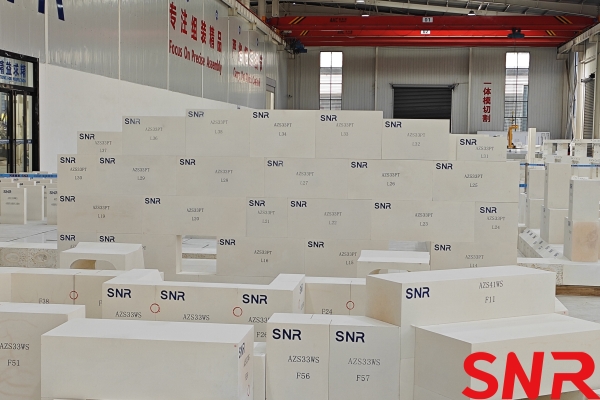
Currently, the superstructure refractories most widely used in oxy-fuel glass furnaces are predominantly fused-cast materials, including fused-cast AZS series, fused-cast alumina series, and fused-cast chrome-corundum series. Among the fused-cast AZS series, in addition to the commonly used ER1681, ER1685, and ER1711, the low-glass-phase product ER1851 deserves special attention. By reducing SiO₂ and Na₂O content, this product achieves a glass phase content below 14%, offering extremely strong alkali vapor resistance, batch carryover resistance, and good creep resistance. It has demonstrated excellent performance in low exudation and corrosion resistance and has been applied in multiple oxy-fuel projects.
The fused-cast alumina series includes fused-cast α-β alumina and fused-cast β-alumina materials. The fused-cast α-β alumina product consists of approximately 50% α-alumina and 50% β-alumina, with interlocking crystal structures forming a very dense microstructure. It offers excellent alkali resistance and very good corrosion resistance below 1350°C. Because it contains no harmful impurities such as iron or titanium and has very low glass phase content, its spallation products cause negligible contamination to the glass melt, making it suitable for furnace crowns. The fused-cast β-alumina product consists of 100% β-alumina with a large tabular β-alumina crystal structure, offering good spalling resistance and particularly high resistance to strong alkali vapors. However, its higher porosity and lower strength restrict its use to locations with less dust carryover, typically at the rear section of the crown.
From a practical application perspective, Saint-Gobain‘s technical literature explicitly states that in the batch charging area of an oxy-fuel furnace, where the superstructure is subjected to raw material dust, high temperature, and alkali vapor attack, fused-cast AZS bricks outperform fused-cast alumina refractories in alkali vapor corrosion resistance. Therefore, low-exudation fused-cast AZS bricks (such as ER1851) should be selected for the superstructure in the batch charging area. In the mid-to-downstream areas, where the superstructure experiences high temperature and alkali vapor (without dust) attack, fused-cast alumina materials (such as Jargal M/H) perform better.
Spinel refractories are an emerging option developed in recent years. To address the high-stress conditions of oxy-fuel furnace crowns, researchers have developed pure spinel refractories (MgO·Al₂O₃). Research results indicate that due to their high resistance to alkali attack and excellent creep resistance at 1650°C, spinel materials can be recommended for crowns and superstructures of oxy-fuel glass melting furnaces. The main advantages of spinel materials include strong resistance to reducing atmospheres such as free CO₂, free SOₓ, and free K₂O/Na₂O, good thermal stability and wear resistance, and low thermal expansion coefficient with low thermal stress.

2.2 Tank Wall and Batch Charging Area
The tank wall is in direct contact with high-temperature glass melt, enduring chemical corrosion and physical scouring. Under oxy-fuel combustion conditions, although alkali vapor concentration at the tank wall is lower than at the crown, it still faces corrosion rates exceeding conventional levels.
The superstructure in the batch charging area is subjected to the combined attack of raw material dust, high temperature, and alkali vapor. In this area, fused-cast AZS bricks outperform fused-cast alumina refractories in alkali vapor corrosion resistance, so low-exudation fused-cast AZS bricks such as ER1851 should be selected. For furnaces melting high-value-added specialty glasses, high-zirconia refractories (ZrO₂ content 85% to 95%) may be considered for critical tank wall locations to reduce stone and bubble generation. Although high-zirconia refractories are difficult to manufacture and expensive, their excellent performance has led to widespread use in the glass industry, suitable for glass-contact locations in borosilicate glass, aluminosilicate glass, and glass-ceramic furnaces.

2.3 Mid-to-Downstream Areas
The superstructure in the mid-to-downstream areas of the furnace experiences high temperature and alkali vapor (without dust) attack, with operating conditions differing from those in the batch charging area. In this region, fused-cast alumina materials (such as Jargal M/H) perform better. Due to their low glass phase content and low apparent porosity, α-β corundum bricks maintain an intact skeleton structure after alkali vapor attack, offering the most outstanding corrosion resistance.
3. Comparative Analysis of Alkali Vapor Corrosion Resistance of Mainstream Refractories
To provide scientific guidance for material selection, researchers conducted systematic comparative tests on the alkali vapor corrosion resistance of refractories for oxy-fuel glass furnaces using the crucible method. Tests were conducted at 1600°C for 24 hours, comparing premium silica bricks, zero-expansion silica bricks, fused-cast zirconia-corundum bricks (AZS33), and α-β corundum bricks.
Results showed that premium silica bricks and zero-expansion silica bricks have relatively high apparent porosity. Under high-temperature alkali vapor conditions, calcium-silicate oxides and glass phases in the silica bricks continuously exude and drip, persistently dissolving SiO₂ particles, resulting in poor alkali vapor corrosion resistance. Fused-cast zirconia-corundum bricks generate more glass phase under alkali vapor attack; after the glass phase drips away, pores remain. However, due to their low apparent porosity, alkali vapor penetration is slow, giving good alkali vapor corrosion resistance. α-β corundum bricks have low glass phase content and low apparent porosity, maintaining an intact skeleton structure after alkali vapor attack, offering superior alkali vapor corrosion resistance.
The ranking of alkali vapor corrosion resistance of the four brick types is: **α-β corundum bricks > fused-cast zirconia-corundum bricks > zero-expansion silica bricks > premium silica bricks**. This ranking provides a clear experimental basis for material selection in oxy-fuel furnace superstructures.
From the perspective of laboratory corrosion testing, researchers have also developed a Controlled Atmosphere Dynamic Corrosion Application Furnace (CADCAF), capable of simulating dynamic corrosion conditions of refractories in glass systems under various atmospheres other than air, with a maximum temperature of 1600°C. This facility provides important reference value for laboratory evaluation of refractories under oxy-fuel combustion conditions. Meanwhile, research also indicates that conventional crucible vapor corrosion testing may lead to incorrect material selection due to acceleration effects, requiring test methods that more closely approximate actual service conditions.
4. Systematic Principles and Engineering Practice of Refractory Configuration
Refractory configuration for oxy-fuel furnaces requires establishing systematic selection logic based on individual material performance evaluation.
**Zoned configuration** is the core principle. Significant differences exist in corrosive media concentration, temperature, and scouring intensity at different locations, necessitating differentiated material selection. In the batch charging area, where dust and alkali vapor coexist, fused-cast AZS bricks are more advantageous; in mid-to-downstream areas dominated by alkali vapor attack, fused-cast alumina materials perform better; at the crown, where thermal load and alkali vapor attack are superimposed, low-glass-phase AZS or spinel materials are reasonable choices. This zoned configuration strategy has been validated in the technical practice of international glass enterprises such as Saint-Gobain.
**Low glass phase content** is a common direction for material development. Whether in the AZS series or the alumina series, reducing glass phase content significantly improves both alkali vapor corrosion resistance and high-temperature creep resistance. The successful application of low-glass-phase products such as ER1851 has validated the effectiveness of this technical approach.
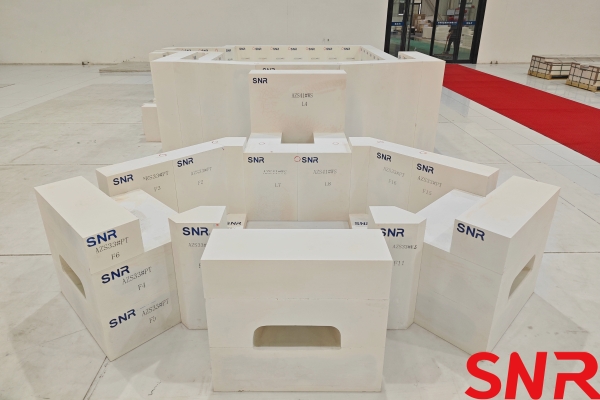
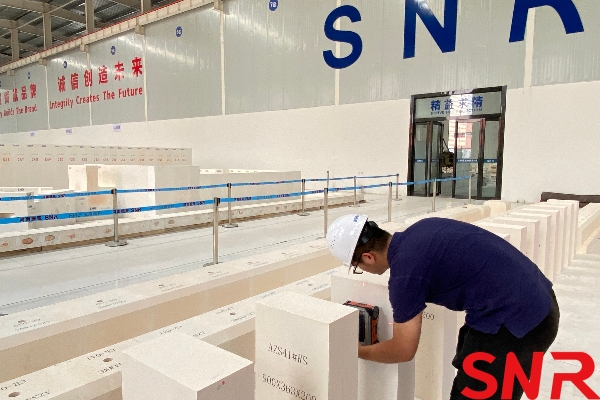
**Masonry quality and process control** cannot be overlooked. Oxy-fuel furnaces have experienced accidents such as crown deformation, breastwall collapse, and tank wall perforation and leakage. The causes include both improper material selection and substandard masonry and inadequate operational control. Research shows that using fused-cast zirconia-corundum bricks for the furnace crown, exhaust ports, and most flue channels, with precision grinding and pre-assembly to control brick joints below 1 mm, can effectively prevent flame leakage through the crown and extend furnace life. Proper operation and inspection can reduce or eliminate localized burn-through, and manufacturers need to establish comprehensive daily management and control systems.
From the perspective of glass quality, refractory corrosion products in oxy-fuel furnaces may enter the glass melt, forming defects such as stones and knots. Research indicates that oxy-fuel combustion generates 3.5 times more water vapor than air combustion, and water vapor adsorbed on refractory surfaces accelerates corrosion. Although alumina bricks offer advantages such as strong alkali vapor corrosion resistance, high thermal load bearing strength, and low creep at 1600°C, making them suitable for oxy-fuel furnaces, they can still produce alumina stones and alumina knot defects as operation time extends. It is recommended to reduce defects by appropriately lowering melting zone pressure, adopting lower-limit temperature control, and maintaining stable combustion air flow.
5. Conclusion and Outlook
The challenge posed by oxy-fuel combustion technology to glass melting furnace refractories essentially stems from the fundamental change in combustion chemistry. The multiplied concentrations of water vapor and alkali vapor have rendered conventional silica-based material systems unsuitable, driving the widespread application of fused-cast AZS, fused-cast alumina, and spinel materials in oxy-fuel furnaces. The experimental ranking of alkali vapor corrosion resistance—α-β corundum bricks superior to fused-cast zirconia-corundum bricks superior to silica bricks—provides a clear technical basis for material selection.
With the continued promotion of oxy-fuel combustion technology in high-value-added specialty glass fields such as photovoltaic glass, high-alumina silicate glass, and ultra-thin glass, and the evolution of furnace scale from 250 t/d toward 800 t/d and even larger, refractory configuration will face higher requirements. Rainbow New Energy has already built 750-ton, 800-ton, and 850-ton oxy-fuel photovoltaic glass furnaces, and oxy-fuel combustion technology has become an important technical support for the thin-glass strategy in photovoltaic glass. Spinel materials, high-zirconia series products, and new composite materials with even lower glass phase content are expected to play more important roles in future oxy-fuel furnaces. Collaborative coordination among refractory suppliers, furnace design institutes, and glass manufacturers will be key to achieving long-life, high-quality operation of oxy-fuel furnaces.
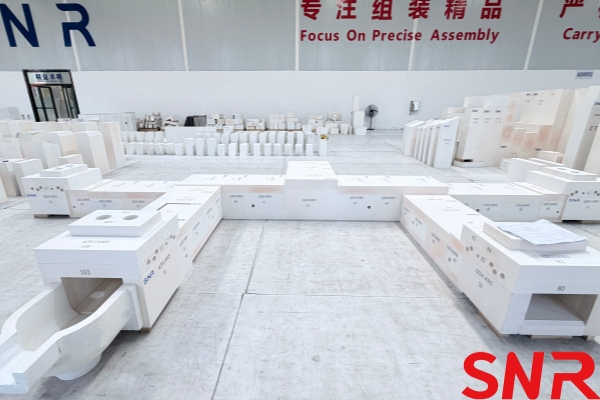
Henan SNR Refractory Co., Ltd. has been specializing in the production of fused cast AZS blocks for more than 25 years. We use high-quality raw materials and advanced fusion and casting technology and equipment to provide customers with high-quality products. From raw material procurement to finished product delivery, every step is strictly quality inspected to ensure that every indicator meets the standards, so you can use it with confidence.
Should you have any inquiries or specific requirements, our team is ready to provide professional support and tailored solutions.
 Contact Information:
Web: www.snr-azs.com
Email: [email protected]


 +86-18203976036