

The main energy-consuming part of glass production equipment is the glass furnace, whose energy consumption accounts for more than 75% of the total energy consumption of glass production. In some outdated glass furnaces, this figure can reach 80% ~ 85%. Under the "dual carbon" strategy and dual control of energy consumption, how to reduce the energy consumption of glass furnaces is not only the key to reducing production costs, but also a core technical issue that determines whether glass enterprises can survive and develop. The following systematically elaborates 8 energy-saving methods for glass furnaces that have been verified in production practice, from professional perspectives such as thermal regime, glass furnace structure, combustion technology, and refractory matching.
1. Increase Glass Melt Temperature Without Increasing Flame Temperature
After the glass melt temperature is increased, its viscosity decreases significantly, and the rates of silicate formation, fining, and homogenization are accelerated, thereby accelerating melting speed and shortening melting time. Under the premise of maintaining the same pull rate, the unit energy consumption is reduced. The essence of this method is to enhance radiative heat transfer from the flame space to the glass melt, rather than simply relying on increasing the flame temperature (which often leads to a sharp increase in NOx emissions and accelerated corrosion of refractories). Specific measures are divided into two main directions:
(1) Increase the Radiant Heat from the Flame Space to the Glass Melt
The absorption of radiant energy by glass melt is highly selective. According to radiative heat transfer theory, radiation with a wavelength shorter than 3μm can penetrate the glass surface and be transmitted downward to a certain depth, while radiation with a wavelength longer than 3μm is mainly absorbed at the surface layer. In the flame space of a glass furnace, the main sources capable of emitting radiation with a wavelength shorter than 3μm are carbon particles in the flame (incandescent carbon particles formed during oil atomization combustion) and the inner wall surface of the glass furnace space (i.e., the inner surfaces of the crown, breast walls, and port necks). Therefore, increasing the emissivity of the flame and maintaining a high emissivity value of the glass furnace masonry can increase the radiant heat from the flame space to the glass melt.
The emissivity value is related to the surface roughness and temperature of the masonry. According to experimental data, the emissivity values of fireclay bricks and silica bricks at high temperatures are: 0.61-0.62 at 1000℃, 0.52-0.53 at 1200℃, and 0.47-0.49 at 1400℃。 The emissivity value of fused cast refractories at high temperatures is 0.4-0.5. It is worth noting that the emissivity value decreases with increasing temperature, which means that in the high-temperature section, the radiation capacity of the refractory surface actually decreases. Therefore, in actual operation, efforts should be made to maintain the "brightness" of the flame in the glass furnace, that is, by optimizing atomization and rational air distribution, the carbon particle concentration in the flame is kept moderate, ensuring radiative heat transfer while avoiding incomplete combustion.
In addition, eliminating the "cold air" film near the glass surface is crucial. The so-called "cold air" film refers to a layer of low-temperature combustion product gas film formed near the glass surface due to improper height of the port floor above the glass surface or unreasonable flame injection angle. This gas film significantly hinders radiative and convective heat transfer from the flame to the glass melt. Specific measures include: optimizing the height of the port floor above the glass surface (usually controlled within the range of 100~150mm, adjusting the flame injection angle (generally inclined downward at 5°~10°, so that the flame sweeps close to the glass surface. Oxygen-assisted melting can also be considered, in which oxygen is injected at a velocity of 195~ 500m/s, accelerating the heat transfer rate and increasing the flame temperature near the glass surface by about 100℃. The mechanism of oxygen-assisted melting is that after oxygen enters the flame, it increases the local oxygen partial pressure, accelerates the combustion of carbon particles, and rapidly raises the flame temperature. At the same time, the high-speed airflow scours and destroys the boundary layer at the glass surface, significantly enhancing convective heat transfer.
(2) Increase the Temperature or Temperature Uniformity of the Glass Melt in the Melting Tank
The traditional view holds that increasing the melt surface temperature can accelerate melting, but in practice it has been found that appropriately lowering the melt surface temperature is actually beneficial to increasing the heat transfer from the flame to the glass melt. The thermal principle lies in the fact that when the melt surface temperature decreases, the radiation temperature difference between the flame space and the melt surface increases. Since radiative heat transfer is proportional to the fourth power of the temperature difference, the heat transfer rate increases. At the same time, lowering the melt surface temperature also improves the temperature uniformity of the glass melt in the tank depth direction, avoiding the phenomenon of surface overheating accompanied by stagnation at the bottom.
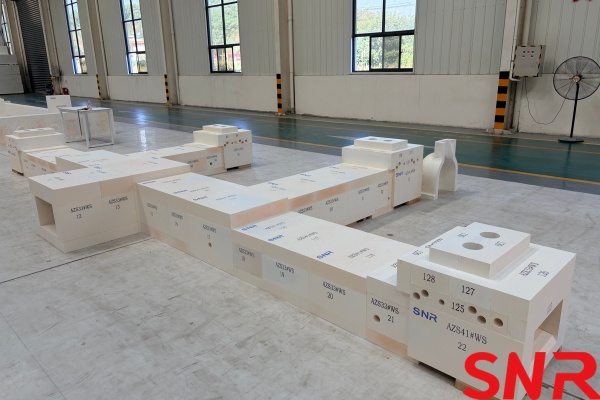
To realize the above viewpoint, the following measures should be taken:
① Bubbling at the tank bottom. By introducing purified gas (usually compressed air or nitrogen) into the glass melt through bottom bubbling bricks, the bubbles drive the glass melt to undergo vertical convection during their rise, significantly improving the temperature uniformity in the depth direction and accelerating fining and homogenization. The purification of the bubbling medium is crucial. If the gas contains oil, water, or impurities, it will contaminate the glass melt and produce bubble defects. The corrosion of bubbling bricks also needs close attention. Corrosion-resistant corundum or zirconia bubbling bricks are usually used, and the bubbling frequency and pressure should be reasonably controlled.
② Deepening the tank depth. Deepening the tank depth can intensify vertical convection, improve the temperature uniformity of the glass melt in the depth direction, and also adapt to the increase in melting rate. After the tank depth is increased, the residence time of the glass melt in the tank is prolonged, which is conducive to fining and homogenization. However, it should be noted that too low a bottom temperature may cause the glass melt to "freeze at the bottom", so bottom insulation or electric boosting must be combined.
③ Glass furnace insulation. glass furnace insulation is a fundamental measure to reduce heat dissipation and improve thermal efficiency. High-quality silica bricks must be used. The insulation layer in contact with silica bricks must use siliceous insulating bricks to avoid contact reactions at the high-temperature interface (silica bricks and clay-based insulating bricks will undergo liquid-phase reactions at high temperatures, causing softening and deformation of refractories). At the same time, the tightness of brick joints must be ensured. The siliceous refractory mortar must not contain clay or other additives, otherwise the high-temperature performance of silica bricks will be reduced.
④ Electric boosting. By means of electrodes, electrical energy is directly introduced into the glass tank furnace heated by fuel, supplementing part of the heat required for melting and improving the melting rate and quality of the glass melt. Electric boosting has high heating efficiency (up to more than 90%), and the heat is generated directly inside the glass melt, avoiding heat loss in the flame space. Electrodes are usually molybdenum electrodes or tin oxide electrodes, and their insertion depth, electrode spacing, and power supply regime must be precisely designed according to the glass furnace structure and glass melt resistance.
2. Shallow Fining, Deep Extraction, and Controlling the Glass Flow in a Single-Pass Direct-Flow Direction
This starts from the aspects of increasing the glass melt temperature in the fining zone, reducing return flow, and selecting high-quality glass melt to enter the throat. After the glass melt completes bubble removal and homogenization in the fining zone, it should enter the throat as soon as possible to avoid forming a return flow at the end of the fining zone. Otherwise, the already fined glass melt will be contaminated again, and the heat consumption for reheating will increase.
Specific measures include: installing a low and wide weir to make the fining tank shallower, and lowering the throat. The function of the weir is to block the unfined surface glass melt from flowing directly into the throat, forcing the glass melt to flow downward through the high-temperature zone at the bottom of the fining tank, promoting bubble flotation. A low and wide weir (height usually 1/3~1/2 of the tank depth) can effectively control the flow direction without significantly increasing return flow. A lowered throat ensures that the extraction port is located in the deepest, highest-quality glass melt with the highest temperature in the depth direction. When melting dark-colored glass, the throat may not be lowered, because dark glass has poor heat transmission, the bottom temperature is lower, and a lowered throat would instead extract low-temperature glass melt.
Controlling the glass flow in a single-pass direct-flow direction means that from the doghouse to the throat, the glass melt should form a stable "plug flow" pattern, avoiding dead corners and vortices. This requires reasonable design of the tank length-to-width ratio, tank depth, weir position, and throat dimensions. The regenerative end-port throat glass furnace is a typical single-pass direct-flow glass furnace type. Its flame swirls in a horseshoe shape inside the glass furnace, which helps prolong the residence time of the flame in the glass furnace and improve heat transfer efficiency.
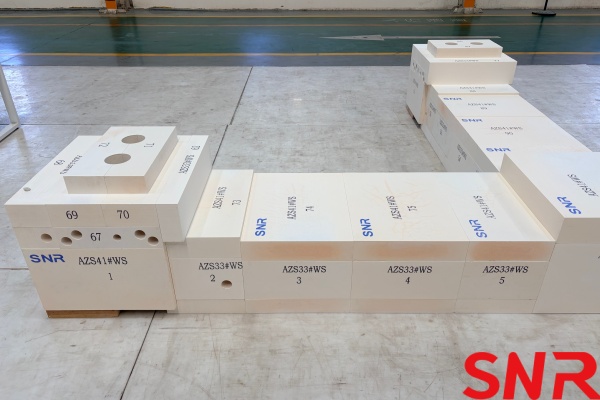
3. Strengthen Homogenization
Homogenization is a key process affecting product quality. At present, the homogenization process is basically in a state of "inherent deficiency and acquired disorder". After the batch enters the glass furnace, it is difficult to maintain the uniformity after mixing, resulting in compositional non-uniformity. The heat transmission of the glass melt and the heat dissipation from the glass furnace to the surroundings cause temperature non-uniformity. Relying solely on natural diffusion for homogenization is obviously insufficient. Therefore, forced homogenization measures must be taken.
Currently effective measures include: bottom bubbling, forehearth stirring, working end or forehearth bottom draining, and forehearth electric heating.
- Bottom bubbling: As mentioned above, bubbling not only improves temperature uniformity but also promotes chemical homogenization of the glass melt through the stirring action of bubbles.
- Forehearth stirring: A stirrer (usually heat-resistant alloy or platinum-rhodium alloy) is inserted into the glass melt and rotated to generate forced convection, significantly improving transverse and longitudinal temperature uniformity and chemical uniformity. The stirring point position, stirrer insertion depth, and stirring process must be optimized, otherwise ideal results cannot be obtained. The material of the stirrer is an urgent problem to be solved, because high-temperature glass melt corrodes the stirrer very severely. Surface flow can not only strengthen transverse flow and improve temperature uniformity, but also pull away dirty material and scum from the surface. The stirrer size should be appropriate and should not cause too much heat loss.
- Draining: It can be continuous or intermittent. Through the draining hole at the bottom of the forehearth, low-temperature and compositionally non-uniform glass melt at the bottom is discharged, thereby improving the quality of the glass melt entering the forming zone.
- Forehearth electric heating: Electric heating can significantly improve the temperature uniformity in the depth direction of the forehearth, but the temperature distribution on the horizontal plane of the forehearth may not necessarily improve. Electrode shape, determination of glass melt resistance between electrodes, and methods of electrode adjustment, installation, and maintenance are issues that need attention when using electric heating.
While taking forced homogenization measures, the role of natural diffusion should be fully utilized. Therefore, when designing, the size of the working end and the length of the forehearth must be carefully considered. If the working end is too large, the residence time of the glass melt will increase, leading to heat loss; if the working end is too small, homogenization will be insufficient. The length of the forehearth should be determined according to the flow rate and pull rate. A slightly longer forehearth is beneficial for temperature adjustment and can adapt to changes in flow rate over a wider range.
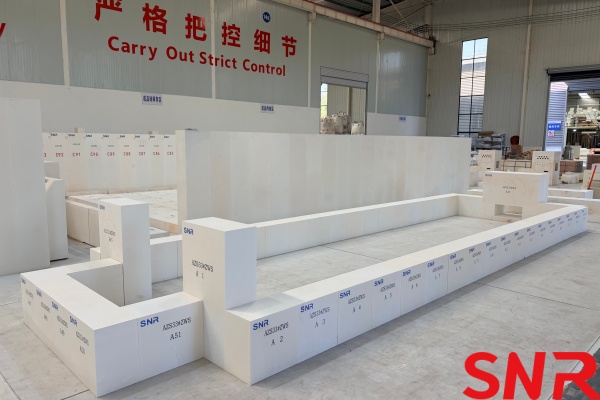
4. Stable Feeding
The stability of the shape, size, and temperature of the feed is the prerequisite for ensuring forming quality and output. The degree of separation between the forehearth and the working end, as well as the cross-section, dimensions, insulation, heating system, and cooling system of the forehearth, are the main factors affecting stable feeding.
- Full separation: Full separation between the forehearth and the working end enables the forehearth to maintain an independent operating regime, free from the influence of flame atmosphere and pressure fluctuations in the glass furnace. Full separation is usually achieved by a partition wall or damper, with a flow hole left at the lower part of the partition wall and the upper space completely enclosed.
- Forehearth cross-section: A saddle-shaped cross-section at the bottom of the forehearth can reduce transverse temperature differences. The saddle-shaped cross-section makes the glass melt deeper in the center of the forehearth and shallower on both sides, which is conducive to heat transfer from the high-temperature central glass melt to both sides, balancing the transverse temperature.
- Deepening the bowl: Appropriately deepening the bowl can increase the static head, making the gob temperature more stable. After the static head increases, the gob weight and shape are easier to control, which is beneficial to forming.
- Forehearth length and width: They should be determined according to the flow rate and pull rate. A slightly longer forehearth is beneficial for temperature adjustment and can adapt to changes in flow rate over a wider range.
- Insulation: The heat dissipation of the forehearth is very large, especially at the bowl. Therefore, insulation must be strengthened. A multi-layer composite insulation structure is usually adopted, with high-quality refractory bricks as the inner layer and insulating bricks and fiber blankets as the outer layers.
- Heating and cooling system: The heating and cooling system must be able to adjust the glass melt temperature flexibly and reliably and maintain temperature uniformity. The cooling system plays a coarse adjustment role, and the heating system plays a fine adjustment role. A system combining multi-nozzle gas heating and electric heating is ideal. Gas heating can provide uniform radiant heat, and electric heating can precisely control local temperatures.
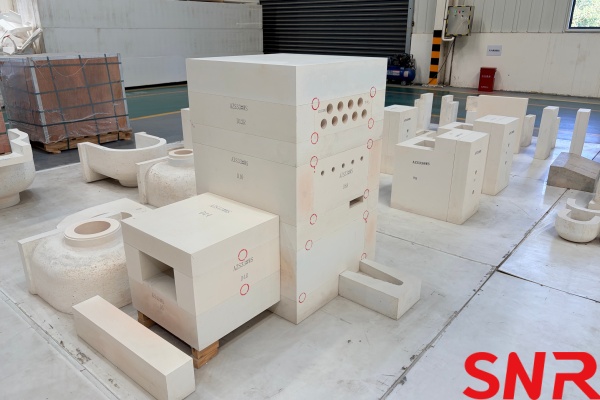
5. Reduce Useless Heat
Reducing useless heat includes two aspects:
(1) Reduce Unusable Heat
Such as heat dissipation from the glass furnace surface, radiation heat from openings, and heat carried away by gases escaping from openings and brick joints. Measures to be taken include:
① glass furnace insulation: To continuously improve insulation effectiveness, the improvement direction of glass furnace insulation is to develop multi-layer composite insulation layers, adopt composite insulation materials, develop bulk concrete-type insulation materials, and develop sealing materials matched with various refractories. A multi-layer composite insulation layer usually consists of, from inside to outside: refractory brick layer, insulating brick layer, fiber blanket layer, and outer steel shell. The thermal conductivity and thermal expansion coefficient of each layer of material must match to avoid thermal stress damage at high temperatures.
② Sealing of openings and brick joints: Attention should be paid to the doghouse, thermocouple holes, peep holes, etc. Where conditions permit, fully enclosed batch chargers should be selected, corundum embedded tubes should be used for temperature measurement, and industrial television should be used to observe the flame and melting conditions. The radiation heat from openings is proportional to the fourth power of the opening area and temperature, so reducing the area and number of openings is crucial.
③ Large-scale glass furnaces: The larger the glass furnace scale, the lower the heat dissipation per unit output. This is because the ratio of glass furnace surface area to volume decreases as glass furnace size increases, and heat loss is relatively reduced. Large glass furnaces can also adopt more efficient regenerators and more advanced combustion systems.
(2) Reduce Heat from Reheating
The main thing is to reduce the heat consumed by reheating the return flow glass melt. Usually, this heat accounts for about one-tenth of the heat consumption for glass melting. Measures to be taken include installing a weir, lowering the throat, appropriately reducing the throat height, and appropriately lowering the glass melt temperature entering the throat. The weir can block return flow, the lowered throat can extract deep low-temperature glass melt, reducing the throat height can reduce the amount of return flow glass melt, and lowering the glass melt temperature entering the throat can reduce the heat consumption for reheating.
6. Utilize Available Heat
(1) Fuel Must Be Fully Combusted to Release All Heat
When burning oil, oil nozzles with good atomization effects should be selected, atomization-strengthening measures should be adopted, and the port neck structure and breast wall height matched with the nozzles should be designed. The atomization effect directly affects the combustion speed and flame shape. Poor atomization will cause oil droplets to crack inside the glass furnace, producing a large amount of carbon black, which wastes fuel and contaminates the glass melt. When burning gas, the appropriate air-gas momentum ratio should be determined, and the air should surround the gas. Air surrounding the gas can prevent the gas from cracking at high temperatures and ensure complete combustion.
(2) Improve Heat Exchange Efficiency and Increase Air Preheating Temperature as Much as Possible
To this end, the heated surface area of the checker bricks should be increased, a higher checker body should be adopted, and novel checker bricks and their arrangement should be used, such as cross-shaped and cylindrical bricks, arranged in basket-weave or chimney style. The material of the checker bricks and the uniformity of gas flow distribution in the checker body should also be studied. The material of checker bricks is usually high-alumina, magnesia, or silica, and should be selected according to the glass furnace atmosphere and temperature. The uniformity of gas flow distribution in the checker body directly affects heat exchange efficiency and can be achieved by optimizing the checker arrangement and gas flow channel design.
(3) Utilization of Flue Gas Waste Heat
The heat carried by the flue gas discharged from the regenerator should be recovered as much as possible under permissible conditions. A waste heat boiler can be installed in the flue system, and heat pipes can be installed to recover heat. In addition, how to use flue gas waste heat to heat or even sinter the batch should be studied. Waste heat boilers can generate steam for power generation or heating, and heat pipes can efficiently recover medium- and low-temperature waste heat. Using flue gas waste heat to preheat the batch can significantly reduce melting energy consumption, because the batch enters the glass furnace after preheating, reducing the heat required for temperature rise.
7. Change the Batch Composition and Batch Pelletizing
(1) Incorporate a Small Amount of Fluxing Ingredients into the Batch Composition
Such as lepidolite powder, which can lower the glass melting temperature, accelerate glass melting, and significantly increase the pull rate. Li₂O in lepidolite powder can significantly reduce the high-temperature viscosity of the glass melt and promote silicate reactions. In addition, a small amount of fluorite, borax, and other fluxing agents can be incorporated, but attention must be paid to their corrosion of refractories and their impact on glass properties.
(2) Batch Pelletizing
For batch shaping treatment, dry pelletizing treatment is recommended, in which the batch is pressed into small pellets without adding a binder. It can eliminate dust inside and outside the glass furnace, accelerate solid-phase reactions, and increase the contact area between the batch and the glass melt. In this way, the melting time can be shortened, the glass furnace life can be extended, and the unit heat consumption can be reduced accordingly. The pelletized batch has good flowability, is not easy to segregate, and is not easily carried away by airflow after entering the glass furnace, reducing raw material loss caused by dust flying and regenerator blockage.
8. Use High-Quality Refractories and Reasonably Match Them
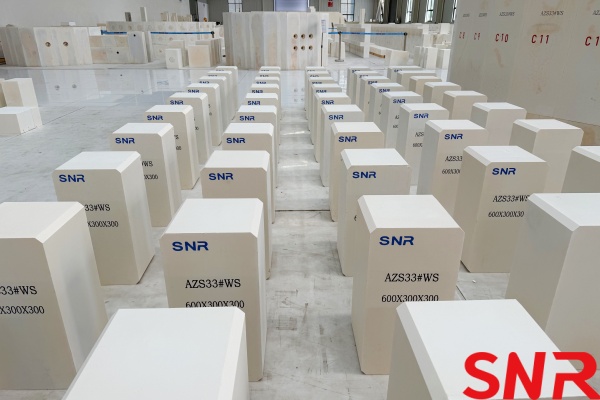
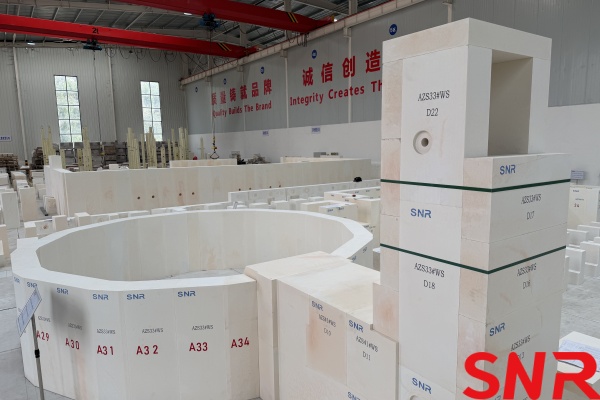
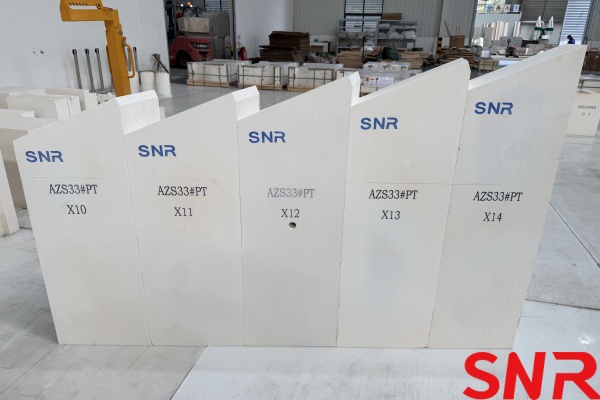
Various high-quality and durable refractories must be used, such as fused cast AZS refractories, or zirconia, chrome, corundum, and basic refractories, high-density, high-strength refractories, etc., and they must be reasonably matched so that the service life of the entire glass furnace increases synchronously. The quality of glass furnace masonry materials is crucial to glass furnace output, glass quality, fuel consumption, and glass furnace life.
- Fused cast refractories: Such as fused cast AZS blocks , which have excellent resistance to glass melt corrosion and are widely used in key parts such as tank walls and throats.
- Zirconia and chrome refractories: Such as zircon bricks and chrome-corundum bricks, used in high-temperature and strongly corrosive areas.
- Corundum and spinel refractories: Such as sintered corundum bricks and magnesia-alumina spinel bricks, used for regenerator checkers and glass furnace crowns.
- Basic refractories: Such as magnesia bricks and magnesia-chrome bricks, used in the upper part of regenerators.
The use of high-quality refractories in more parts should also be expanded. From a long-term perspective, spending more on refractories is worthwhile. Because high-quality refractories can extend glass furnace life, reduce the number of glass furnace shutdowns for maintenance, improve glass quality, and reduce unit product energy consumption. Reasonable matching of refractories means selecting different materials for different parts so that the corrosion rates of each part are similar, avoiding forced glass furnace shutdown due to premature local damage.
According to industry practical data, the combined application of the above eight energy-saving measures can generally reduce the comprehensive energy consumption of glass furnaces by 15% to 28%, with a payback period of investment ranging from 1.2 to 3 years for different production scales. For large float glass production lines with a daily melting capacity of more than 600 tons, priority can be given to the full implementation of waste heat power generation, electric boosting and high-performance refractory matching schemes, which can achieve an annual energy cost saving of more than 8 million yuan. For small and medium-sized specialty glass production lines, it is recommended to adopt targeted lightweight transformation schemes focusing on batch pelletizing, furnace insulation and combustion system optimization, which can achieve energy saving benefits with lower initial investment.
In the future, with the continuous iteration of intelligent control technology, glass furnace energy saving will further develop towards the direction of digital twin real-time optimization, multi-energy complementary coupling and full life cycle carbon emission accounting. Integrating artificial intelligence algorithms to dynamically adjust combustion parameters, melting temperature and material flow rate according to real-time production data will become the core development direction of next-generation glass furnace energy-saving technology, which is expected to help the glass industry further reduce energy consumption by more than 10% on the existing basis, strongly supporting the realization of the "dual carbon" goal of the whole industry chain. In summary, glass furnace energy saving is a systematic project involving combustion, heat transfer, fluid mechanics, refractories, process operation, and many other professional fields. Only by comprehensively applying the above 8 methods and optimizing them in combination with the actual conditions of a specific glass furnace can efficient, low-consumption, and long-life operation of the glass furnace be achieved.
About SNR Refractory
With extensive experience in the refractory industry and a strong focus on glass furnace applications, Henan SNR Refractory Co., Ltd. is committed to providing reliable refractory products and technical solutions for glass melting furnaces. Our product range covers a wide variety of refractory materials used in different glass furnace sections, including silica brick, fused cast AZS, alumina-based refractories, fireclay brick, high-alumina brick, magnesia brick, magnesia-alumina spinel brick, and other customised refractory products. We understand that refractory selection is closely related to glass furnace design, glass composition, operating temperature, corrosion conditions, and campaign objectives. Therefore, our approach is not limited to supplying individual refractory products. We aim to provide application-oriented refractory solutions, helping customers select suitable materials and grades according to their specific glass furnace conditions and technical requirements. For glass manufacturers, glass furnace contractors, engineering companies, and refractory distributors looking for reliable refractory materials or customised solutions for glass furnaces, Henan SNR Refractory Co., Ltd. is ready to provide technical consultation, product recommendations, quotations, and project support. If you have any requirements for glass furnace refractories, drawings, material selection, or refractory quotations, please feel free to contact me. I would be glad to discuss your project and provide a suitable solution.
CONTACT: [email protected]/ WhatsApp:+86 15670323812


 +86-18203976036